
Make sure to join my list for Weekly Tips and Recipes to Your Inbox
15 Inspiring Wabi Sabi Bathroom Design

A little note: Some images in this post may come from third-party sources and are shared purely to inspire you. All credit goes to their original creators. Visit our Image Credits Policy for more information.
When I first stepped into my bathroom, I couldn’t shake the feeling that it was bland, almost vacant. Too sterile, like something unfinished. That’s when I started looking into Japanese minimalism and stumbled upon the idea of a wabi sabi bathroom.
The philosophy spoke to me: beauty in imperfection and an honest sense of simplicity. Suddenly, I didn’t just want a bathroom that looked good, I wanted a bathroom that felt calm and deeply human.
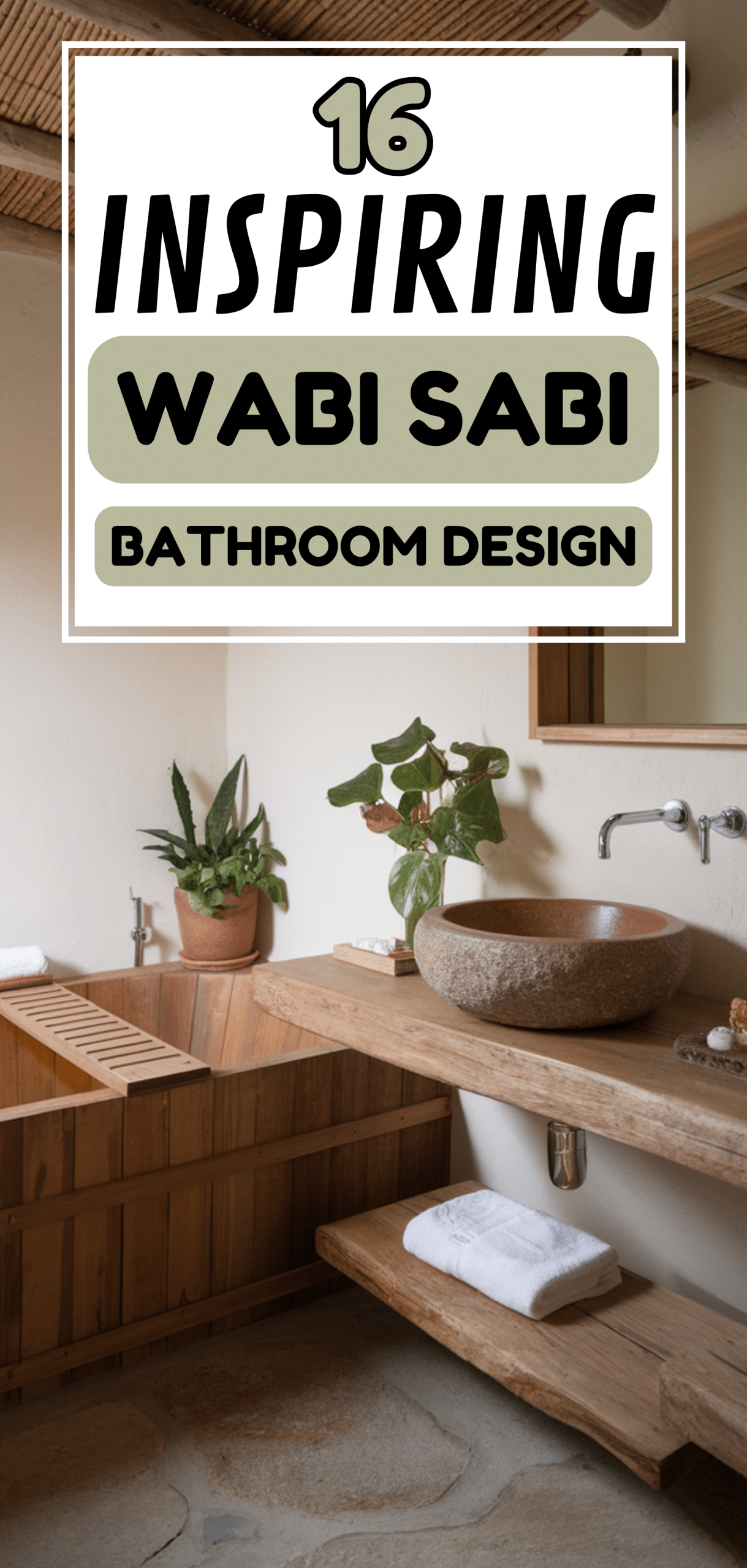
But figuring out how to translate that into design wasn’t easy. I looked at photos; some made sense, others confused me. A log on the floor? An outdoor shower fenced in with bamboo? Even a Japanese soaking tub (ofuro) seemed impossible to climb into without instructions.
I laughed at how impractical some of it felt. Still, there was something about the raw textures, the muted tones, and the way each piece looked purposeful that kept me inspired. I wanted that. I wanted my plain bathroom to transform into a wabi-sabi bathroom that embraced imperfection but also worked in real life.
What I learned is this: wabi-sabi isn’t about copying Pinterest photos or forcing rustic pieces into a modern space. It’s about balance. A reclaimed wood vanity paired with smooth stone. A linen curtain next to a concrete basin.
A handmade ceramic soap dish that isn’t perfectly shaped but feels real. By layering natural materials and a few pieces that show age or craftsmanship, a sterile room suddenly feels warm and calming. That’s the heart of wabi sabi bathroom design; it makes space for stillness.
If your bathroom feels empty or too polished, the solution isn’t to clutter it with trendy decor. It’s to step back and add intentional imperfections—an unpolished metal fixture, textured plaster walls, or a single plant that softens the stone.
That’s where the magic happens. And if you’re also thinking about refreshing your walls, I’ve shared an article on 15 Best Greige Paint Colors, a perfect palette to bring warmth into a wabi-sabi-inspired home.
What We're Exploring
- 01 15. Embrace Raw Natural Materials
- 02 14. Earth-Toned Color Palette
- 03 13. Minimalist Layouts
- 04 12. Rough Stone Basins
- 05 11. Weathered Wooden Accents
- 06 10. Organic-Shaped Mirrors
- 07 9. Concrete Surfaces
- 08 8. Handmade Ceramic Accessories
- 09 7. Soft, Ambient Lighting
- 10 6. Natural Textiles
- 11 5. Indoor Plants for Balance
- 12 4. Freestanding Wooden or Stone Bathtubs
- 13 3. Imperfect Wall Finishes
- 14 2. Low, Grounded Furniture
- 15 1. Open Shelving with Curated Essentials
- 16 Conclusion
15. Embrace Raw Natural Materials
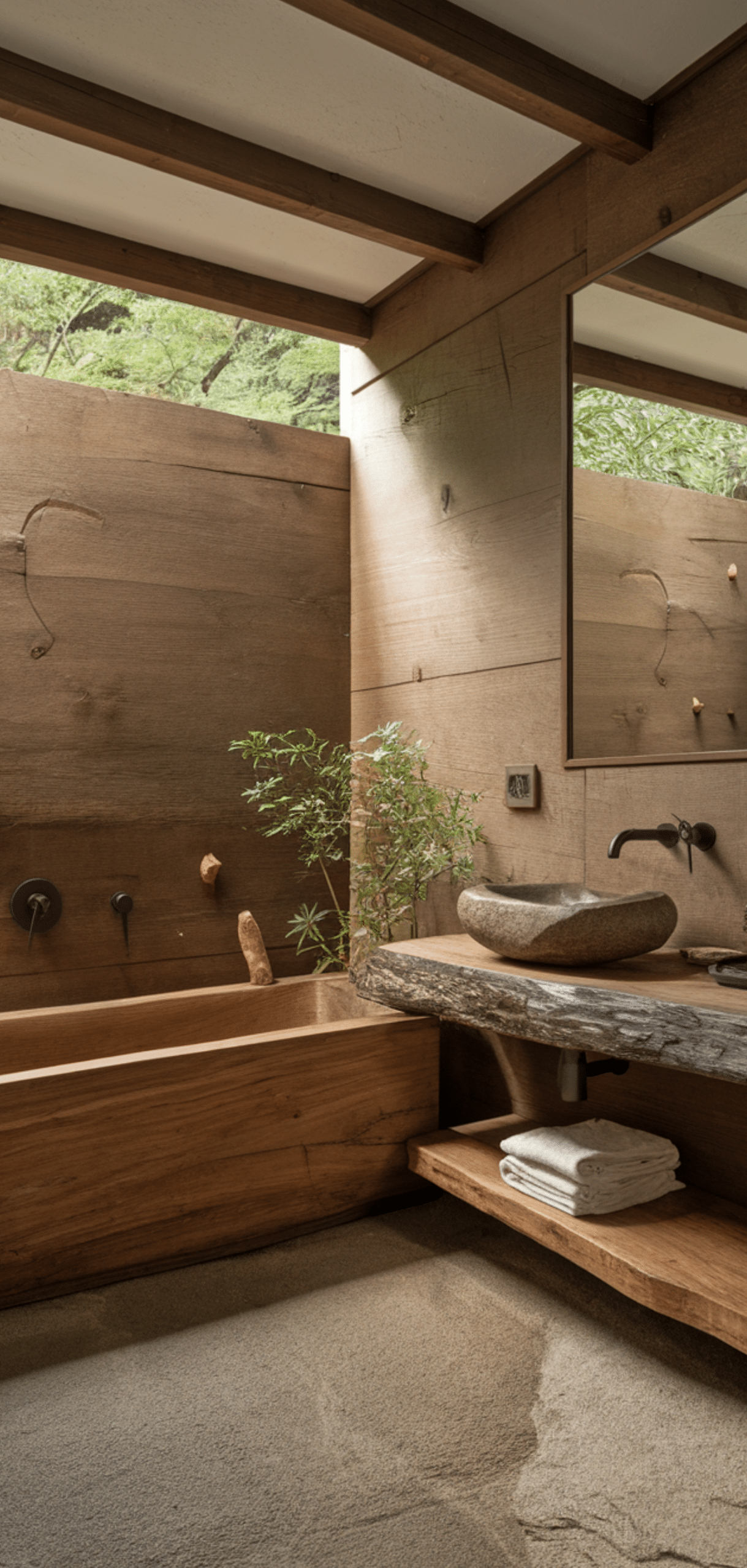
Natural stone, reclaimed wood, and rough clay tiles define wabi-sabi interiors. Use unfinished or matte textures on countertops, shelves, and walls to highlight the beauty of imperfections.
14. Earth-Toned Color Palette
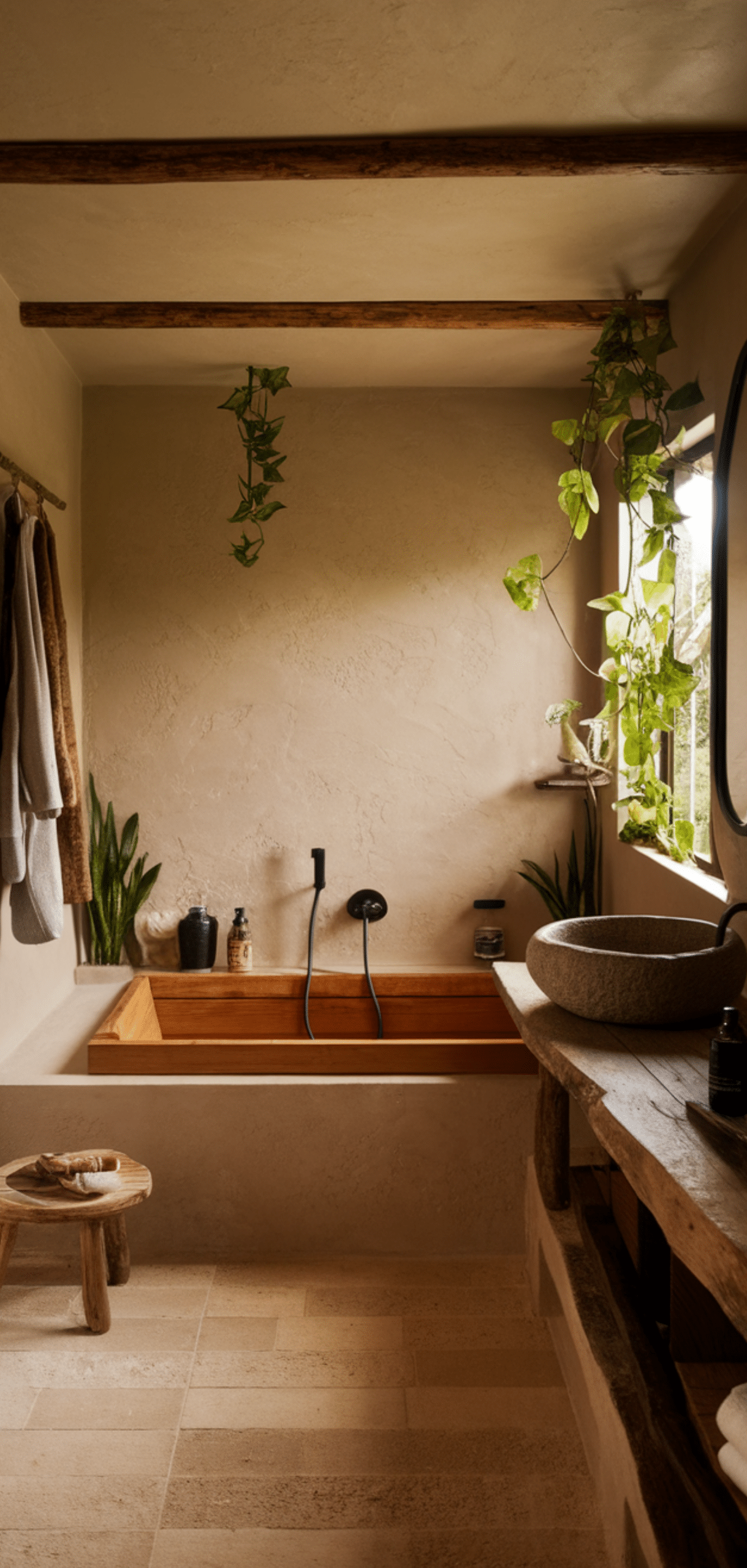
Stick to muted tones such as beige, taupe, soft gray, and warm browns. These shades mirror nature and create a grounding atmosphere.
wabi sabi bathroom Tip: Avoid harsh contrasts to maintain a calm flow.
13. Minimalist Layouts
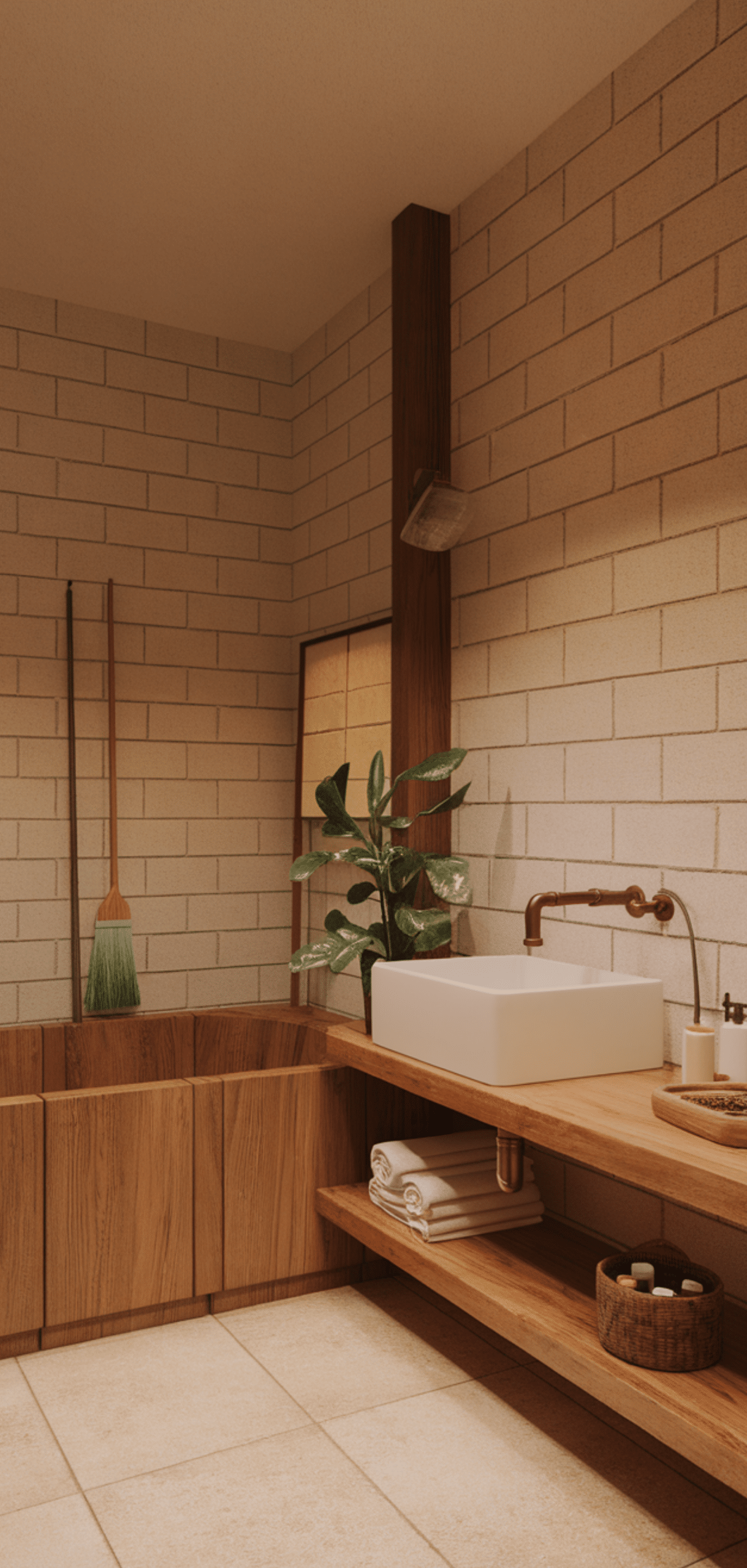
Less is more in wabi-sabi design. Keep your bathroom layout uncluttered, with open floor space, clean lines, and essential fixtures only.
Wabi Sabi Bathroom Tip: Minimalism enhances both function and serenity.
12. Rough Stone Basins
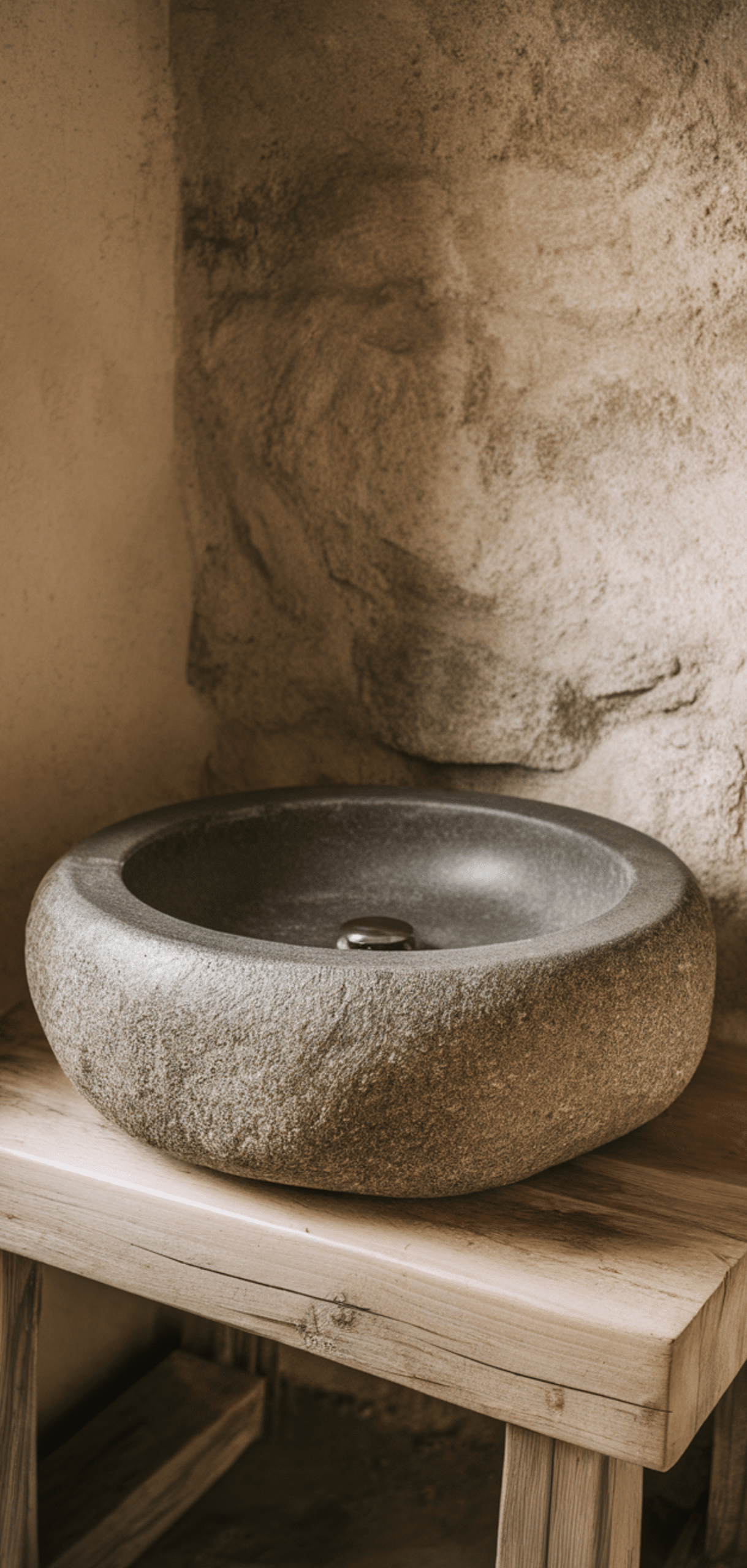
A hand-carved stone sink or basin reflects natural craftsmanship. The irregular edges and textures create a focal point that embodies wabi-sabi values of imperfection.
11. Weathered Wooden Accents
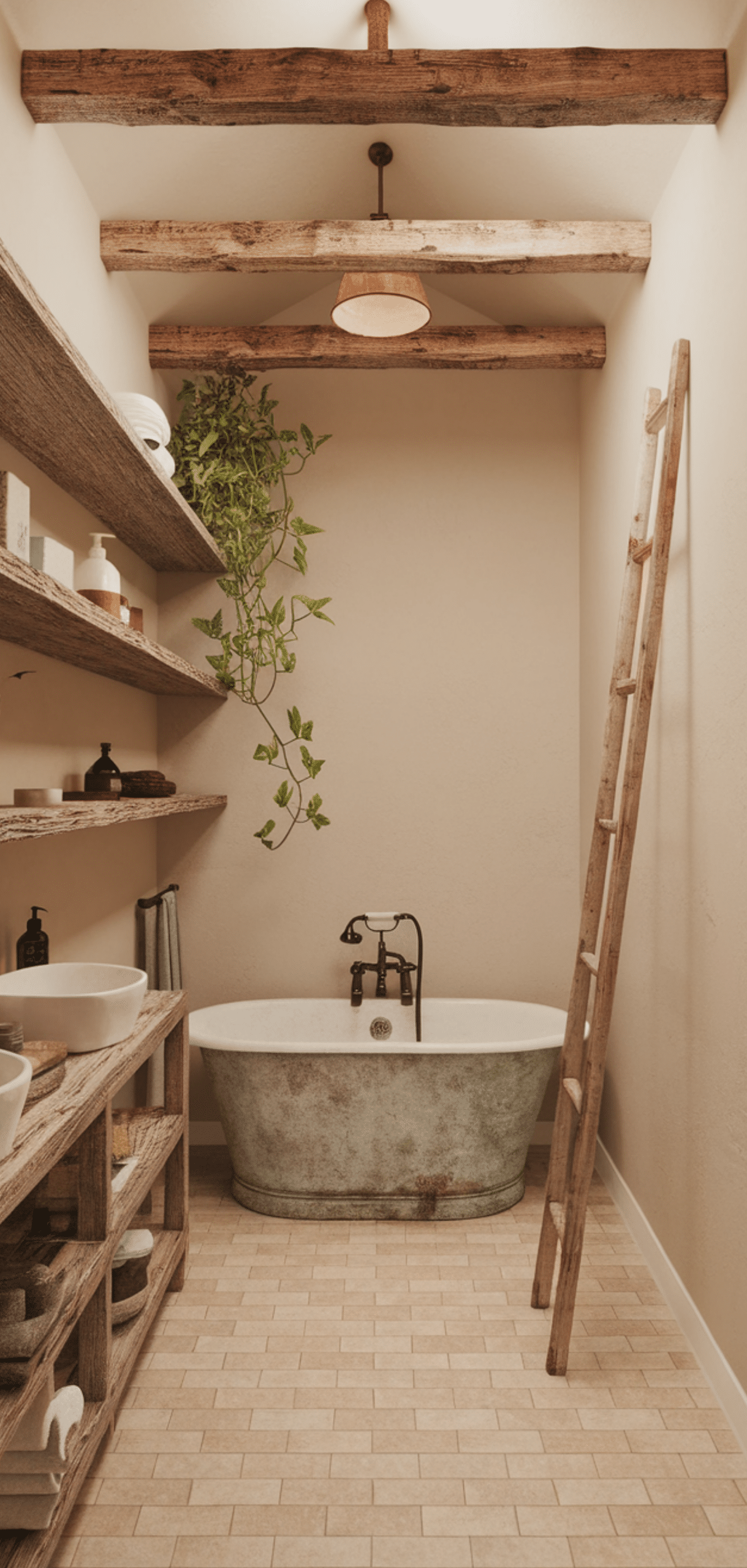
Introduce reclaimed wood for vanities, shelving, or stools. Cracks, knots, and uneven finishes highlight authenticity and tell a story of natural aging.
10. Organic-Shaped Mirrors
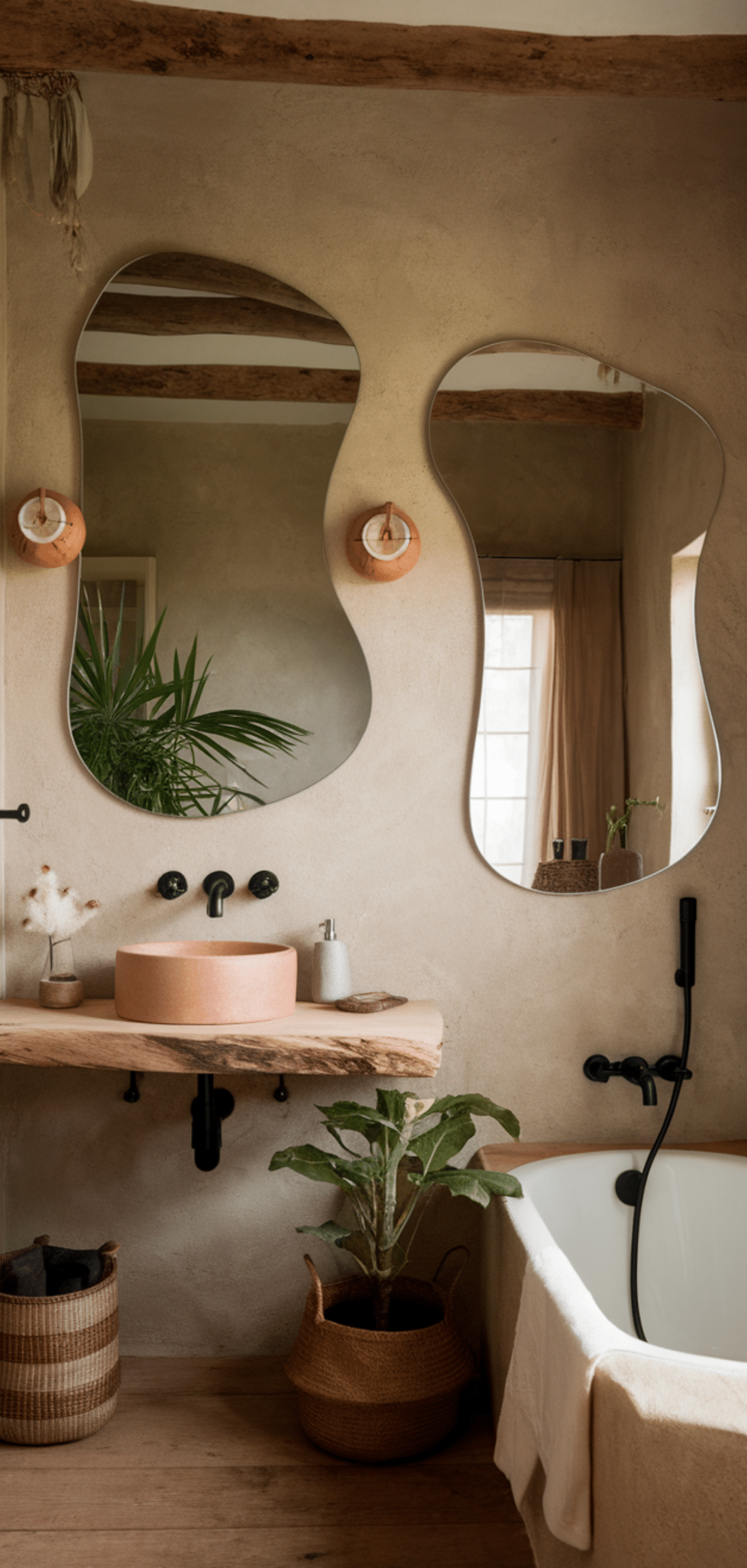
Avoid overly polished or symmetrical mirrors.
Wabi Sabi Bathroom Tip: Opt for asymmetrical, irregularly shaped mirrors that add visual softness and echo natural forms.
9. Concrete Surfaces
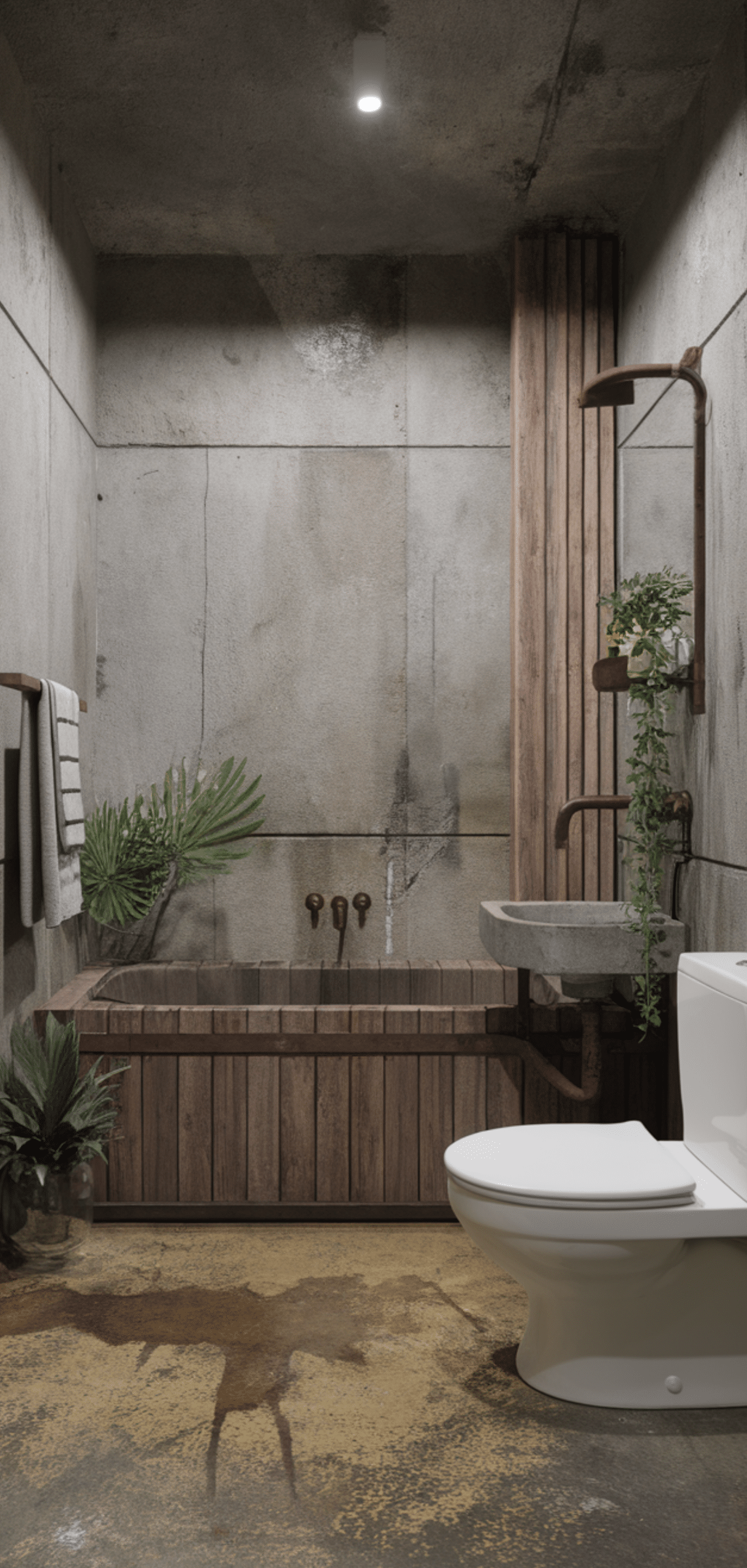
Matte concrete walls, bathtubs, or countertops provide a raw, industrial yet organic texture.
Wabi Sabi Bathroom Tip: Their neutral tone blends seamlessly with earthy palettes.
8. Handmade Ceramic Accessories
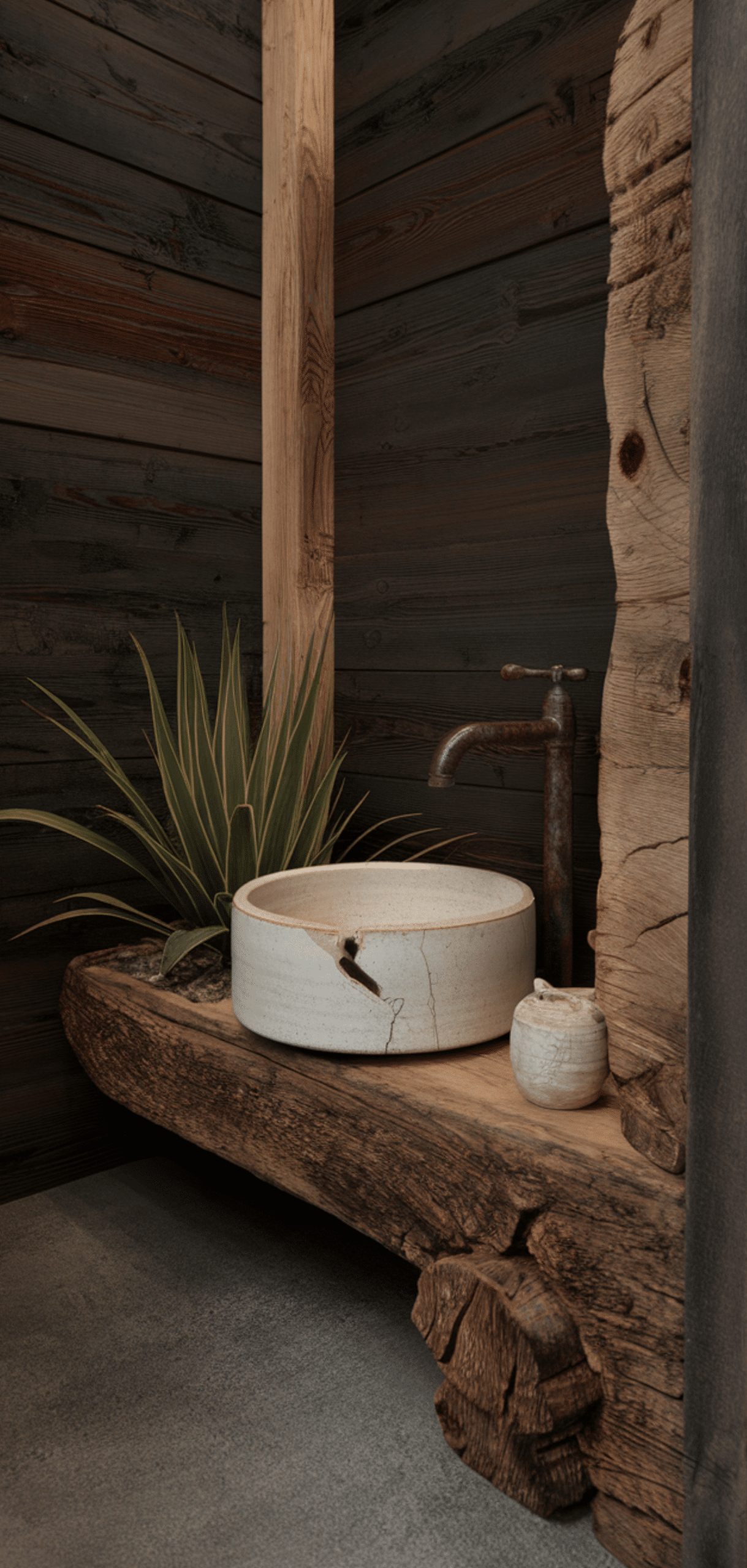
Hand-thrown pottery for soap dishes, toothbrush holders, or vases adds character.
Wabi Sabi Bathroom Tip: Each piece is unique, reinforcing the philosophy of embracing imperfections.
7. Soft, Ambient Lighting
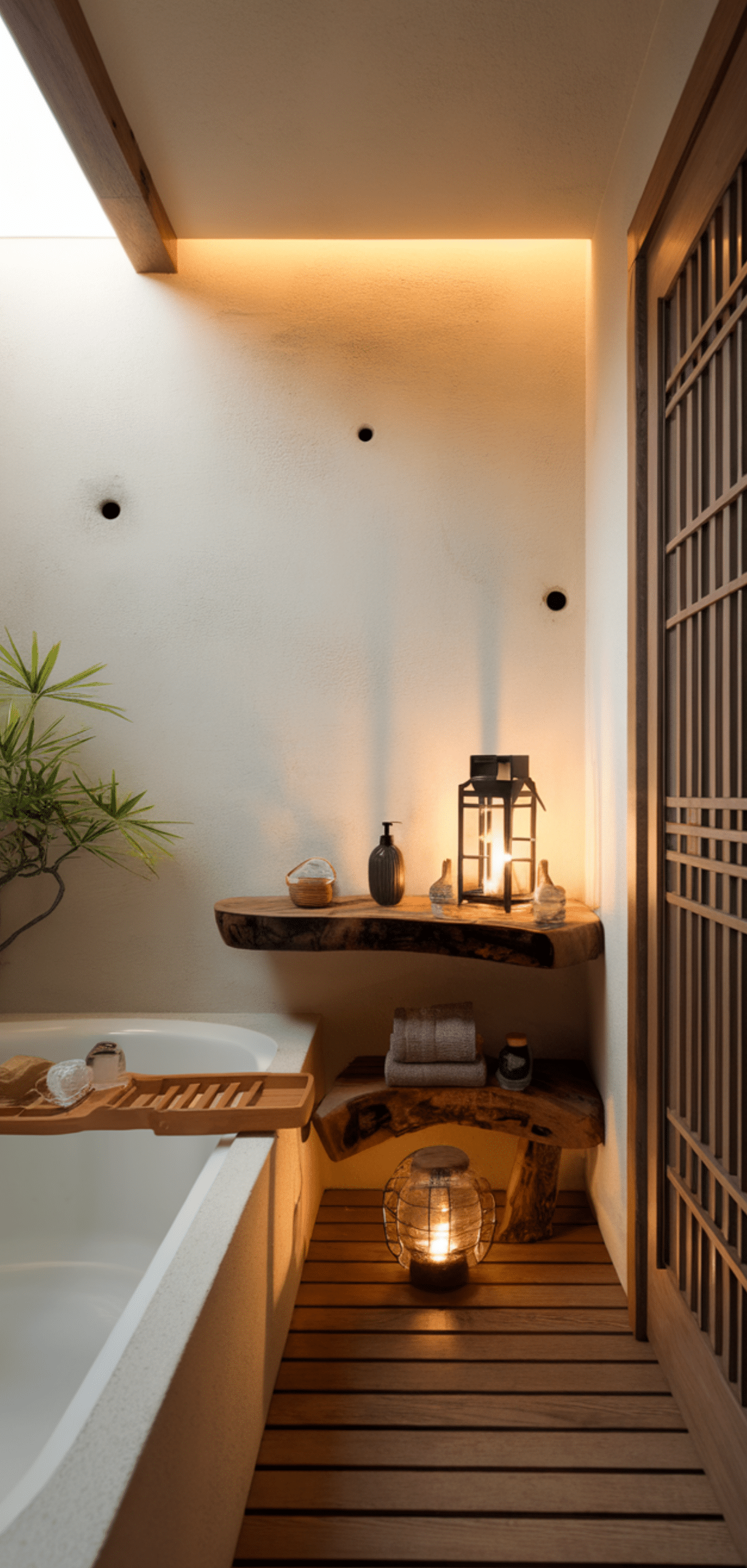
Warm, diffused lighting creates a calming atmosphere. Paper lanterns, rattan pendants, or dimmable wall sconces in earthy finishes complement the wabi-sabi mood.
6. Natural Textiles
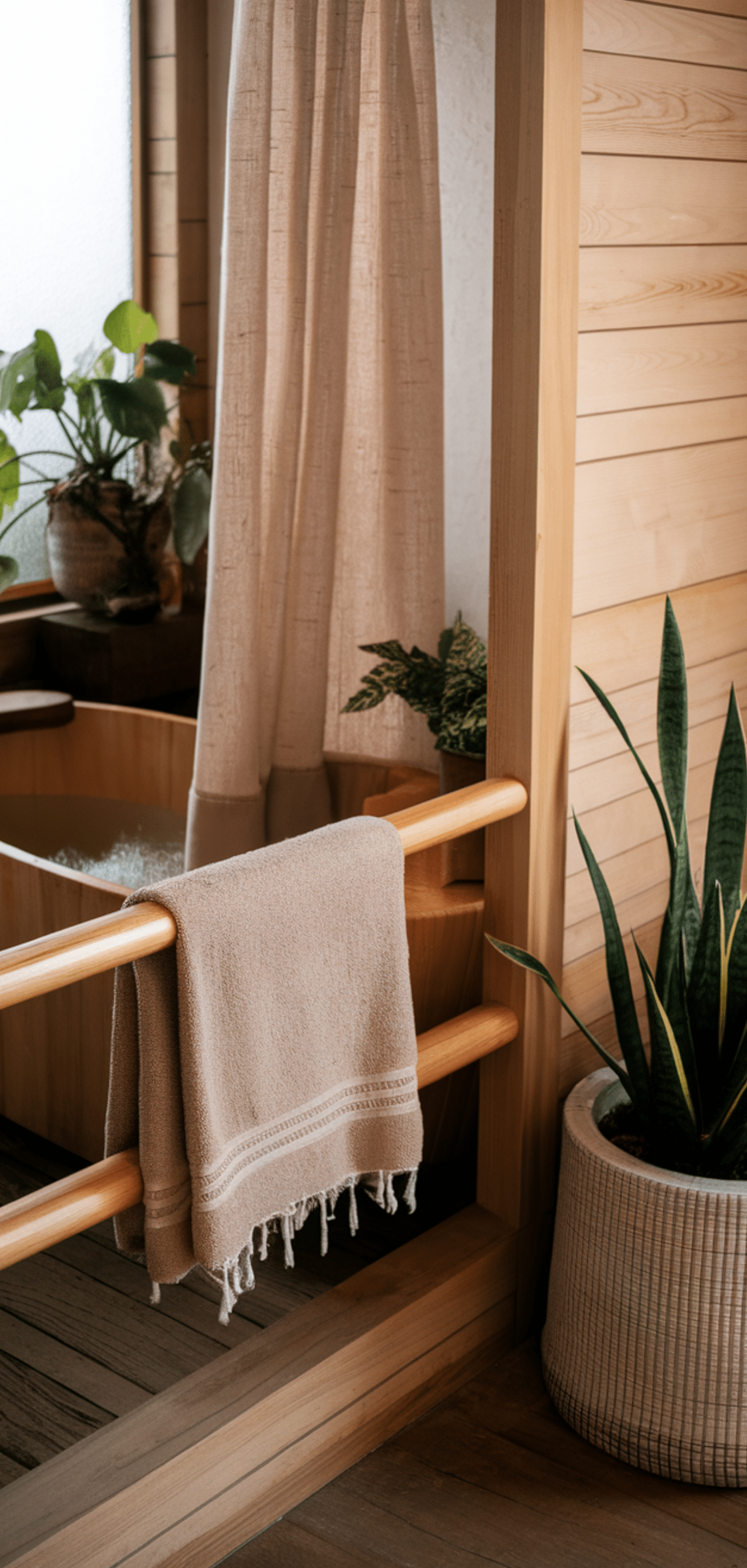
Incorporate linen shower curtains, cotton towels, and woven floor mats. These add tactile warmth while staying true to a natural, unrefined aesthetic.
5. Indoor Plants for Balance
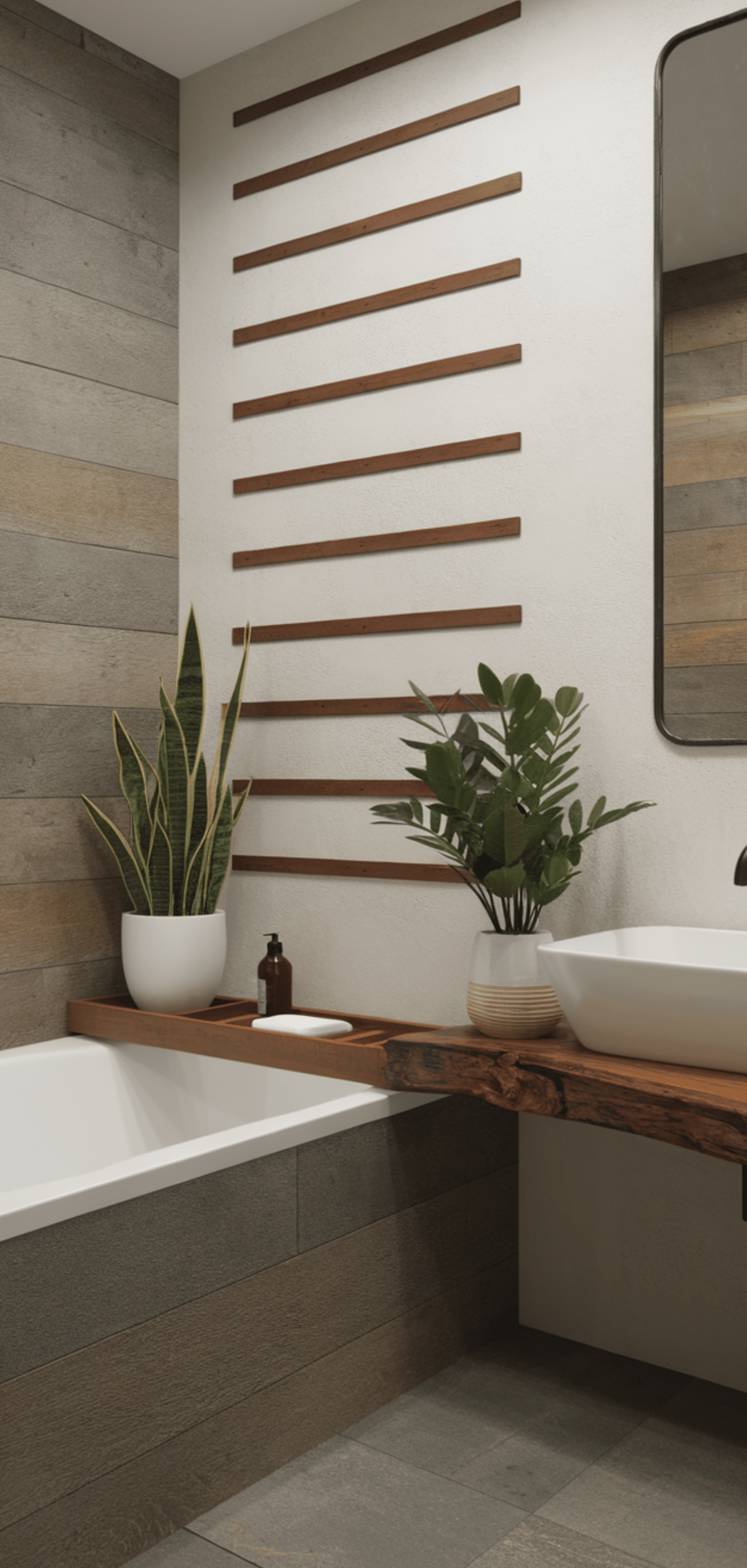
Greenery softens the raw textures of stone and concrete. Add potted bamboo, hanging ferns, or snake plants to bring life and balance into the bathroom.
4. Freestanding Wooden or Stone Bathtubs
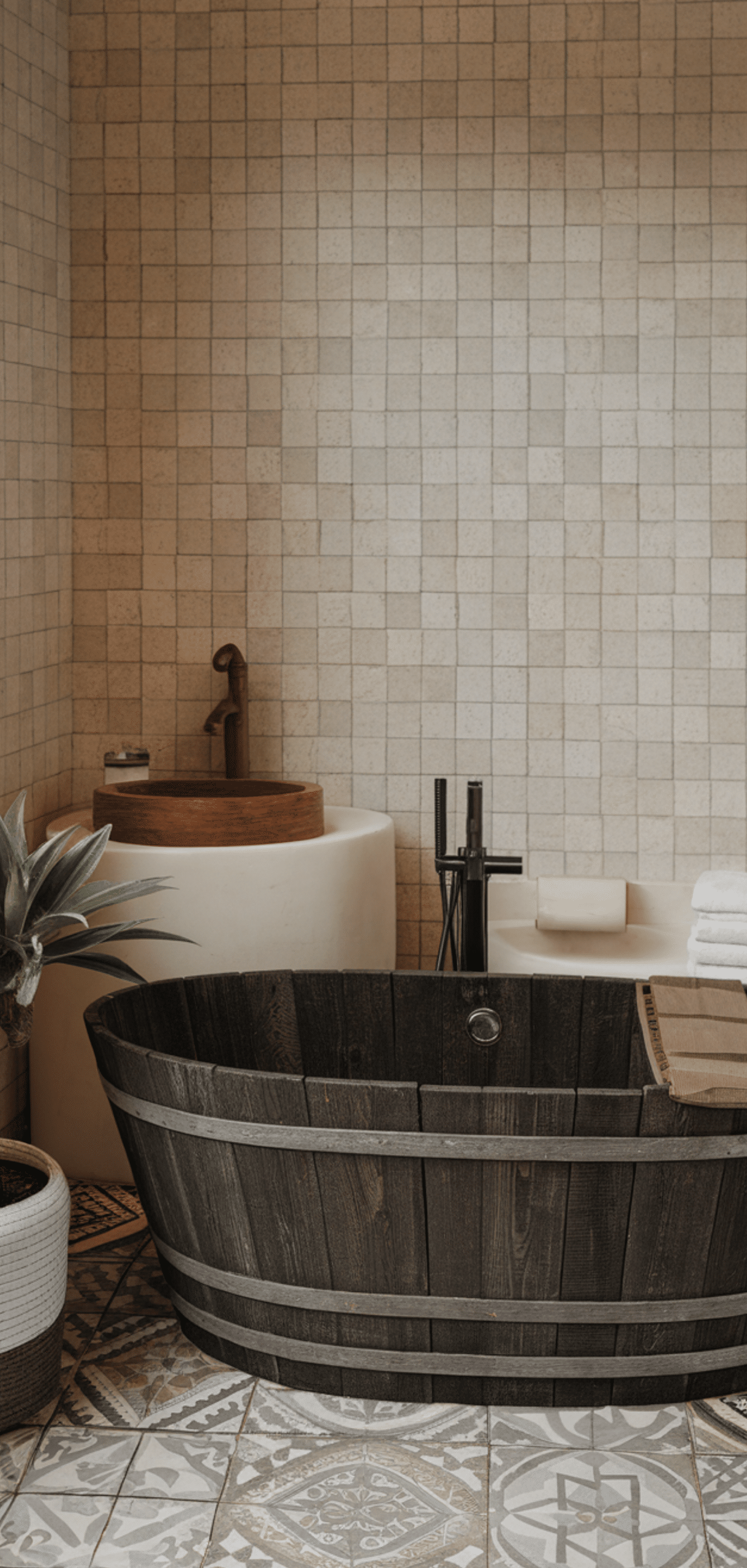
A freestanding tub carved from wood or stone becomes the centerpiece of a wabi-sabi bathroom.
Wabi Sabi Bathroom Tip: Their organic presence transforms bathing into a ritual of stillness.
3. Imperfect Wall Finishes
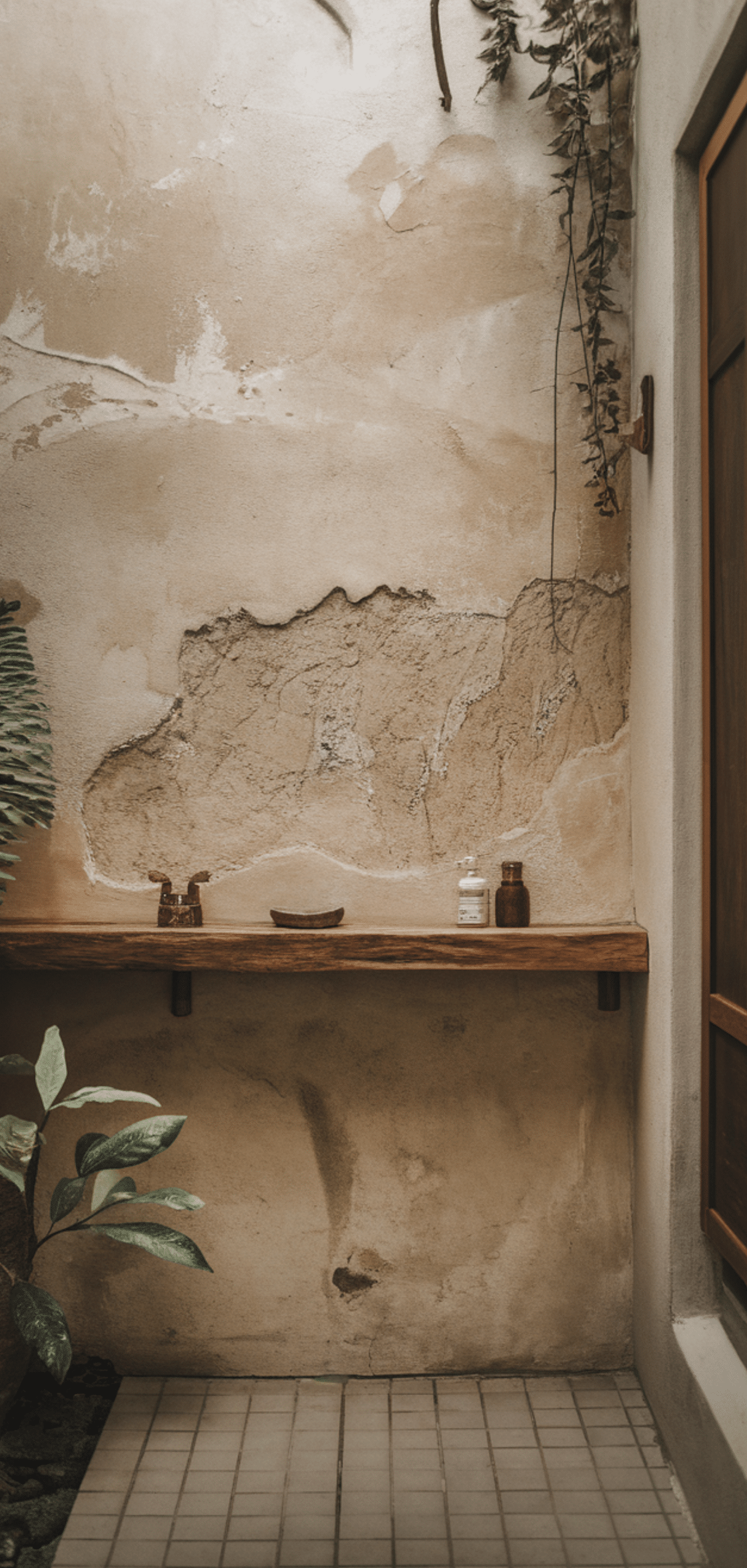
Textured plaster, limewash, or exposed brick walls provide subtle variations that enhance authenticity.
Wabi Sabi Bathroom Tip: These surfaces reflect the passage of time and natural wear.
2. Low, Grounded Furniture
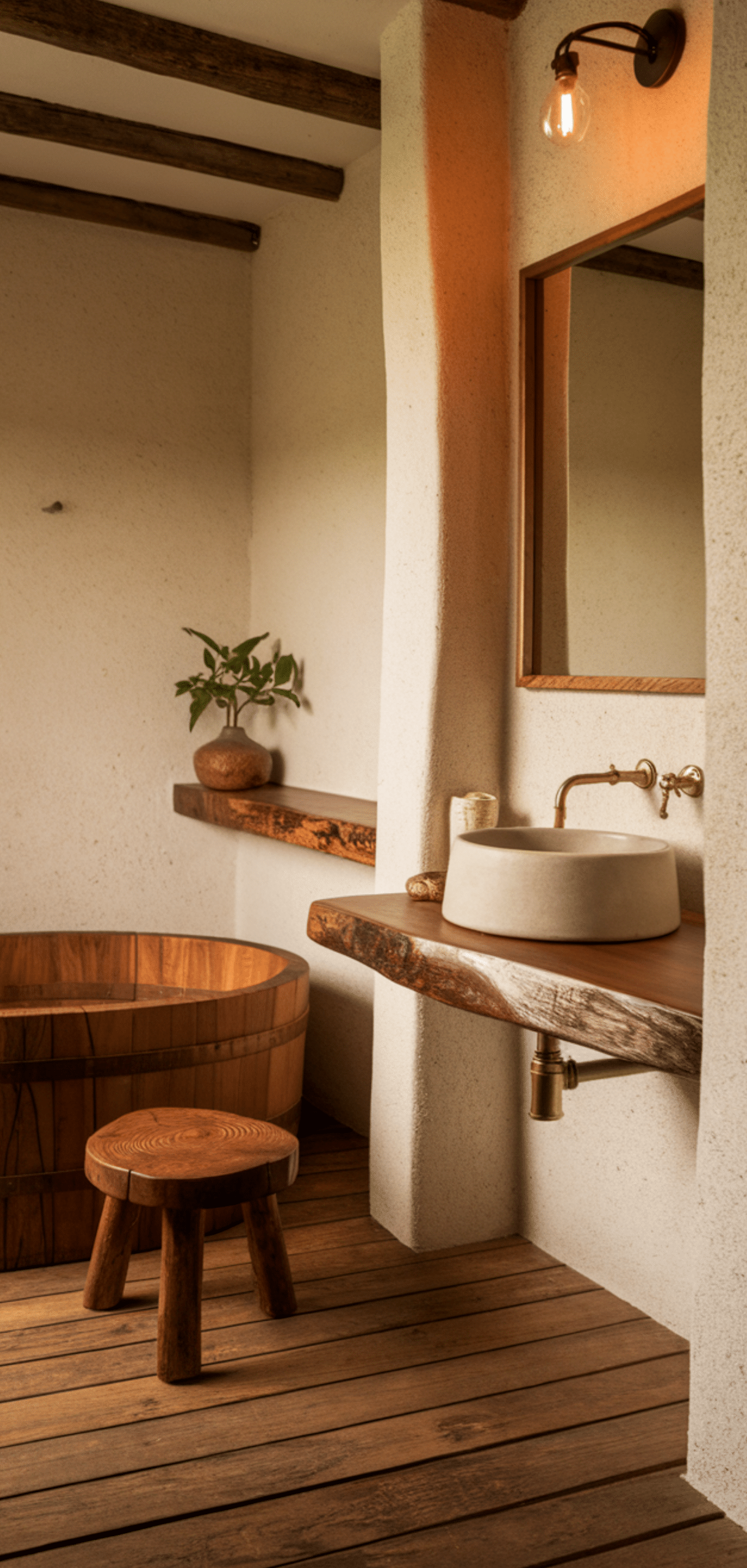
Stools, benches, or low shelves made from reclaimed wood add grounding elements. Their low profile connects the space to earth and maintains simplicity.
1. Open Shelving with Curated Essentials
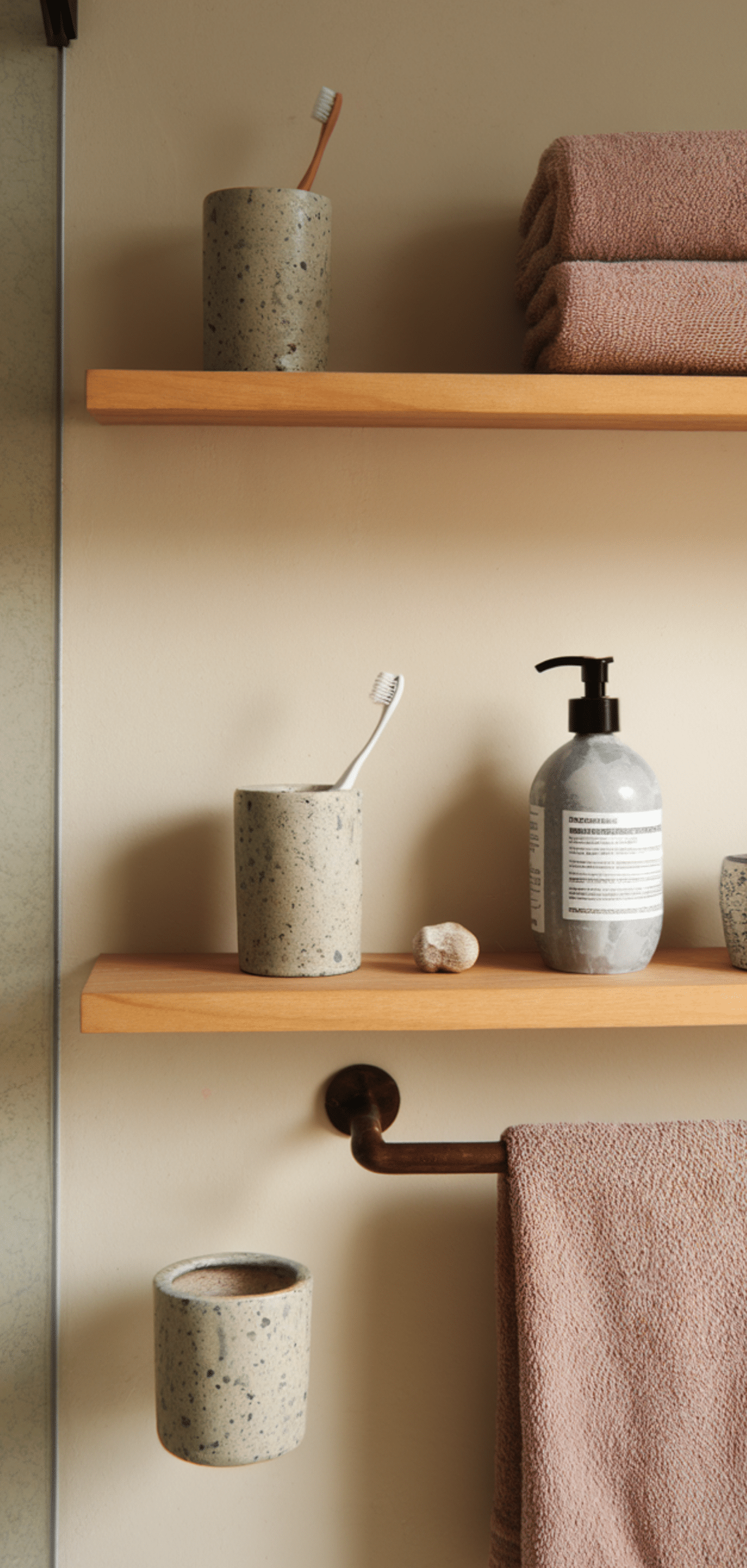
Instead of closed cabinets, use open shelving with carefully curated essentials. Display folded towels, ceramic jars, and natural baskets for a lived-in, authentic look.
Conclusion
A wabi-sabi bathroom design isn’t about chasing perfection—it’s about creating a quiet, authentic space that embraces nature, imperfection, and simplicity. By combining raw textures, earthy tones, and minimal layouts, we can design a bathroom that becomes a daily retreat for mindfulness and renewal.
Enjoyed this post?
Share the love with another mom!
Every share helps this little blog grow — thank you so much