
Make sure to join my list for Weekly Tips and Recipes to Your Inbox
16 Perfect Open Concept Kitchen Living Room Ideas

A little note: Some images in this post may come from third-party sources and are shared purely to inspire you. All credit goes to their original creators. Visit our Image Credits Policy for more information.
When we first removed the wall between our kitchen and living room, our very own Open Concept Kitchen experiment, I didn’t know if it would be a blessing or a headache. I had read so much about the trend and even mentioned it in an article I wrote about Bedroom Trends for 2026, but seeing it in real life is different.
The kitchen and living room suddenly became one huge space instead of two smaller, separate rooms. Natural light poured in from multiple angles, the counters seemed to stretch endlessly, and it felt visually amazing. For the first time, I could cook while keeping an eye on everything else happening in the house without being isolated.
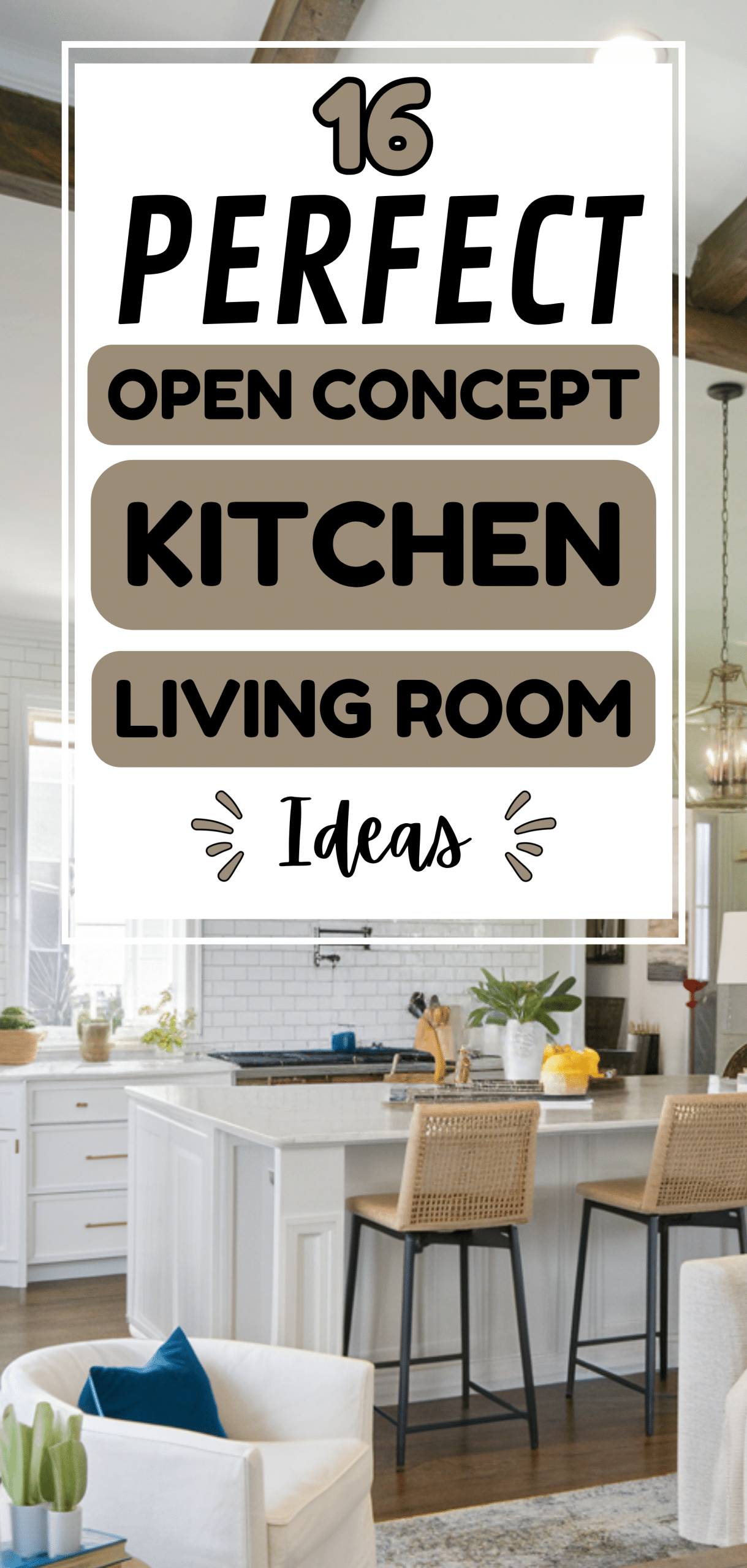
At first, the pros were undeniable. The island added vast counter space and storage, the flow between cooking, dining, and lounging felt effortless, and the room looked a thousand times larger. But then reality set in. Noise, smells, and clutter became more obvious.
If I were cooking, the blender, dishwasher, or just normal cooking noise would carry into the living room. Any mess on the counters or dishes in the sink became part of the open view, and maintaining a visually coordinated space across the two areas proved tricky. For someone like me, who likes clean, orderly spaces, the openness could feel distracting at times.
The solution came through a thoughtful compromise. We kept the large doorways on each end to maintain that open-concept kitchen feel, but added partial separation where needed. An appliance garage helped hide countertop clutter without closing off.
Strategic layouts ensured the flow felt natural, and even though it’s open, certain zones, like a “TV room” or bedroom, still provide private spaces when needed. With the right design, an open concept doesn’t mean sacrificing peace. It’s about creating a flexible environment where cooking kids can coexist.
What We're Exploring
- 01 16. Layered Lighting for Ambiance and Function
- 02 15. Use Rugs to Define Zones
- 03 14. Consistent Flooring for Flow
- 04 13. Kitchen Island as a Functional Divider
- 05 12. Open Shelving for Visual Lightness
- 06 11. Integrated Storage Solutions
- 07 10. Cohesive Color Palette
- 08 9. Statement Lighting Fixtures
- 09 8. Smart Furniture Arrangement
- 10 7. Strategic Use of Mirrors
- 11 6. Accent Walls to Create Depth
- 12 5. Multi-Functional Furniture
- 13 4. Greenery and Natural Elements
- 14 3. Visual Anchors Through Art and Decor
- 15 2. Flooring Transitions for Subtle Separation
- 16 1. Personalized Touches
- 17 Conclusion
16. Layered Lighting for Ambiance and Function
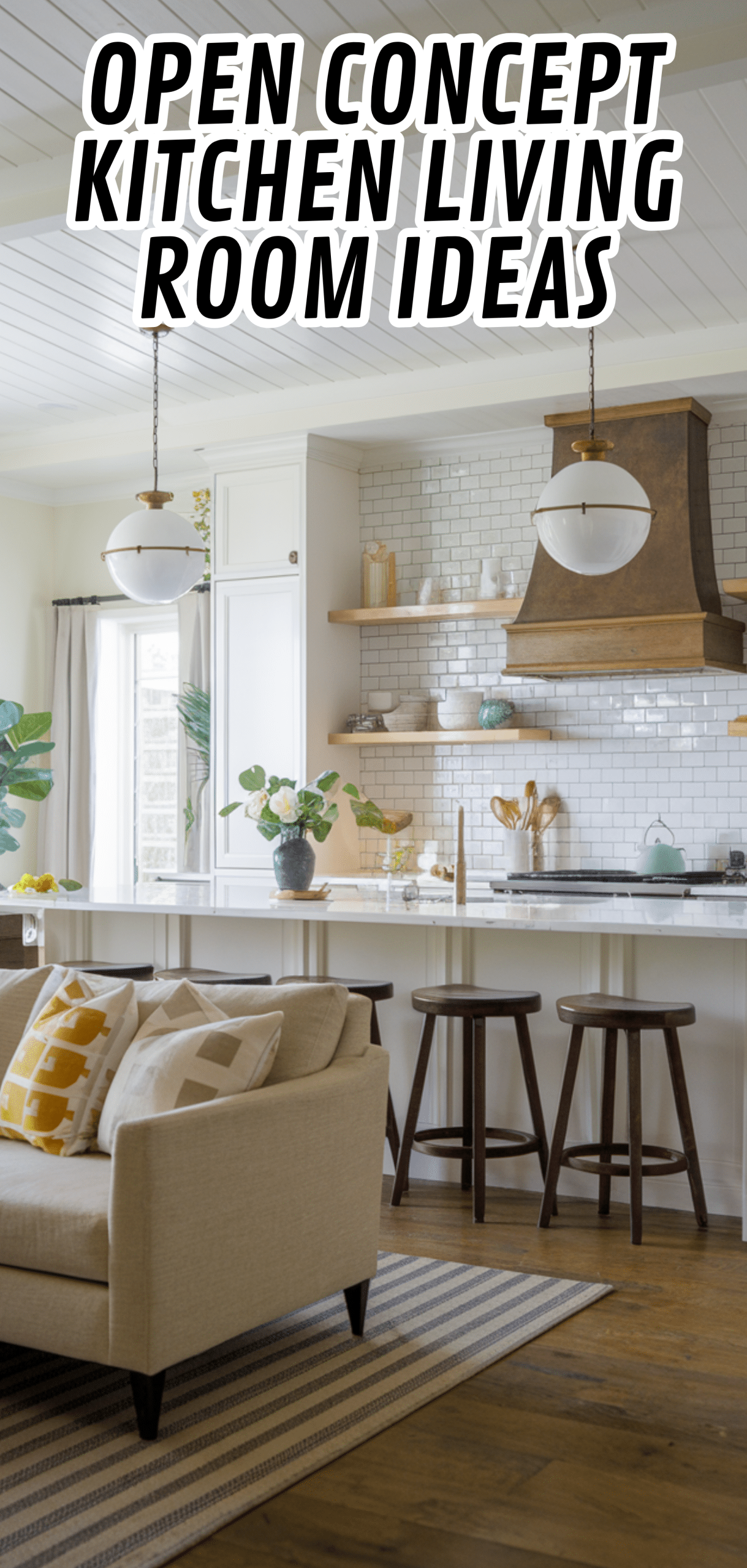
Layered lighting transforms an open space, creating zones for cooking, dining, and lounging. We personally installed recessed ceiling lights for general illumination, pendant lights above the kitchen island for task lighting, and a combination of floor and table lamps in the living area to soften the mood. This mix ensures that no corner feels over- or under-lit while providing visual interest and depth.
15. Use Rugs to Define Zones
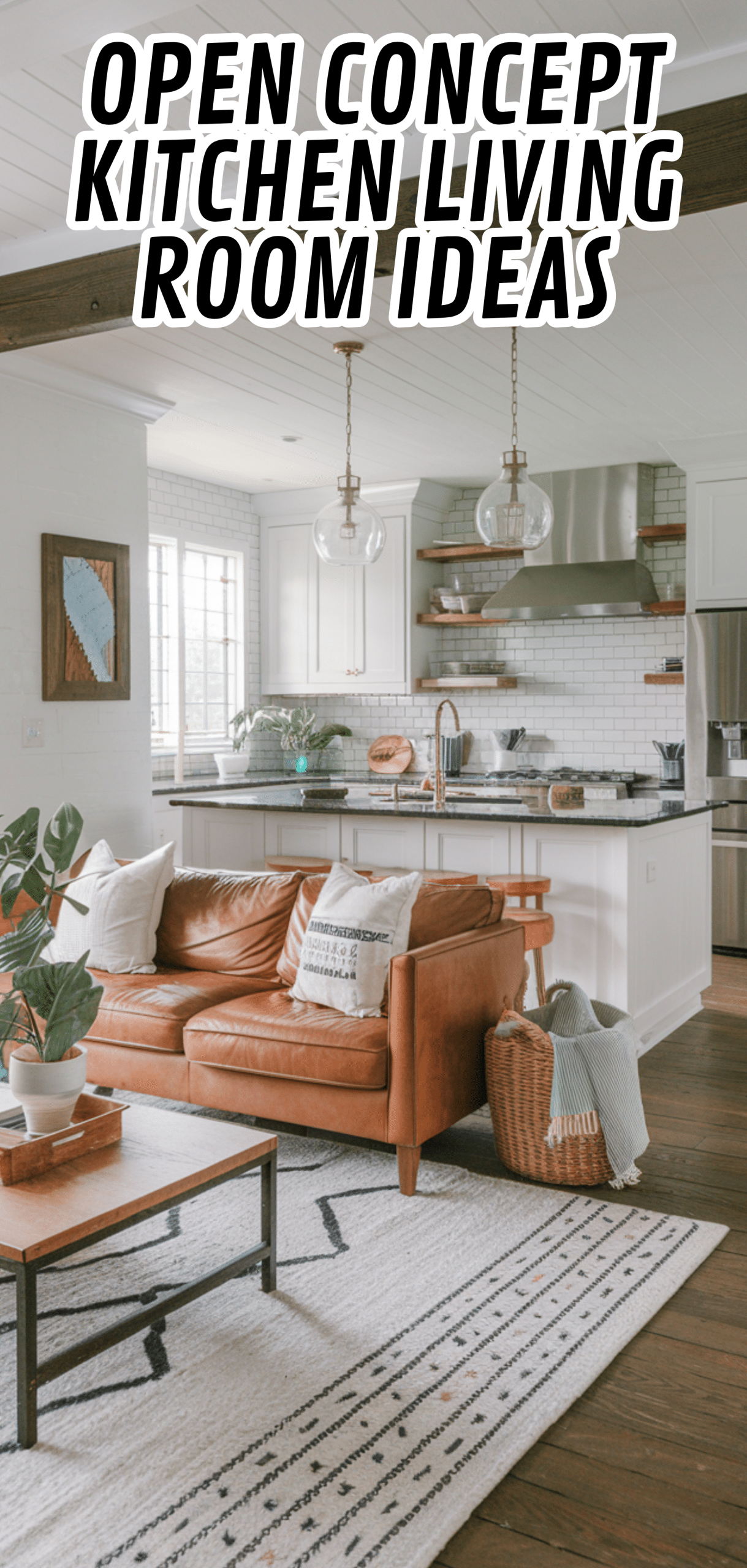
We found that rugs are one of the most effective ways to define areas within an open floor plan. A large area rug under the seating arrangement helps anchor the living space, while a smaller, durable rug in front of the kitchen sink or island delineates cooking areas.
Open Concept Kitchen Tips: Choosing complementary colors and textures ties the zones together seamlessly.
14. Consistent Flooring for Flow
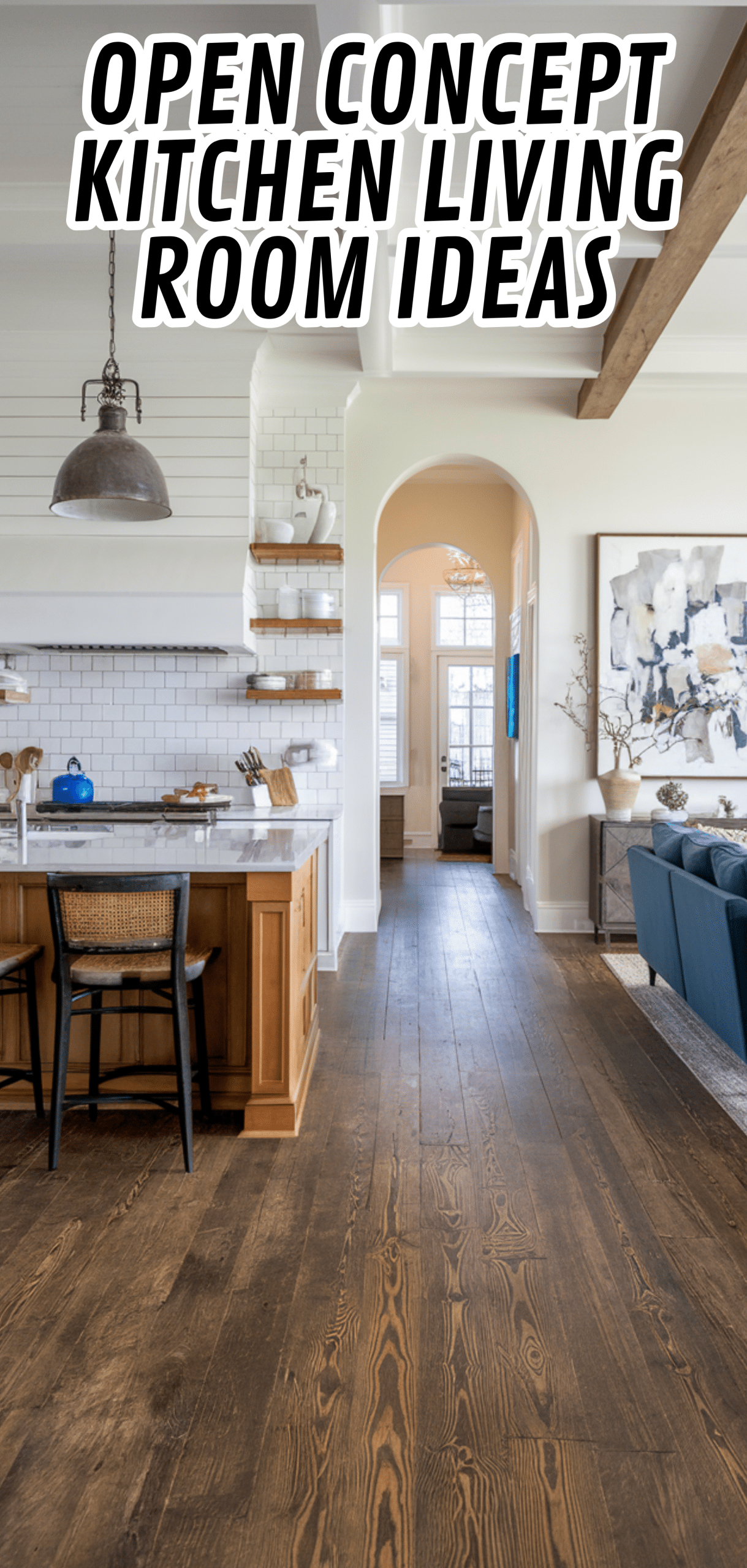
Consistent flooring is crucial in open spaces. We replaced patchwork hardwood and tile with a warm, medium-toned oak throughout both the kitchen and living areas.
Open Concept Kitchen Tips: This not only visually unifies the space but also creates an effortless flow that guides movement naturally from one zone to the next.
13. Kitchen Island as a Functional Divider
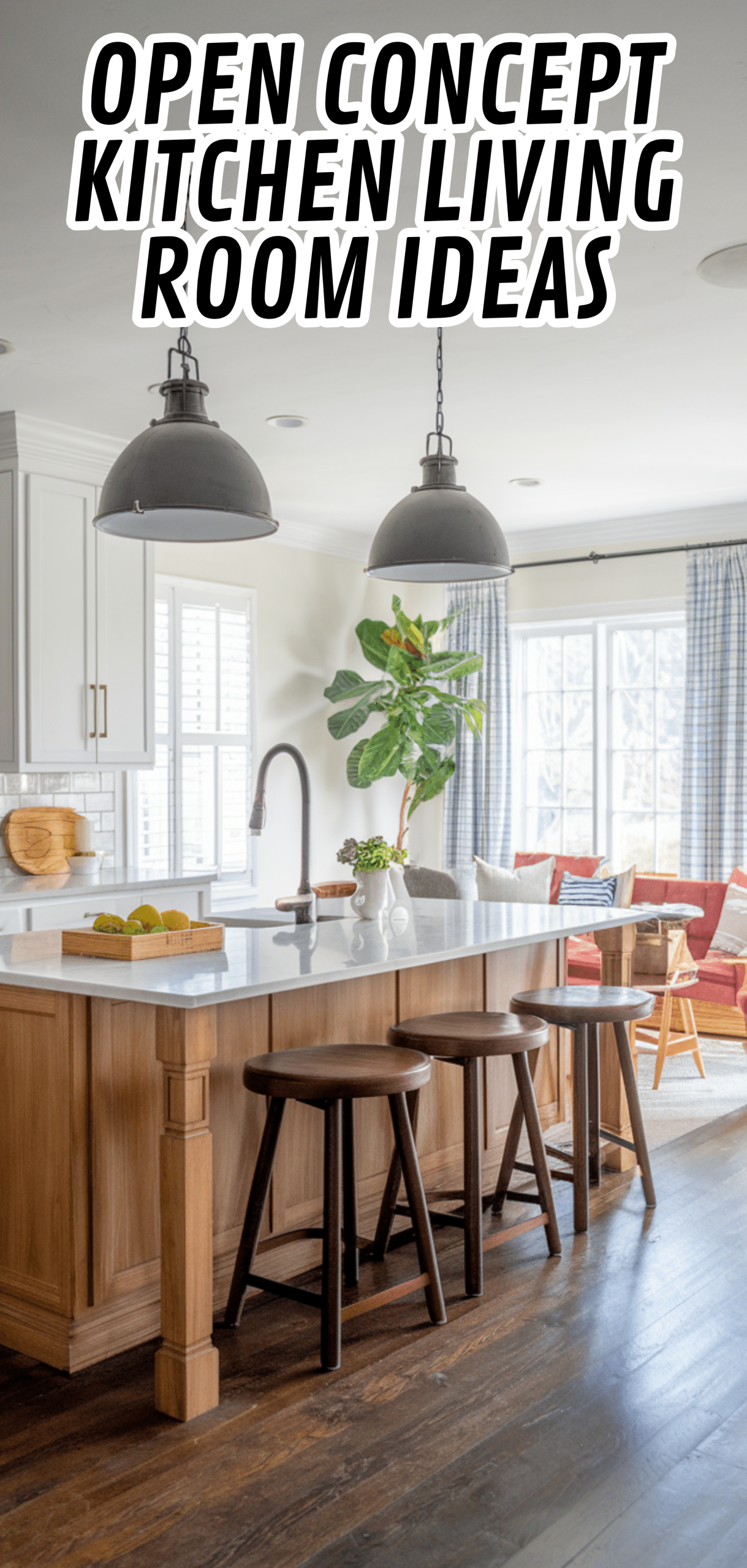
A well-designed kitchen island acts as both a workspace and a subtle room divider. In our home, a multi-level island separates the cooking area from the living room while providing extra seating for casual meals.
Open Concept Kitchen Tips: Incorporating cabinetry on the side facing the living area ensures it remains visually cohesive with the rest of the kitchen.
12. Open Shelving for Visual Lightness
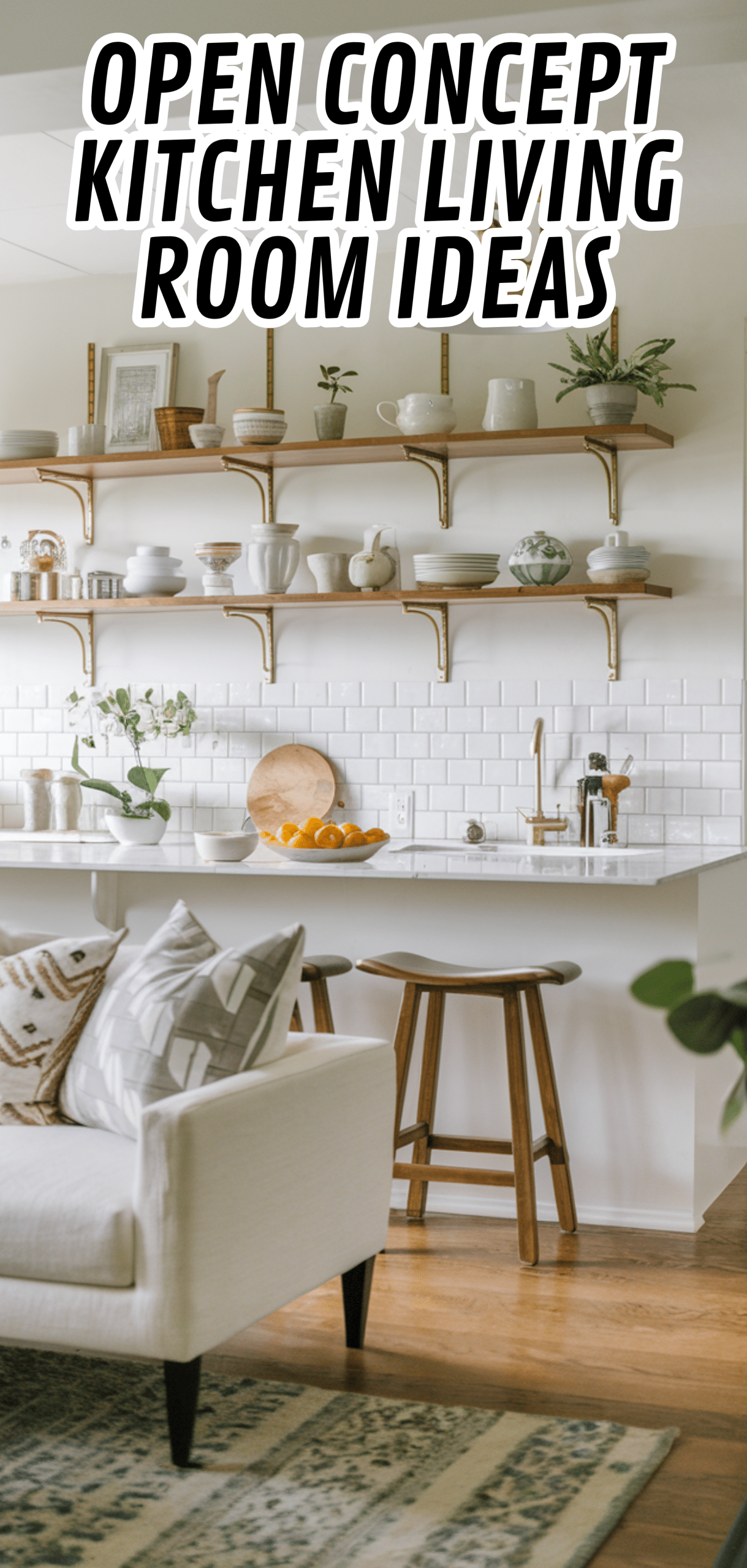
We replaced some upper cabinets with open shelving to reduce visual weight in the kitchen. Displaying select dishware and decorative objects creates a sense of openness while allowing easy access to everyday essentials.
Open Concept Kitchen Tips: Adding plants and small art pieces softens the kitchen’s lines.
11. Integrated Storage Solutions
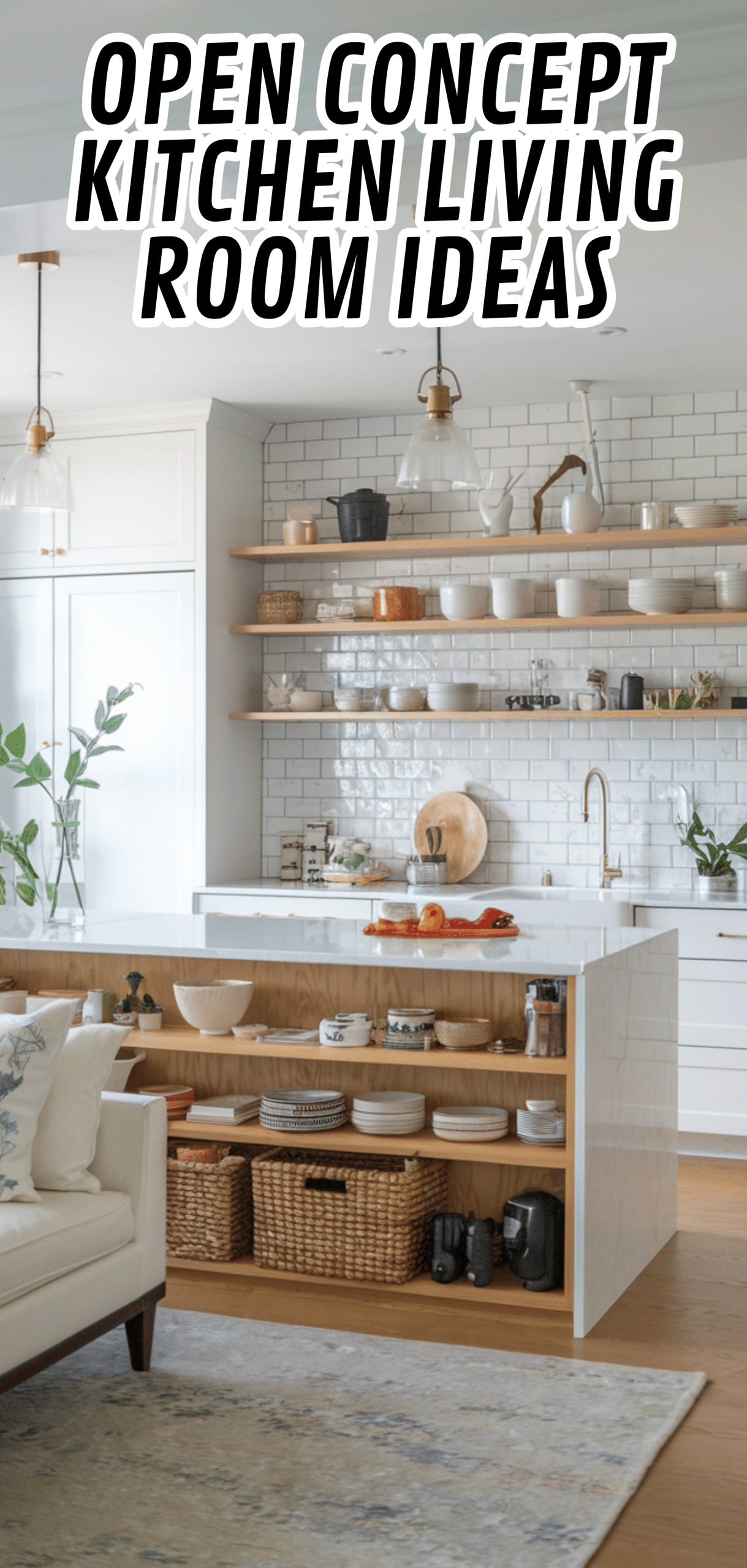
Storage is always a challenge in open layouts. We installed built-in cabinetry along the living room wall that matches the kitchen’s color palette.
Open Concept Kitchen Tips: This maintains aesthetic harmony and prevents clutter from spilling into the shared space. Hidden storage in the kitchen island further maximizes utility without sacrificing style.
10. Cohesive Color Palette
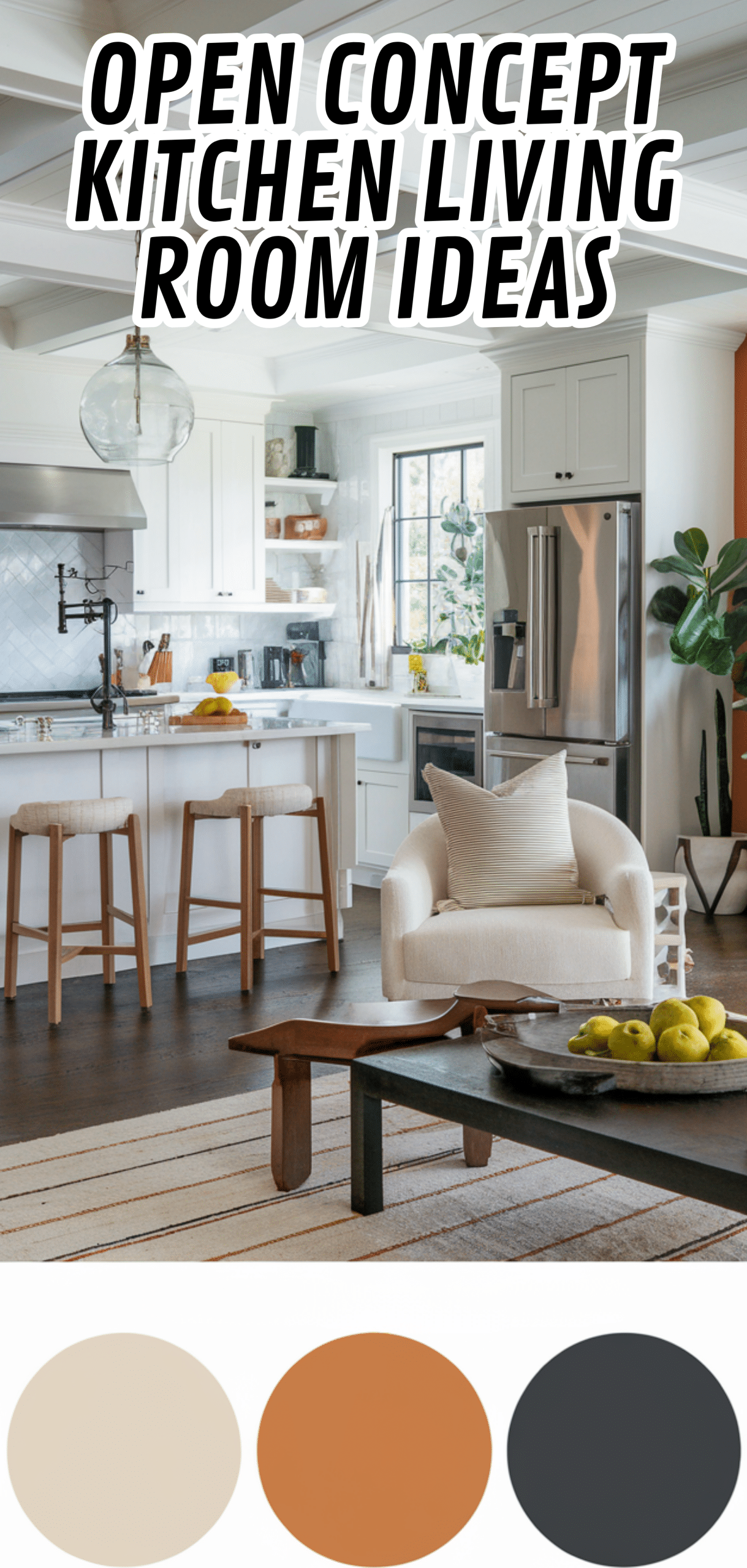
A unified color scheme ties open spaces together. We selected soft neutrals for walls, paired with muted blues and greys in the living area, while keeping kitchen cabinets and countertops in complementary shades.
Open Concept Kitchen Tips: This approach ensures the two spaces feel connected without being monotonous.
9. Statement Lighting Fixtures
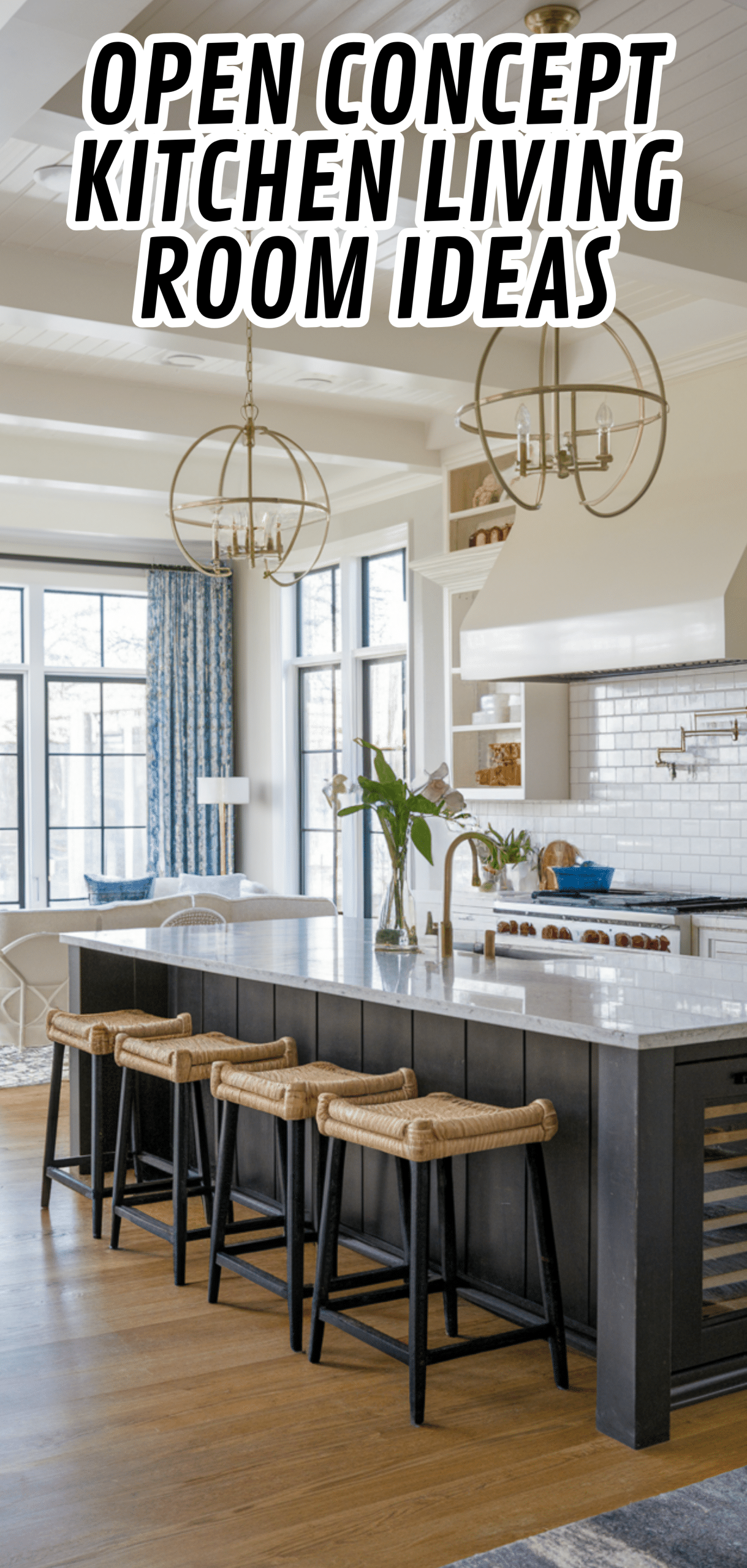
Pendant lights or chandeliers can serve as focal points. Over our dining table, we installed a sculptural fixture that draws the eye upward and creates a sense of vertical interest in an otherwise horizontal open layout.
8. Smart Furniture Arrangement
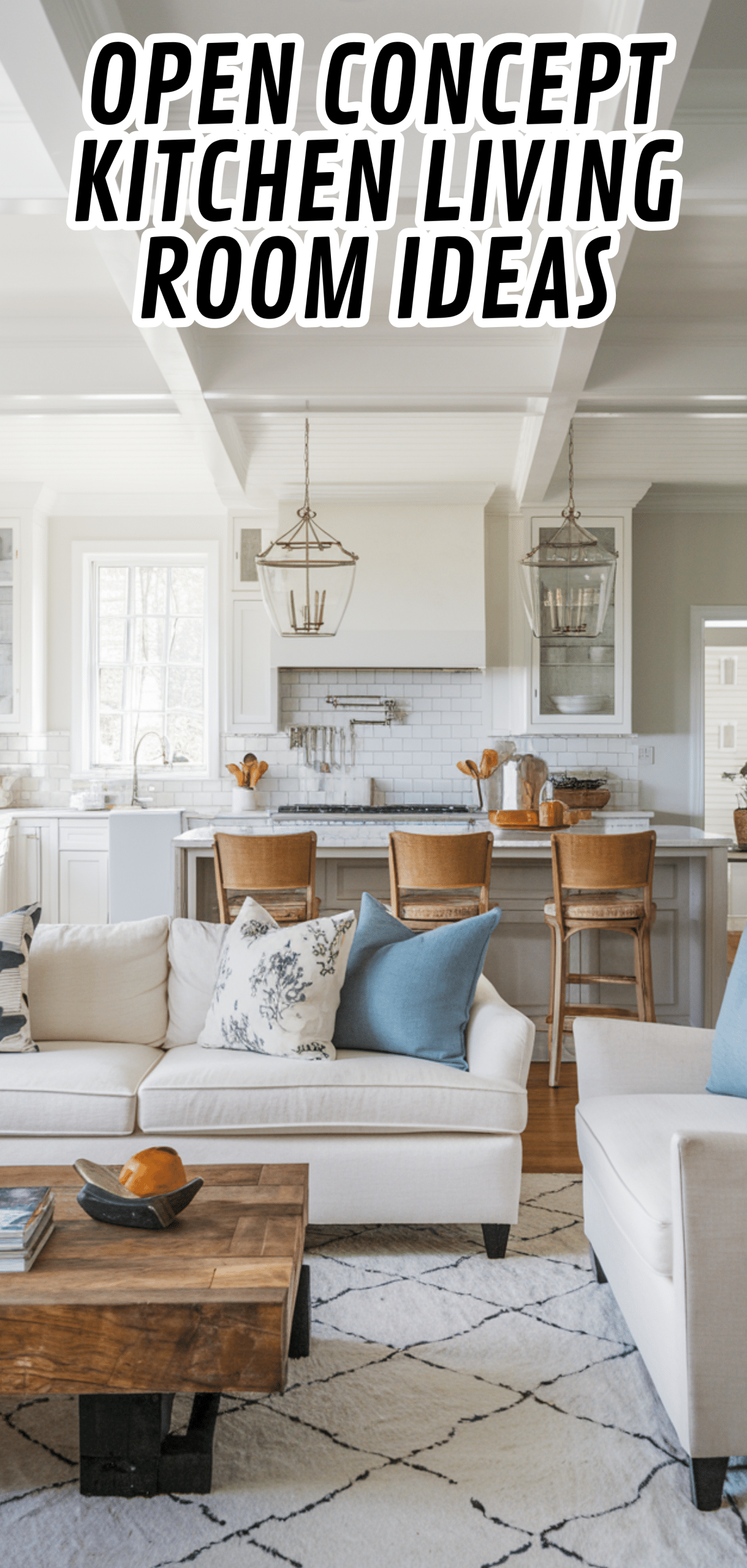
We positioned the sofa to face the kitchen slightly, encouraging interaction while still defining the living zone.
Open Concept Kitchen Tips: Our coffee table and side chairs were scaled to the space, allowing traffic flow without obstruction.
7. Strategic Use of Mirrors
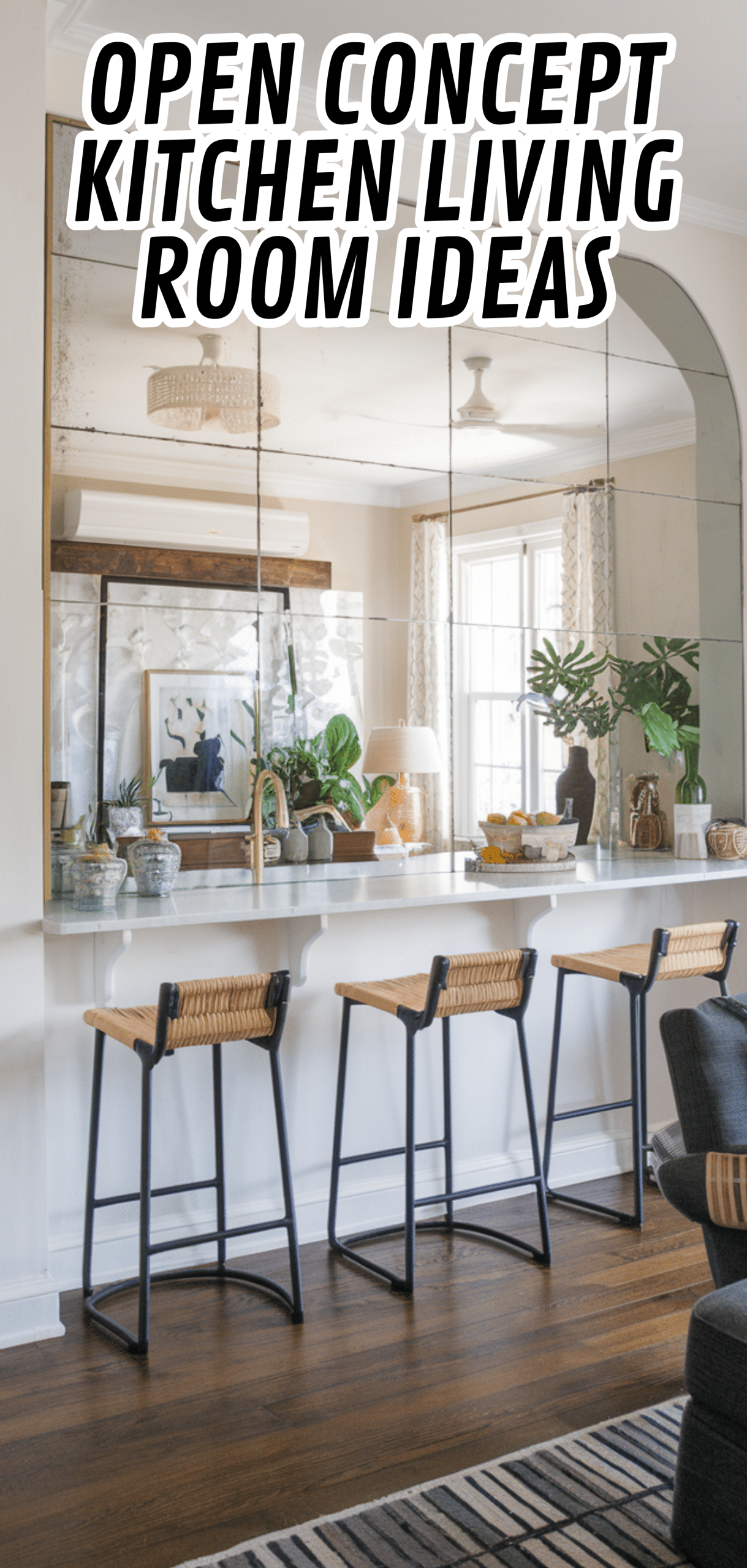
We added a large mirror above the console table in the living area.
Open Concept Kitchen Tips: This reflects natural light from the kitchen, enhancing brightness and creating a sense of expanded space.
6. Accent Walls to Create Depth
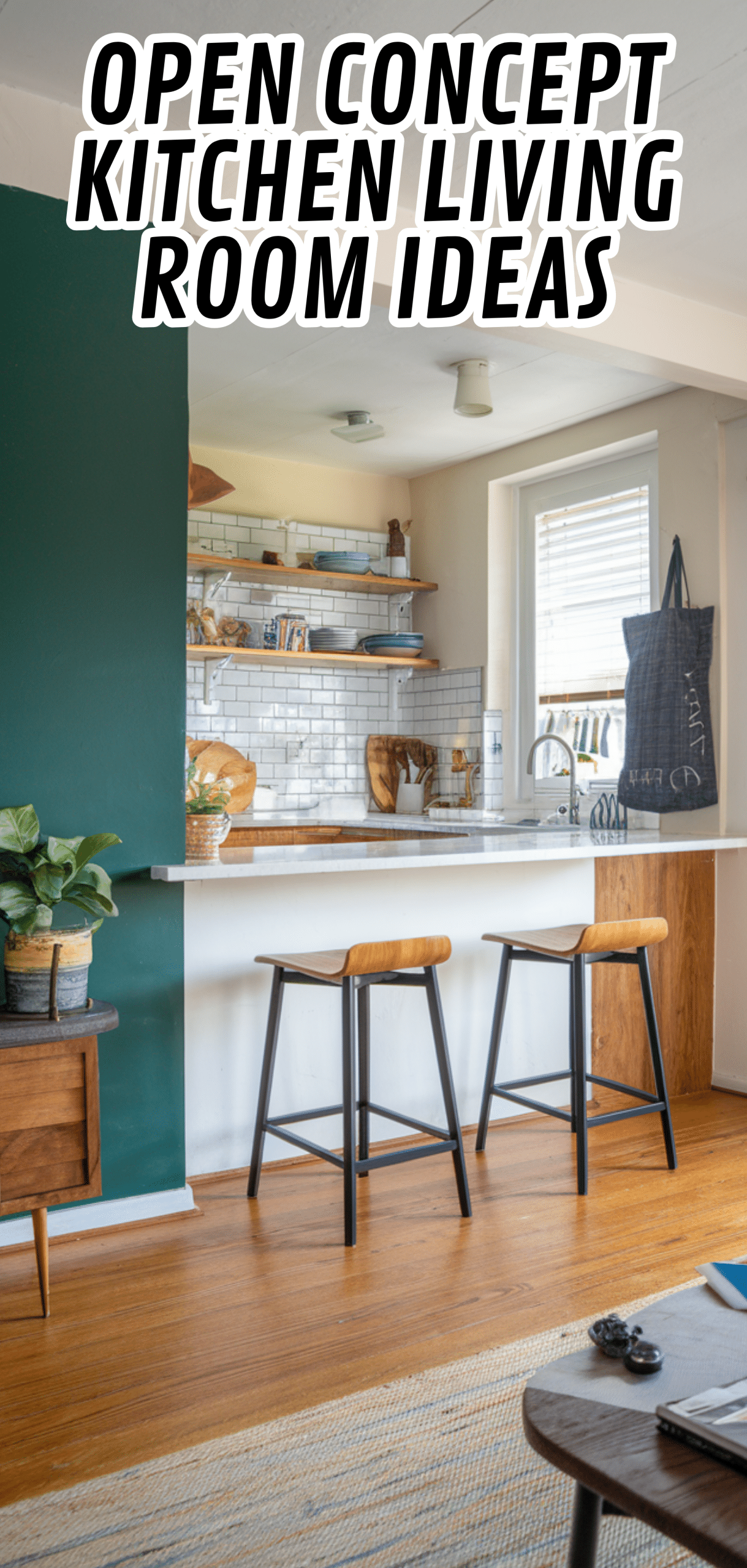
An accent wall behind the TV or along the living room’s main seating area adds depth and interest.
Open Concept Kitchen Tips: In our design, we used textured wood paneling to create warmth that balances the sleek kitchen finishes.
5. Multi-Functional Furniture
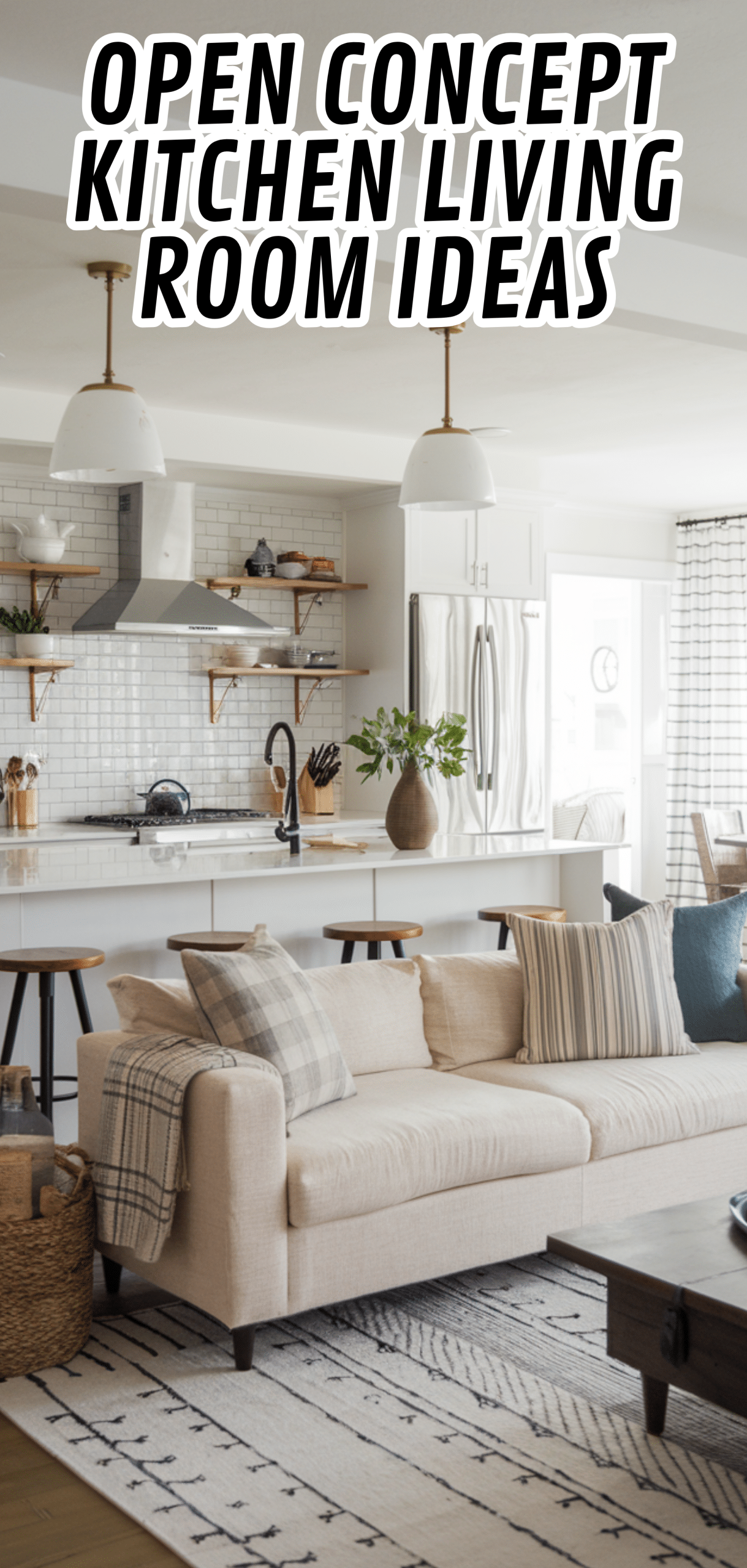
Furniture that serves more than one purpose is essential in open layouts.
Open Concept Kitchen Tips: Our ottomans double as storage, and the console behind the sofa acts as a display surface and a room divider, keeping the flow open yet functional.
4. Greenery and Natural Elements
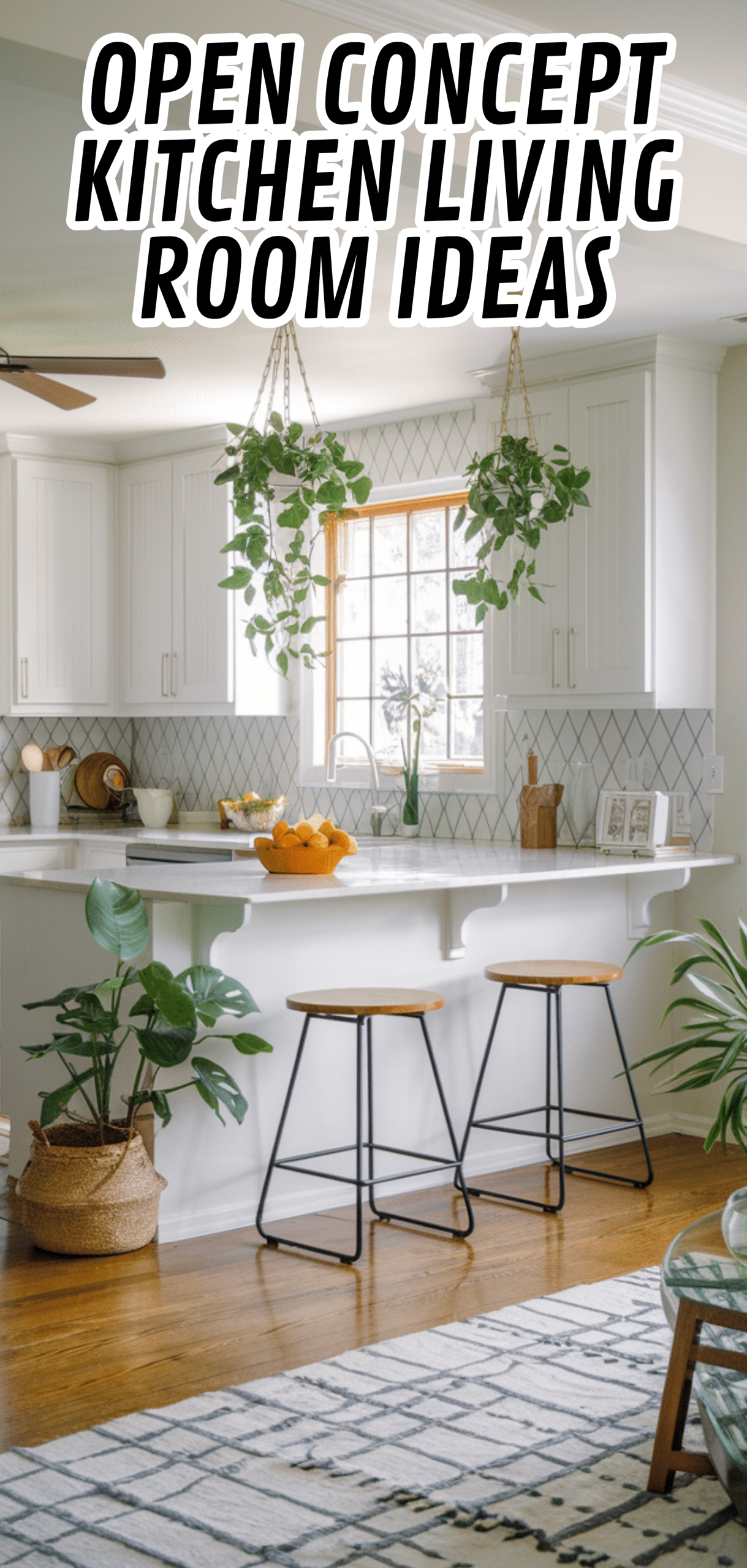
Plants bring life into open spaces. We incorporated potted trees and hanging planters in corners, softening the transition between the kitchen and living areas and enhancing air quality.
3. Visual Anchors Through Art and Decor
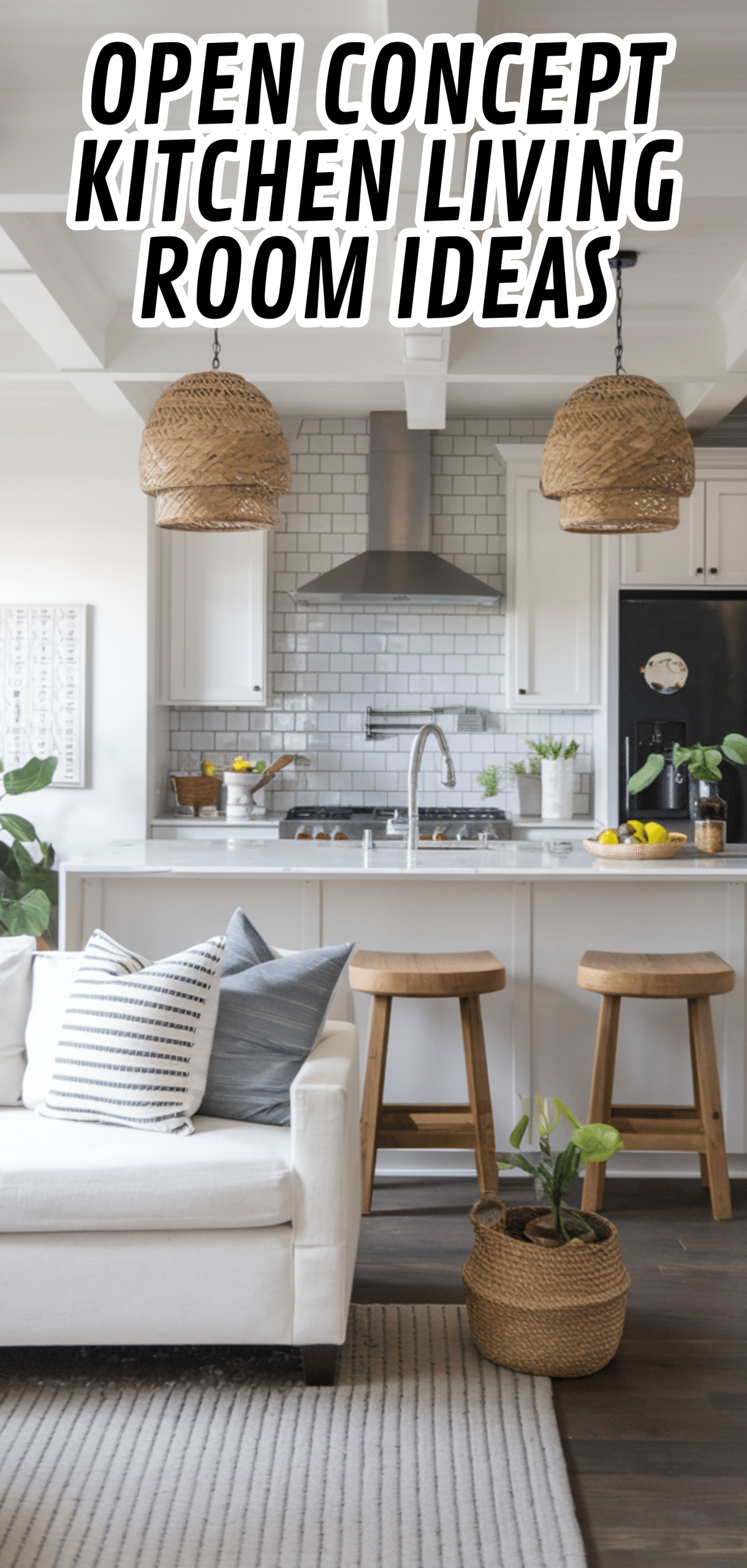
Art pieces and decorative objects provide visual anchors. We strategically placed artwork that aligns with the color palette and scale of the room, giving both spaces cohesion while adding personality.
2. Flooring Transitions for Subtle Separation
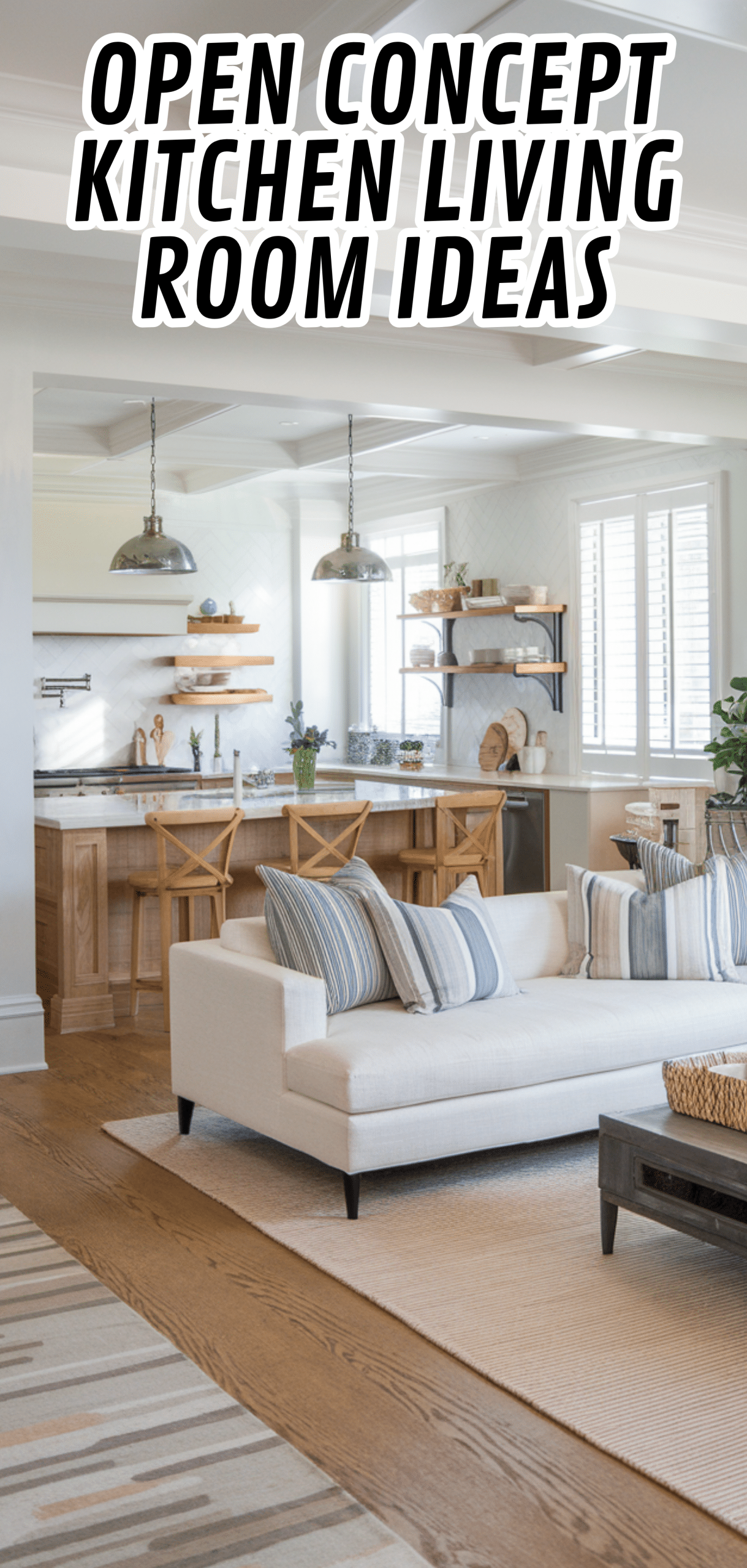
If maintaining the same flooring throughout isn’t feasible, subtle transitions like a border tile or change in plank direction can differentiate zones while keeping an overall cohesive look.
1. Personalized Touches
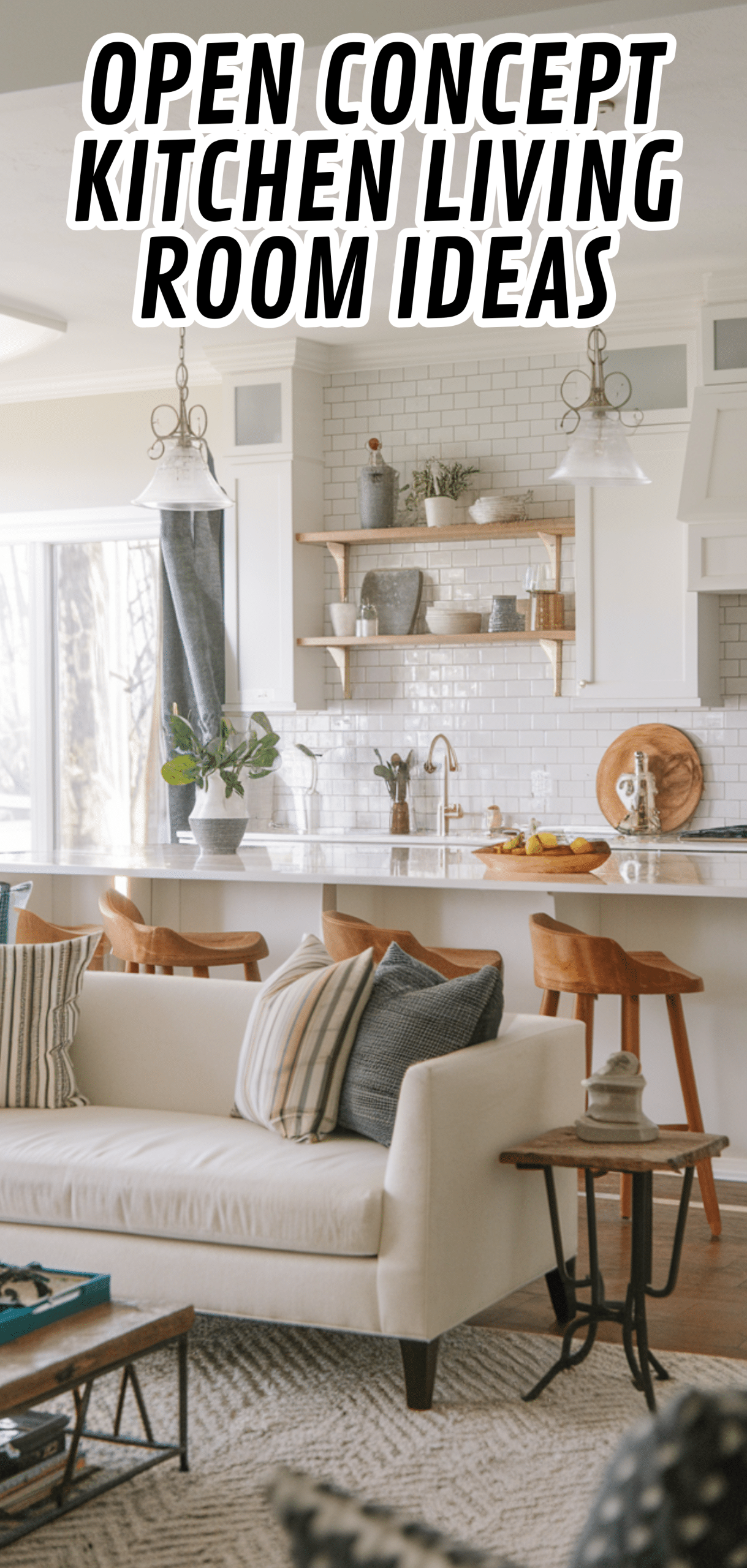
Finally, open concept spaces thrive when they reflect personal style. We added family photos, heirloom decor, and unique lighting fixtures to ensure the space feels lived-in and inviting, not like a showroom.
Conclusion
An open concept kitchen and living room can be both stylish and practical when designed thoughtfully. By defining zones, unifying colors, layering lighting, and incorporating personalized elements, the space feels cohesive and inviting. These 16 strategies ensure a seamless flow while allowing each area to shine independently.
Enjoyed this post?
Share the love with another mom!
Every share helps this little blog grow — thank you so much