
Make sure to join my list for Weekly Tips and Recipes to Your Inbox
Back Screened-In Porch Ideas That Make Bug Season Feel Livable

A little note: Some images in this post may come from third-party sources and are shared purely to inspire you. All credit goes to their original creators. Visit our Image Credits Policy for more information.
I stood at the edge of my patio last June, swatting mosquitoes away from my kids’ bare legs, wishing we had built a back screened-in porch the year we moved in instead of putting it off again. Dinner outside always ended the same way: someone crying about a bug bite before dessert. Every summer I said next year, and every summer nothing changed.
I had been saving photos of screened porches for longer than I want to admit. Every single one looked like the answer to the exact problem we kept having every warm evening. I finally stopped scrolling past them and started actually reading how other families had built theirs.
What struck me first was how differently each porch felt depending on size and layout. Some were small and simple, just enough room for a grill and a place to sit. Others were nearly the size of an extra living room, complete with a fireplace and full seating.
I started paying attention to the small details that made each one feel finished instead of just functional. A ceiling fan for airflow. A rug that tied the whole space together. Furniture that looked like it belonged there instead of leftover patio pieces dragged under a roof.
That is when it clicked for me. A back screened-in porch does not need to be enormous to solve the actual problem, which is simply keeping bugs out while keeping the outdoors in. Even a modest version changes how often a family actually eats and relaxes outside.
I started saving every layout that made me stop scrolling, the way I always do when something feels worth remembering. Some were cozy and small. Some were built for real entertaining, with dining tables and multiple seating areas under one roof.
By the time I finally sat down with our contractor, I had a whole list of ideas I wanted to bring to the table. I am sharing that same list here, the way I would text it to a friend swatting mosquitoes on her own patio this summer.
If a bug-free outdoor space has ever made you pause while scrolling, these ideas are for you. Every single one came from a real family that got tired of bringing dinner back inside.
What We're Exploring
- 01 A Compact Back Screened-In Porch Solves a Real Problem Fast
- 02 A Vaulted Ceiling Gives a Back Screened-In Porch Real Volume
- 03 The Mega Mom Moment
- 04 Exposed Beams Bring Character to a Back Screened-In Porch
- 05 A Corner Fireplace Extends the Season on a Back Screened-In Porch
- 06 The Real Talk
- 07 A Freestanding Back Screened-In Porch Works as Its Own Structure
- 08 What Makes a Back Screened-In Porch Worth Building
- 09 The Family Win
A Compact Back Screened-In Porch Solves a Real Problem Fast
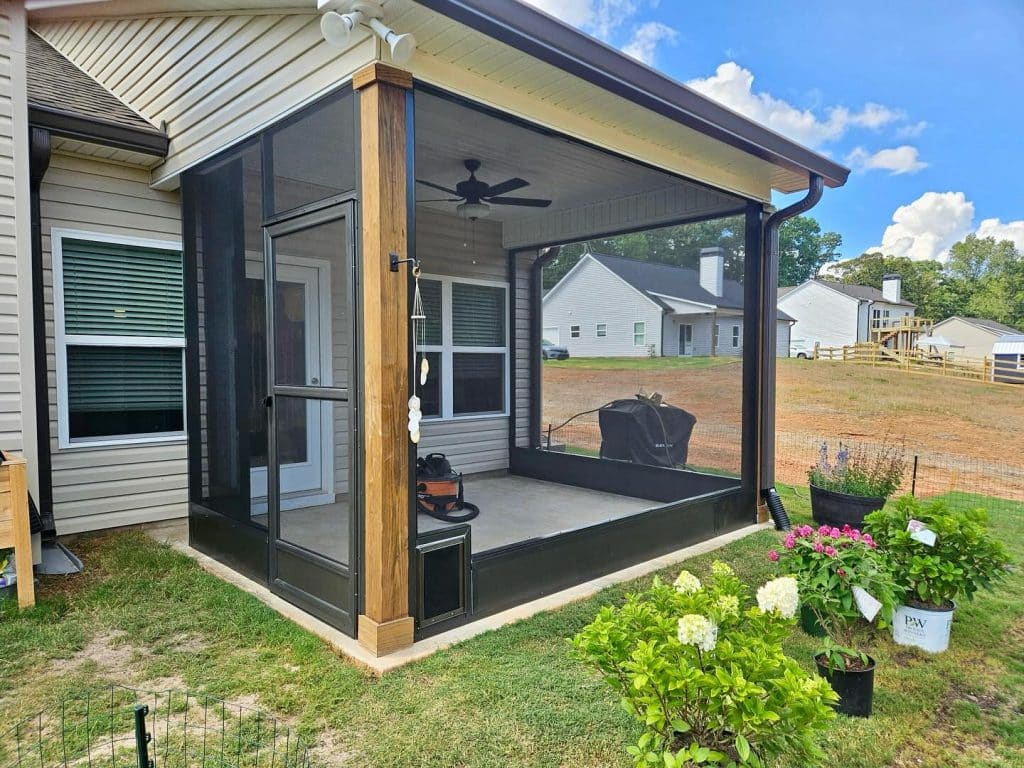
Building a modest-sized screened structure right off the back door gives a family a bug-free outdoor space without a massive construction project. A ceiling fan and a simple concrete floor keep the space functional without needing elaborate finishes. This kind of scaled-down back screened-in porch proves that solving the bug problem does not require a huge budget.
Cedar posts left natural add warmth against the black screen framing without requiring paint or stain. Writers at outdoor addition guides often note that smaller screened additions offer some of the best value per square foot for solving bug and weather problems.
Budget Guide: A basic screened porch addition of this size typically runs $8,000 to $18,000, depending on materials, best planned with a licensed contractor. Ceiling fans for outdoor use cost $80 to $180 at Home Depot or Lowe’s.
A Vaulted Ceiling Gives a Back Screened-In Porch Real Volume
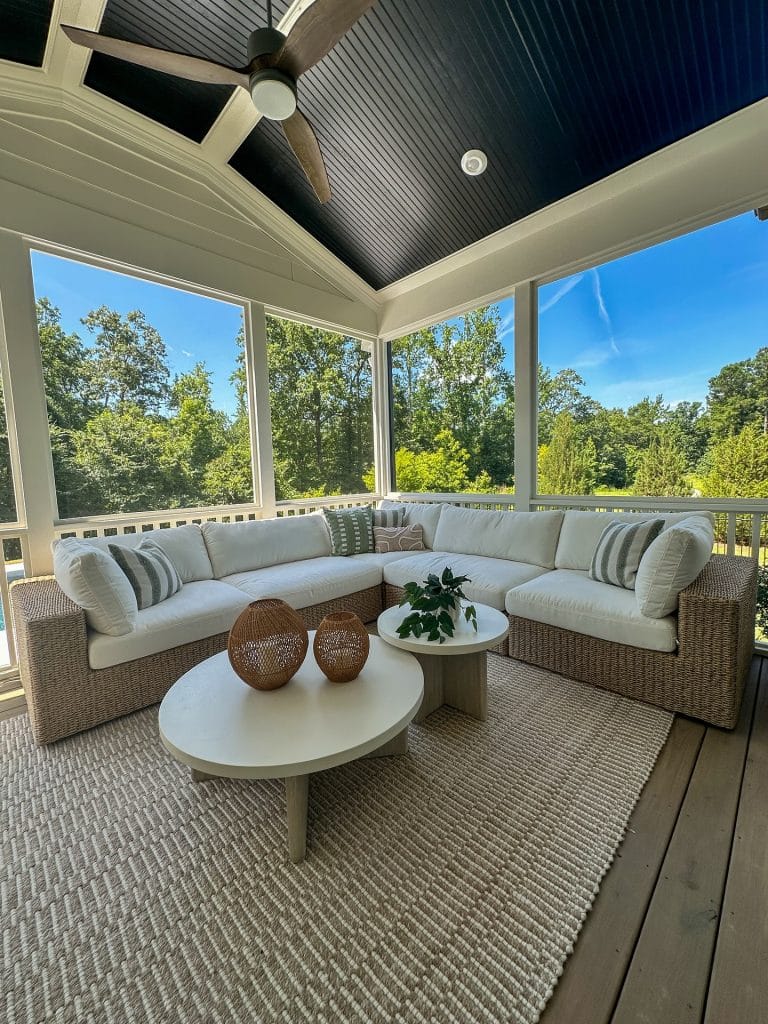
Adding a vaulted ceiling with a dark stained wood finish transforms a screened structure from a simple add-on into a genuine outdoor living room. Woven rattan sectional seating paired with round white coffee tables gives the space a resort-like feeling. This kind of elevated back screened-in porch design proves that screened spaces can feel just as intentional as any interior room.
The dark ceiling against white trim creates dramatic contrast that draws the eye upward, making the whole porch feel more spacious than its actual footprint. Design writers at outdoor living style features often point to ceiling treatments as one of the most underused ways to elevate a screened porch.
Budget Guide: Vaulted ceiling construction adds roughly $3,000 to $8,000 to a standard screened porch build, depending on materials. Woven sectional seating sets cost $1,500 to $3,500, available through Target, Amazon, or specialty patio retailers.
The Mega Mom Moment
I used to think a screened porch was a nice extra, not something we truly needed. One summer of swatting mosquitoes away from dinner plates changed my mind completely. Some projects are not about looking nice, they are about actually being able to eat outside in peace.
Exposed Beams Bring Character to a Back Screened-In Porch
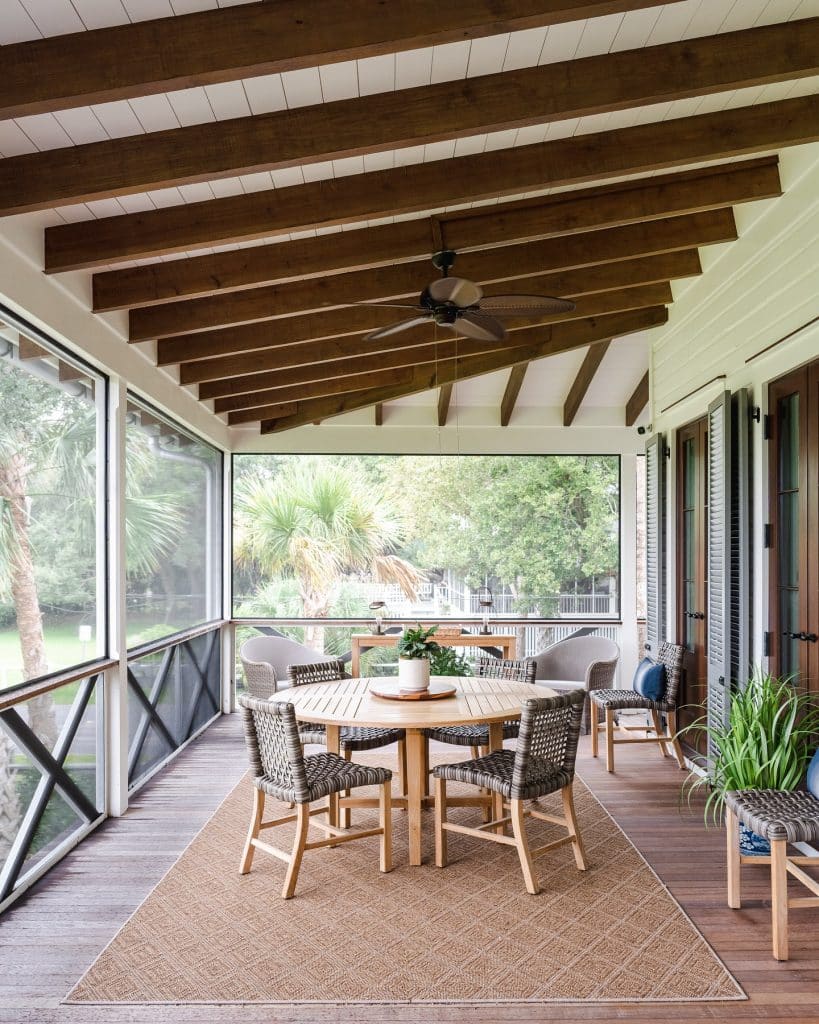
This idea works because the angled beam pattern adds visual interest overhead, giving guests something to notice the moment they step inside. A woven jute rug grounds the wood tones and ties the dining area together without competing with the beams above. Home design writers at porch architecture features frequently highlight exposed beam ceilings as a detail that adds real character to covered outdoor spaces.
It also creates a natural dining zone distinct from any lounging area elsewhere on the porch, which helps a larger space feel organized rather than one big open room. Simple black lanterns on the side table add a touch of coastal charm without requiring any electrical work. That small styling choice pulls the whole look together.
Budget Guide: Exposed wood beam ceiling treatments typically add $2,000 to $6,000 to a porch build depending on wood type and finish. Round outdoor dining sets cost $800 to $2,200, available through Home Depot, Wayfair, or a local furniture retailer.
A Corner Fireplace Extends the Season on a Back Screened-In Porch
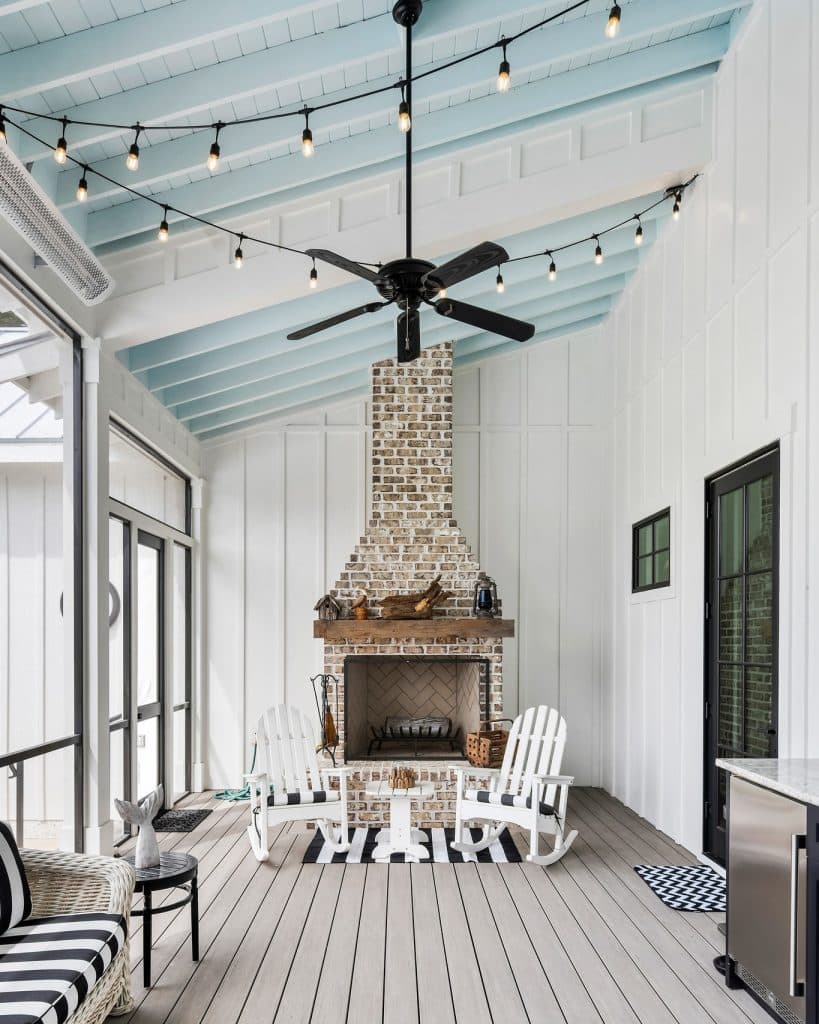
Black rocking chairs on a striped rug create a cozy gathering spot right in front of the brick, and string lights strung along the ceiling beams keep the whole scene glowing after dark. This kind of four-season back screened-in porch turns a summer bug solution into a year-round living space.
Outdoor living writers at fireplace and patio design features often note that an outdoor fireplace is one of the highest value additions for extending a porch’s usable season.
Budget Guide: A built-in brick outdoor fireplace typically runs $5,000 to $12,000 depending on size and materials, best installed by a licensed mason. A small outdoor beverage refrigerator costs $200 to $500 at Home Depot or Best Buy.
The Real Talk
Nobody tells you that a fireplace changes the whole budget and timeline for a screened porch project. It is worth every extra dollar if your family actually spends time outside in cooler weather, but it is not a small add on decision. Plan for it from day one if you want one, since retrofitting later costs much more.
A Freestanding Back Screened-In Porch Works as Its Own Structure
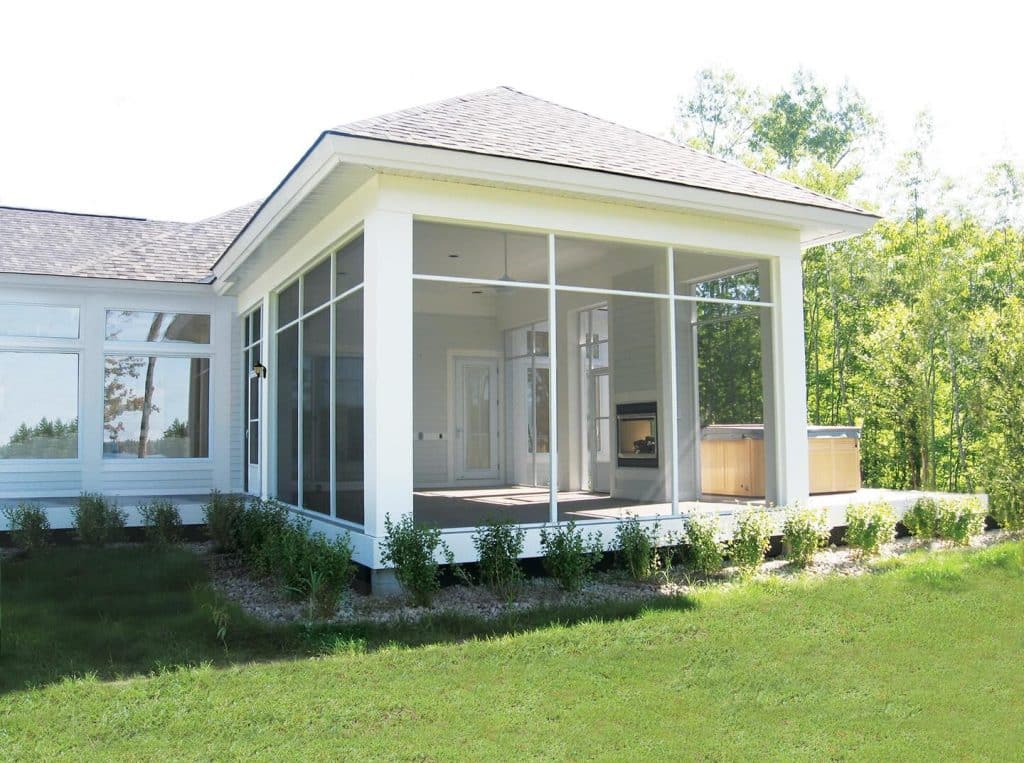
Building a fully freestanding screened structure connected to the house by a covered walkway gives a family a distinct, private outdoor room separate from the main living space. Floor-to-ceiling screens on every side keep the view completely open while still blocking every bug. This kind of standalone back screened-in porch works especially well for larger properties with room to spread out.
A built-in hot tub tucked into one corner makes the space multifunctional, serving both relaxation and everyday outdoor living. Architecture writers at freestanding structure design guides often note that detached screened rooms offer more design flexibility than additions directly connected to a house.
Budget Guide: A freestanding screened structure typically runs $15,000 to $35,000 depending on size and features like a built-in hot tub. You can find hot tub options and pricing through Home Depot or a local pool and spa retailer.
What Makes a Back Screened-In Porch Worth Building
A back screened-in porch earns its place in a backyard because it solves a problem no amount of nice furniture can fix on its own: bugs ruining an otherwise perfect evening outside. Every version on this list, big or small, exists to make outdoor time genuinely enjoyable rather than something to rush through. That core purpose is worth remembering before getting distracted by finishes and furniture.
Size should match how a family actually plans to use the space, not just what looks impressive in photos. A small porch built for quiet dinners serves a different purpose than a large one designed for entertaining a crowd. Matching scale to real habits prevents overspending on space that never gets fully used.
The Family Win
Three easy ways to start planning your own back screened in porch. Decide on size based on how your family actually eats and relaxes outside, not just what looks impressive. Consider a fireplace or heater early if you want to use the space beyond summer. Invest in a ceiling detail, like exposed beams or a painted finish, since it does more for the finished look than furniture alone.
Architectural details, like exposed beams or a vaulted ceiling, do more to elevate a screened porch than most people expect going into the project. These choices cost more upfront but pay off in how finished and intentional the whole space feels once complete. That investment is often what separates a screened porch that feels like an afterthought from one that feels like a real room.
Extending the season with features like a fireplace changes the entire value proposition of a screened porch. A space used only three warm months a year offers far less return than one usable across most of the calendar. That decision is worth making early, since retrofitting heat sources later is far more disruptive and costly.
Enjoyed this post?
Share the love with another mom!
Every share helps this little blog grow — thank you so much