
Make sure to join my list for Weekly Tips and Recipes to Your Inbox
Closet Shoe Rack Ideas That Finally Made Our Mornings Less Chaotic

A little note: Some images in this post may come from third-party sources and are shared purely to inspire you. All credit goes to their original creators. Visit our Image Credits Policy for more information.
I found four mismatched sneakers piled by our front door last Tuesday, none of them belonging to the same pair. My son was already late for practice and was blaming his shoes for hiding from him. That small chaotic moment is what finally pushed me to fix our closet shoe situation for good.
I had been putting off a real shoe system for over a year, telling myself a few bins would eventually solve it. They never did.
Every morning felt like a small treasure hunt nobody wanted to play. I kept promising myself I would deal with it once things calmed down, but things never really calmed down with three kids and one husband who never puts anything back.
Then I stopped trying to copy the massive celebrity closets I kept saving out of habit. I started thinking about how our family actually uses our entryway and closets every single day. Where backpacks land, where cleats pile up, where shoes actually get worn.
That shift changed everything about how I searched from that point forward. I started looking at real family homes instead of impossibly large dressing rooms. Ones with muddy sneakers and school shoes mixed in with everything else.
I noticed how much a dedicated system changed the whole feeling of a space, even a small one. It was never about having fewer shoes. It was about giving every single pair an obvious place to land.
I started saving every setup that made me stop scrolling for a second longer than usual. Some were tall and narrow. Others spread wide across an entire closet wall.
What tied them together was the same idea. A closet shoe system does not need to be huge or expensive to completely change how a household starts its morning.
I tried a version myself before landing on what actually worked for our entryway and our budget. These six ideas are the ones that stuck with me most, each pulled from a real space that clearly solved this exact same daily problem.
What We're Exploring
- 01 A Glass Front Display That Turns Shoes Into Art
- 02 Mega Mom Moment
- 03 A Mudroom Cubby Built for Growing Feet and Muddy Cleats
- 04 A Backlit Sneaker Wall for a Serious Collection
- 05 Family Win
- 06 A Floor-to-Ceiling Wall That Fits an Entire Collection in One Footprint
- 07 A Shared Closet That Keeps Shoes and Coats Working Together
- 08 Real Talk
- 09 A Wall Mounted System That Grows With Whatever You Own
- 10 What Building a Real Shoe System Taught Me About Slowing Down Mornings
A Glass Front Display That Turns Shoes Into Art
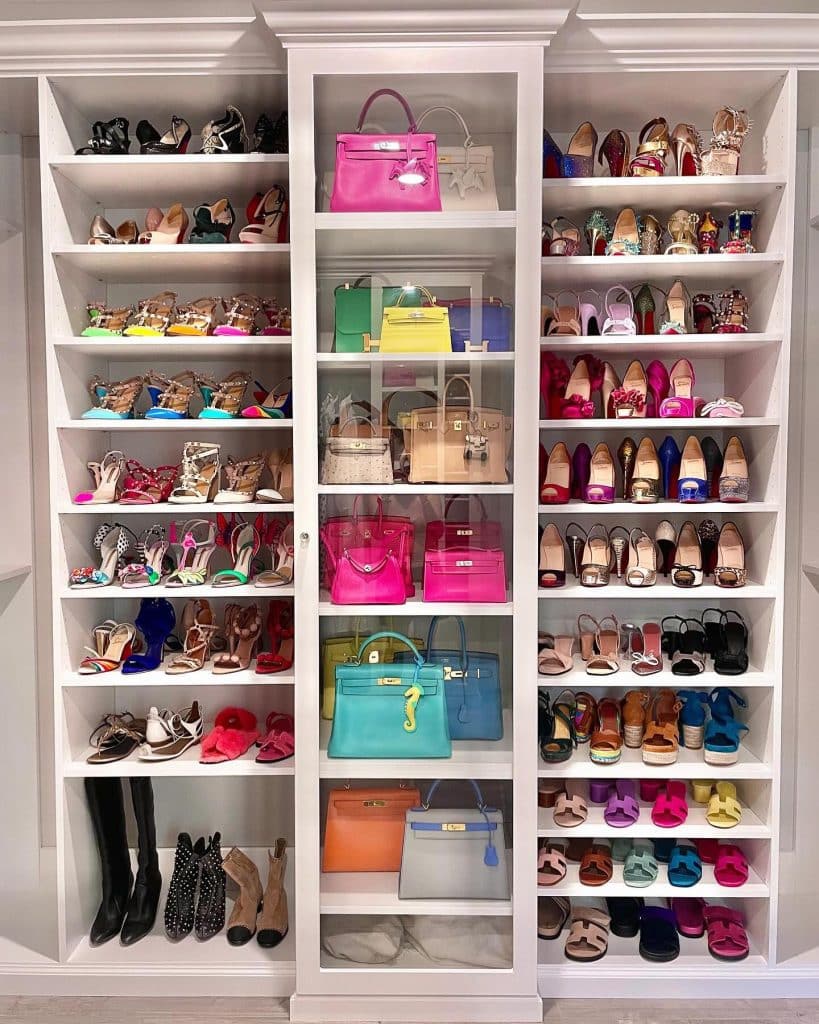
This idea uses a glass-fronted cabinet to turn a closet shoe collection into something that looks intentional rather than crammed onto open shelves. Keeping pairs behind glass protects them from dust while still letting every color and style stay visible at a glance. That visibility alone makes getting dressed each morning feel far less chaotic.
Grouping shoes loosely by color or height keeps a large collection feeling organized rather than overwhelming. Open shelving on either side of the glass section adds even more capacity for everyday pairs that get grabbed most often.
Budget Guide: A glass front cabinet insert typically costs $200 to $500 depending on size, and can often be added to an existing closet through a local carpenter or a container store custom closet consultation.
Mega Mom Moment
I used to think a proper closet shoe system needed a huge budget and a huge closet to actually work. What changed things for us was realizing even one defined shelf, used consistently, beats a dozen bins nobody ever puts shoes back into. That single shift mattered more than any fancy cabinet ever could.
A Mudroom Cubby Built for Growing Feet and Muddy Cleats
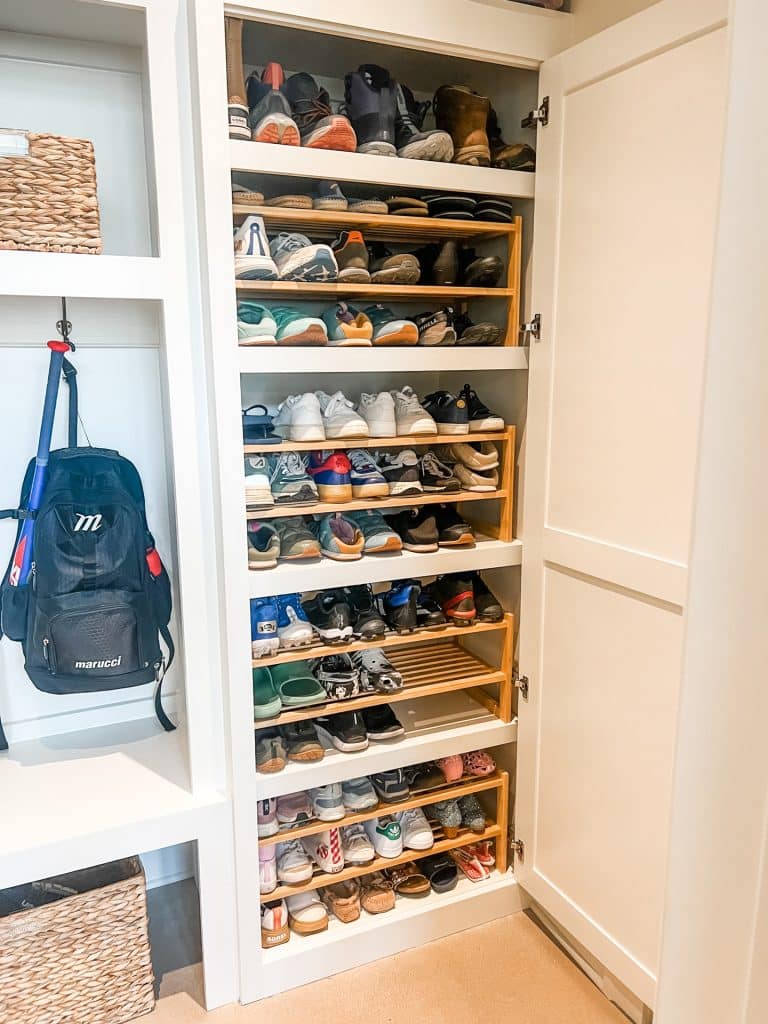
This idea takes a closet shoe setup out of the bedroom entirely and places it right where a busy family actually needs it most, near the door. Angled wooden shelf inserts hold sneakers and cleats at a slight tilt, which keeps pairs visible without shoes toppling forward every time the door opens. Sports bags and backpacks hang nearby, keeping the whole entry organized at a glance.
What makes this idea so practical for real family life is how it handles a constantly rotating collection of growing kids’ sizes. A guide from FamilyHandyman on mudroom organization notes that flexible, adjustable shelving handles a growing family better than fixed cubbies sized for one shoe size. That flexibility matters enormously as kids grow through several shoe sizes a year.
Budget Guide: Adjustable wood shoe shelf inserts typically run $40 to $90 per section at Home Depot or Amazon, and woven storage baskets cost about $15 to $30 each at Target.
A Backlit Sneaker Wall for a Serious Collection
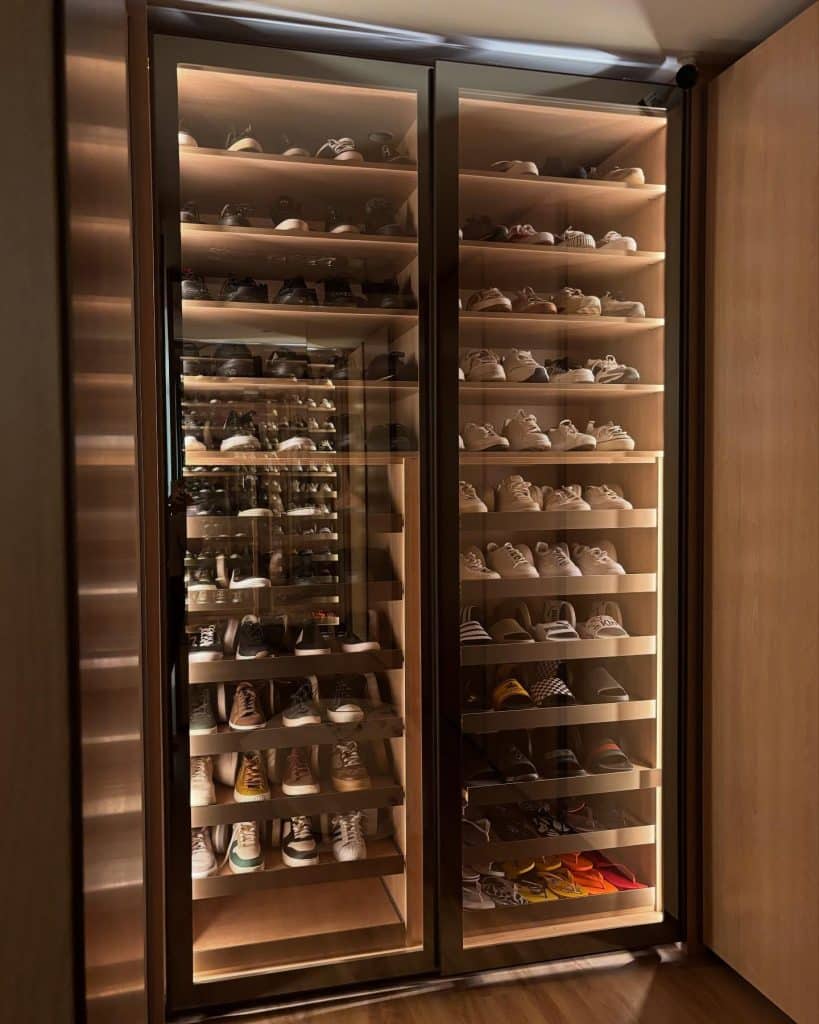
What makes this approach worth considering for a household with a genuine sneaker collector is the protection it offers alongside the display value. Enclosed glass keeps dust and light exposure to a minimum, which matters for anyone who cares about keeping pairs in good condition long-term. A piece from HGTV on closet lighting notes that warm-toned LED strips inside cabinetry make a small space feel dramatically larger and more finished.
Grouping shoes by color across each shelf, rather than by size or brand, creates a visual rhythm that looks intentional even in a packed closet. Sliding glass doors keep the whole system dust-free without requiring anyone to remember to close individual cabinet doors.
Budget Guide: LED strip lighting for closet shelving typically costs $20 to $40 for a full kit on Amazon, and sliding glass door hardware runs about $80 to $150 depending on the size of the opening.
Family Win
If you want one quick win for your own closet shoe setup, start here. Choose adjustable shelving over fixed cubbies whenever kids are involved, since feet grow faster than most closets account for. Group shoes by color or height rather than by owner, since that tends to hold up better daily. Add a light source if your closet is dim, even a simple battery powered strip helps enormously. And keep one open shelf for the shoes worn most often, so they never end up on the floor by accident.
A Floor-to-Ceiling Wall That Fits an Entire Collection in One Footprint
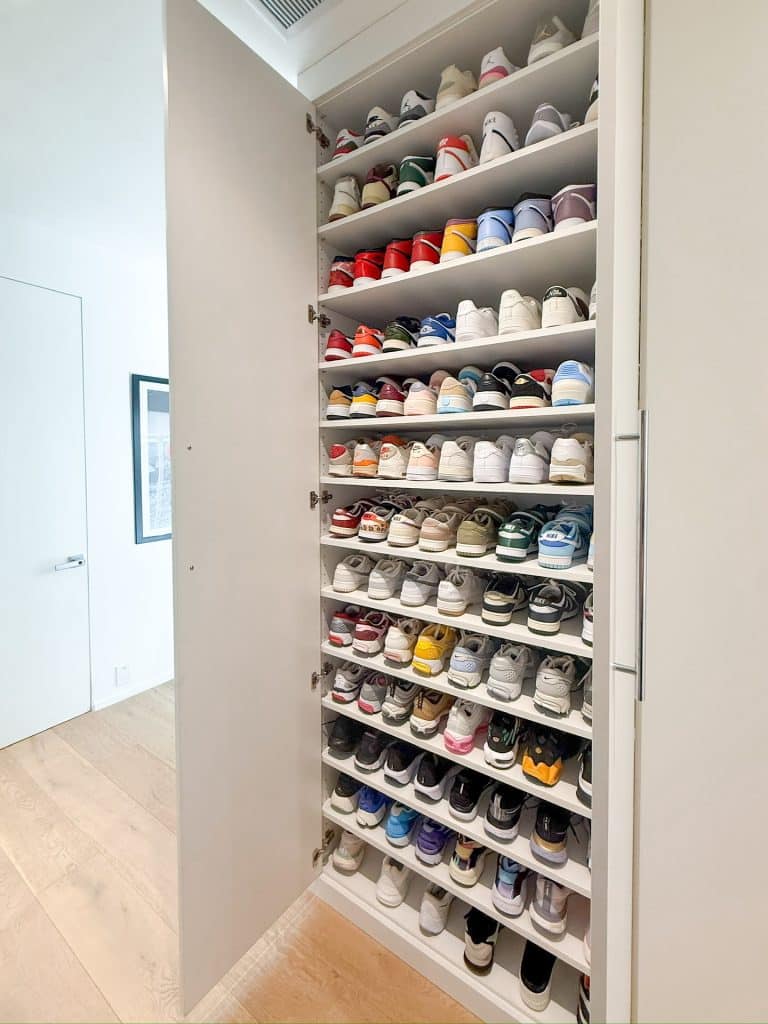
What makes this idea so practical is the sheer efficiency of the layout. A narrow, tall footprint like this fits easily into a hallway closet or an awkward unused corner that would otherwise go to waste. A resource from BHG on maximizing small closets notes that vertical storage consistently outperforms wide, shallow shelving when floor space is limited.
Keeping shelves closely spaced allows a surprising number of pairs to fit into a relatively narrow footprint. A single door keeps the whole collection tucked away and dust-free when not actively getting dressed.
Budget Guide: Simple adjustable closet shelving systems typically cost $150 to $350 for a full floor-to-ceiling installation at Home Depot or through a closet company like California Closets.
A Shared Closet That Keeps Shoes and Coats Working Together
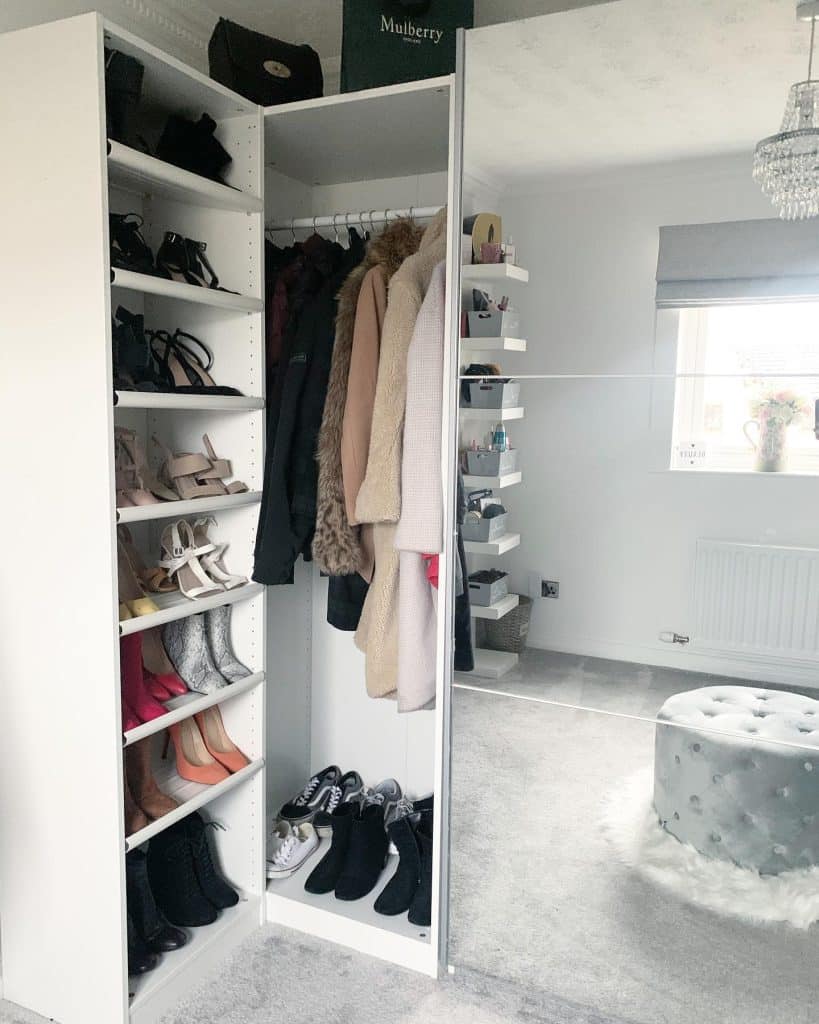
This idea blends a closet shoe section directly into a regular bedroom closet, placing angled shoe shelves right beside a hanging rod for coats and everyday clothes. That combination means getting fully dressed happens in one single spot rather than shoes living in an entirely separate part of the house. A large mirror nearby doubles as a quick outfit check before heading out the door.
Keeping heels and flats on the angled shelves while reserving floor space for sneakers and boots respects how differently shaped shoes actually sit. Small bins on an adjacent shelf hold accessories like scarves or gloves that would otherwise clutter a drawer.
Budget Guide: Angled wire shoe shelf inserts typically run $20 to $50 per section at IKEA or The Container Store, and a full-length closet mirror costs about $40 to $80 at Target or Walmart.
Real Talk
A lot of articles about closet shoe storage make it sound like you need a walk in dressing room to actually get organized. That is simply not true. Every idea in this list works in a normal sized closet or even a hallway cubby, not just a luxury dressing room. Start with the space you actually have, not the one you wish you had, and build from there.
A Wall Mounted System That Grows With Whatever You Own
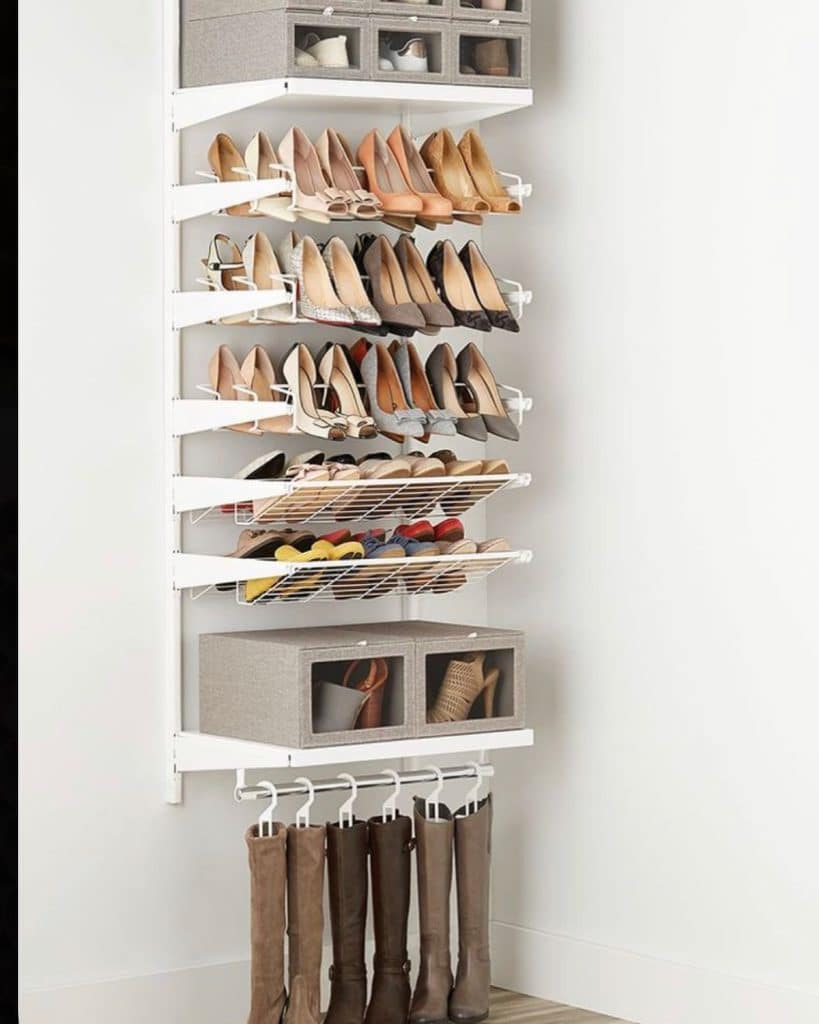
This idea uses a modular wall-mounted track system to build a closet shoe setup that can be rearranged as a collection changes over time. Angled wire shelves hold heels and flats at a slight tilt, while fabric bins above corral pairs that need a little dust protection. A hanging rod below makes room for tall boots that never fit well on a flat shelf.
What makes this approach so worth trying is the flexibility built into the track itself. Shelves can move up, down, or out entirely as needs change, which matters enormously for a family whose shoe collection shifts with the seasons. A piece from GoodHousekeeping on closet systems notes that track-based shelving consistently outlasts fixed shelving because it adapts rather than requiring a full replacement.
Budget Guide: A modular wall-mounted shelving track system typically costs $100 to $250 for a full kit at The Container Store or Amazon, and fabric shoe storage boxes run about $10 to $20 each.
What Building a Real Shoe System Taught Me About Slowing Down Mornings
Every closet shoe idea on this list solved the same basic problem in a slightly different way. None of them required a massive budget or a massive closet; they just required a little intention about where shoes actually belonged. That intention is what changes a morning from chaos into something manageable.
I also learned that visibility matters more than almost anything else in a system like this. Whether it came from glass doors, open shelving, or simple angled racks, being able to see every pair at a glance cut down on searching dramatically.
Watching how quickly our own entryway calmed down once everything had a real place changed how I think about storage in general. A closet shoe system does not need to be permanent or perfect; it just needs to be consistent enough that everyone in the house actually uses it.
I noticed, too, that flexibility mattered as much as capacity. Adjustable shelves handled our growing kids far better than anything fixed ever could, since shoe sizes never stay the same for long.
Enjoyed this post?
Share the love with another mom!
Every share helps this little blog grow — thank you so much