
Make sure to join my list for Weekly Tips and Recipes to Your Inbox
DIY Treehouse Ideas That Actually Work For Real Backyards

A little note: Some images in this post may come from third-party sources and are shared purely to inspire you. All credit goes to their original creators. Visit our Image Credits Policy for more information.
My son asked for a treehouse for his eighth birthday. Just that. No toys, no video games. A treehouse, like the one his cousin had. I said sure, thinking it’d be a weekend project. Six weekends later, I finally understood what I’d signed up for.
We had one big oak in the backyard, sturdy enough, or so I thought. Turns out picking the right tree is half the battle with a DIY treehouse. Too many low branches. Not enough flat space up top.
My husband and I argued for a full evening about whether to build a platform around the trunk or go with support posts instead. We went with posts. Best decision we made, honestly. Once that base was solid, everything else started falling into place.
Walls went up crooked at first, then less crooked. Windows were just cut-out squares with no glass, because our son insisted “real treehouses don’t have windows that close.” Fair enough.
By the end of summer, we had something that actually looked like a treehouse instead of a plywood disaster. Rope ladder. A little flag on top he painted himself. His friends came over and just stared at it like it was a castle.
That’s the thing about a DIY treehouse — it never turns out exactly like the picture in your head, but somehow it turns out better.
If you’re already dreaming up the space underneath it,under-tree landscaping might be worth a look too, because that patch of dirt under ours turned into a mud pit within a week. Lesson learned, one project at a time.
What We're Exploring
- 01 A Simple Deck With A Ladder Is The Most Forgiving Place To Start
- 02 A Second Level Platform Turns One Tree Into Two Play Spaces
- 03 Mega Mom Moment
- 04 Adding A Rock Wall And Slide Makes The Climb Part Of The Fun
- 05 An Open Air Pavilion Style Skips Walls Entirely
- 06 A Freestanding Design Works Even Without A Perfect Tree
- 07 Family Win
- 08 A Rustic Rope Swing Adds Charm Without Any Extra Building
- 09 A Compact Corner Platform Fits Smaller Trees Beautifully
- 10 A Bold Painted Exterior Makes A Modern Statement
- 11 What Building Our Own Treehouse Taught Me About Backyard Projects
- 12 Real Talk
A Simple Deck With A Ladder Is The Most Forgiving Place To Start
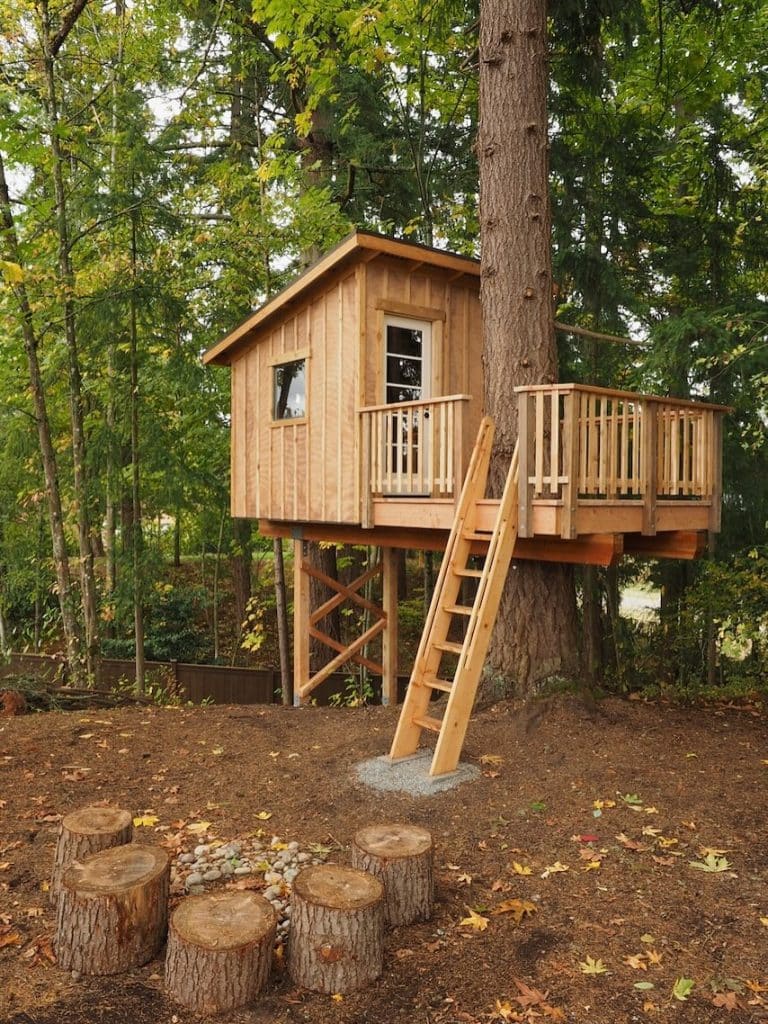
Starting with a straightforward platform and a sturdy ladder is the most forgiving version of a diy treehouse, especially for a first attempt. There is no roof to worry about yet, just a solid, level surface anchored around the trunk.
A wraparound railing keeps things safe without complicating the build, and a single straight ladder is far easier for beginners to get right than anything more elaborate. It is the kind of project Family Handyman often recommends for first-time backyard builders.
Budget Guide: Basic deck boards and railing materials typically run $200 to $450 depending on tree size. Home Depot, Lowes, and Amazon all carry pressure treated lumber suited for this kind of build.
A Second Level Platform Turns One Tree Into Two Play Spaces
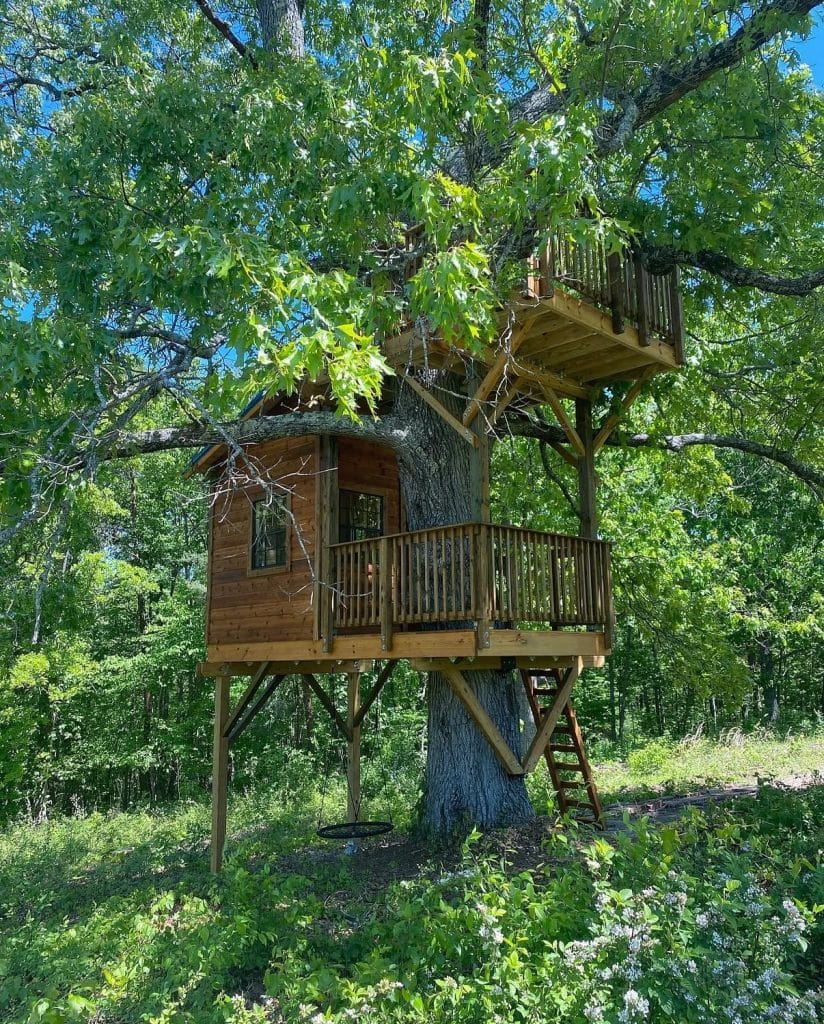
Building a second, smaller platform higher up in the same tree doubles the play value of a single diy treehouse without doubling the footprint on the ground. Kids get a lower deck for everyday play and a higher lookout spot that feels like a genuine adventure.
Connecting the two levels with a simple rope or ladder keeps the climb part of the fun rather than a separate chore. It also teaches kids to respect height gradually instead of all at once.
Budget Guide: Additional platform framing for a second tier generally costs $150 to $300 in extra lumber and hardware. Home Depot and Amazon both stock the galvanized brackets needed for securing upper platforms safely.
Mega Mom Moment
I spent an entire evening researching the perfect paint color before my husband gently reminded me that our kids just wanted to climb something. We picked a color in ten minutes after that and moved on to actually building. Some decisions matter far less than they feel like they do in the moment.
Adding A Rock Wall And Slide Makes The Climb Part Of The Fun
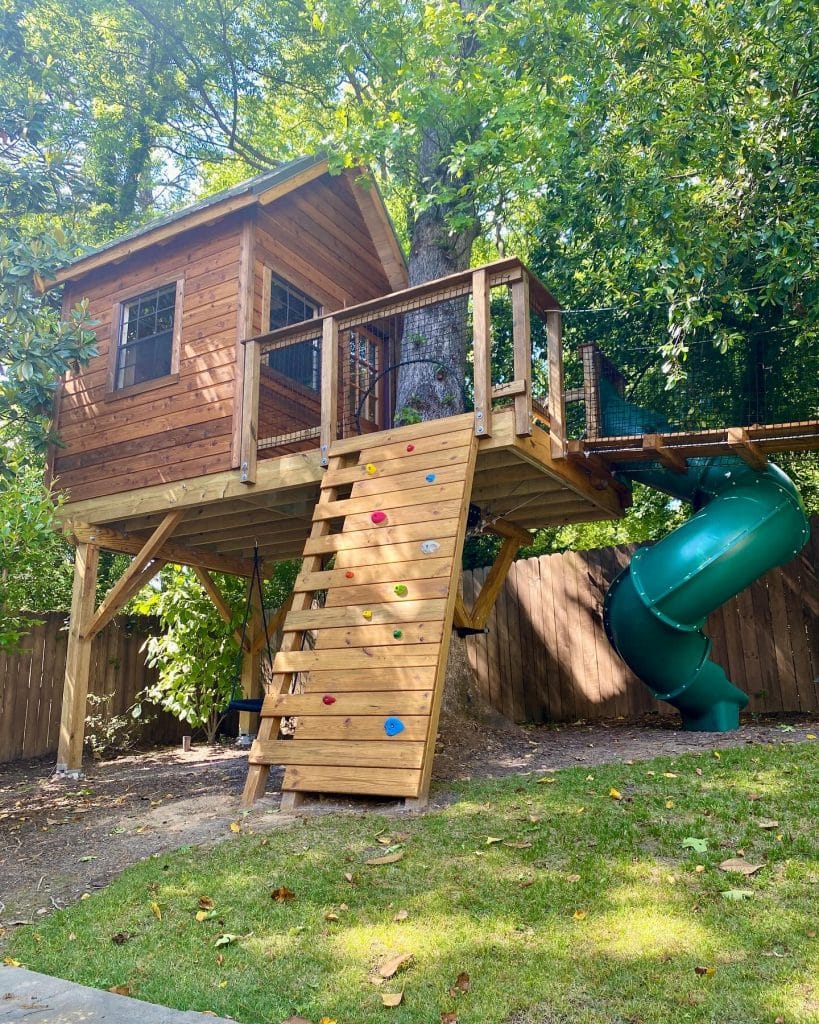
Swapping a plain ladder for a climbing wall with a slide nearby turns a diy treehouse into a full backyard playground rather than just a place to sit. The colorful climbing holds give younger kids something to work toward, while the slide makes coming down just as exciting as going up.
Mesh paneling along the railing adds a layer of safety without blocking the view, which matters most when there is more than one exit point to keep an eye on. It is a detail worth prioritizing on any build with a slide attached.
Budget Guide: Climbing holds run $20 to $40 for a full set, and a tube slide typically costs $150 to $300 depending on length. Both are available through Amazon or a local playground supply store.
An Open Air Pavilion Style Skips Walls Entirely
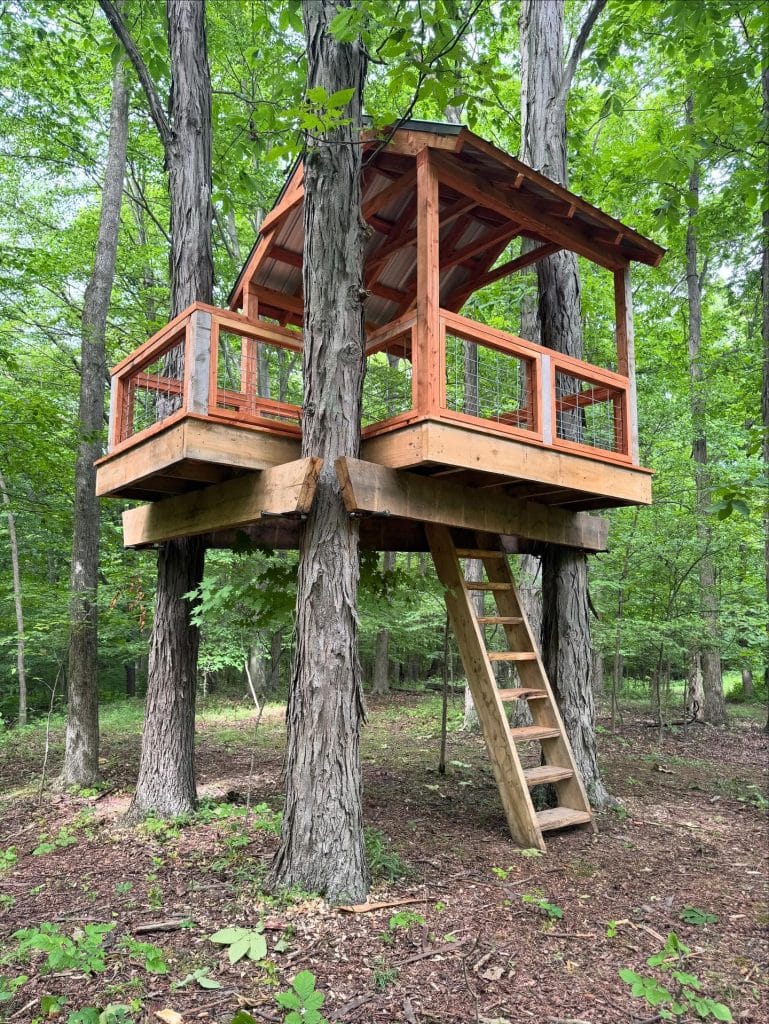
Building an open-sided structure with just a roof and railing gives a diy treehouse a completely different feel from the enclosed cabin style most people picture first. It reads more like a treetop porch than a hideaway, which some families genuinely prefer.
Without walls, airflow and natural light are never an issue, which makes this style especially pleasant during warmer months. It also keeps sightlines open, so keeping an eye on kids from the ground stays easy.
Budget Guide: Skipping wall materials can save $300 to $600 compared to a fully enclosed build. Roofing panels alone typically run $100 to $250 at Home Depot or Lowes depending on coverage size.
A Freestanding Design Works Even Without A Perfect Tree
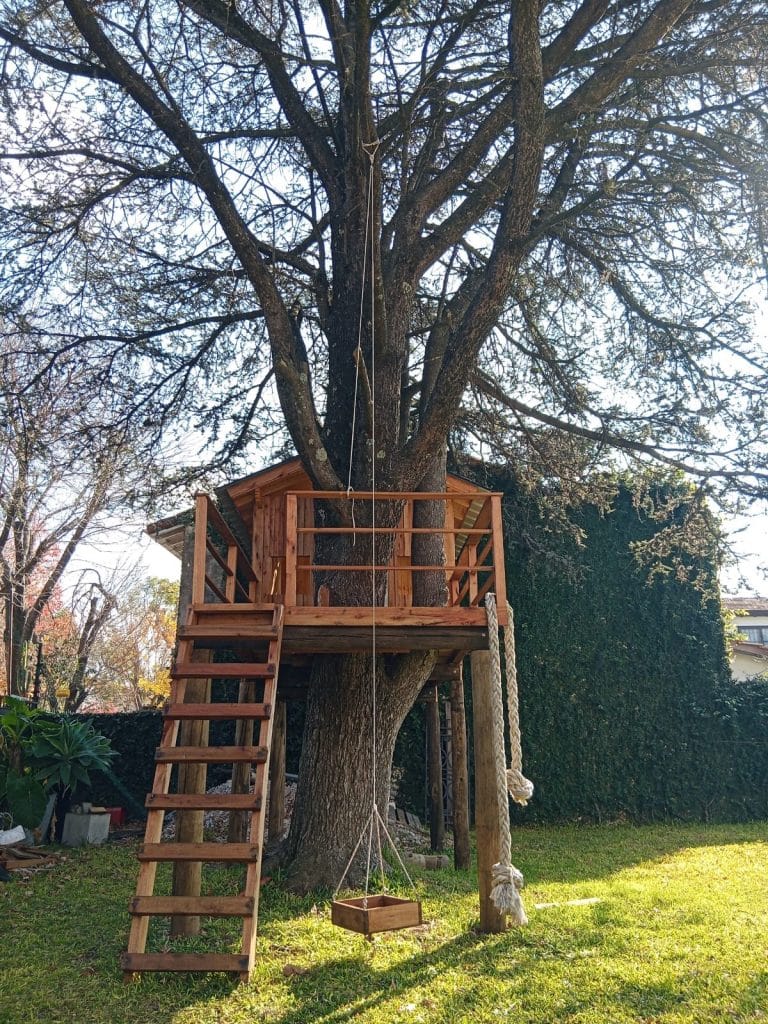
Not every backyard has a tree shaped exactly right for building around, and that is exactly why a freestanding diy treehouse on its own support posts is worth considering. The tree provides shade and charm, but the structure itself carries its own weight independently.
Concrete footings anchor the support posts securely, which matters most in areas with soft or uneven ground. This method takes more planning upfront but pays off with a sturdier, more adjustable final build.
Budget Guide: Concrete footings and support posts typically cost $250 to $500 for a mid-sized structure. Home Depot and Lowes both carry the post anchors needed for a secure freestanding base.
Family Win
Choose a tree with at least three sturdy support points before drawing any plans. Start with a simple platform before committing to walls or a roof. Add safety features like railings and mesh paneling early, not as an afterthought once kids are already climbing.
A Rustic Rope Swing Adds Charm Without Any Extra Building
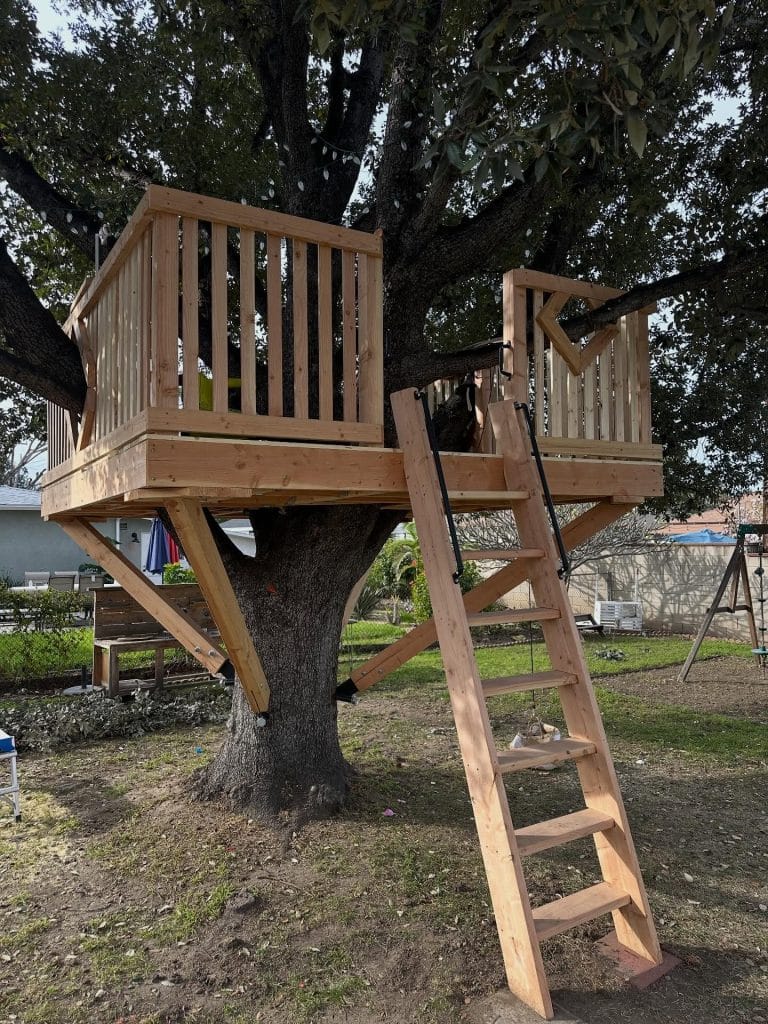
Hanging a simple rope swing from the same tree as the platform is one of the easiest ways to extend the fun of a diy treehouse without adding to the actual structure. It costs almost nothing and takes an afternoon at most.
Because it hangs independently from the main structure, a rope swing can be adjusted or replaced easily as kids grow. That flexibility makes it one of the lowest commitment additions on this entire list.
Budget Guide: Rope swing kits with a wooden seat typically cost $25 to $60. Amazon and most hardware stores carry weather-resistant rope suited for outdoor use.
A Compact Corner Platform Fits Smaller Trees Beautifully
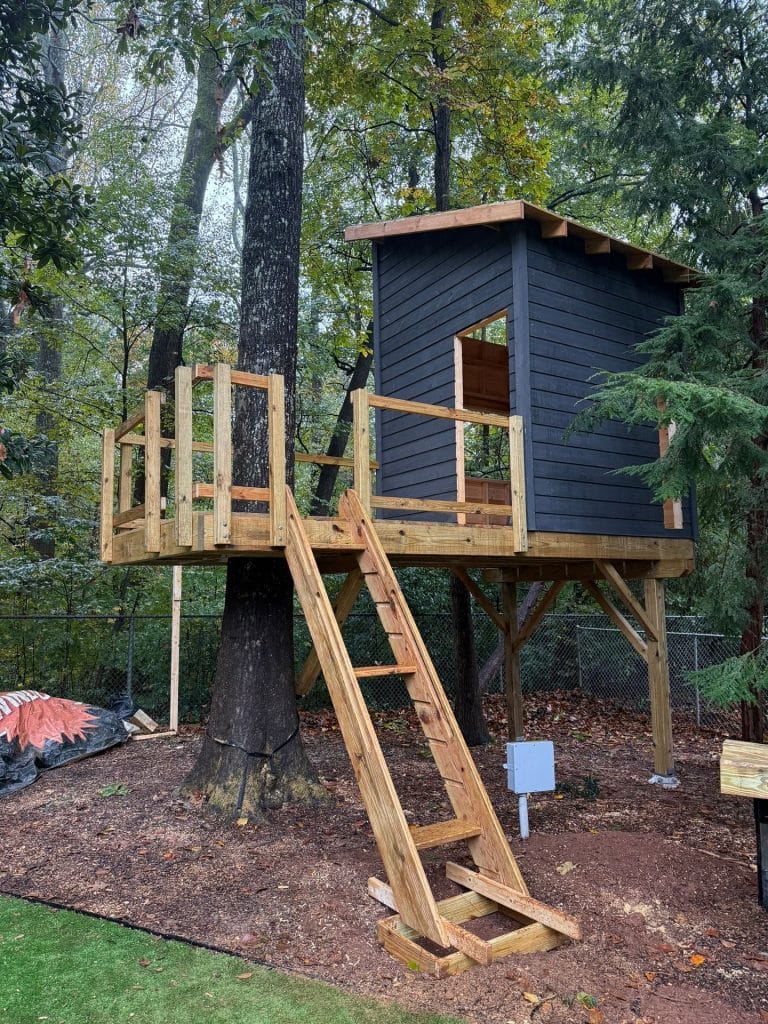
For families working with a smaller or younger tree, a compact corner platform tucked into the branches proves that a diy treehouse does not need a massive trunk to feel special. The design wraps efficiently around slimmer branches without demanding a full canopy.
Smaller platforms also tend to be easier and faster to build, which makes this a smart starting project for anyone nervous about a bigger commitment. It still delivers that treehouse feeling with a fraction of the material.
Budget Guide: Compact platform builds generally cost $150 to $350 in total materials. Lowes and Amazon both offer smaller lumber bundles suited for this scale of project.
A Bold Painted Exterior Makes A Modern Statement
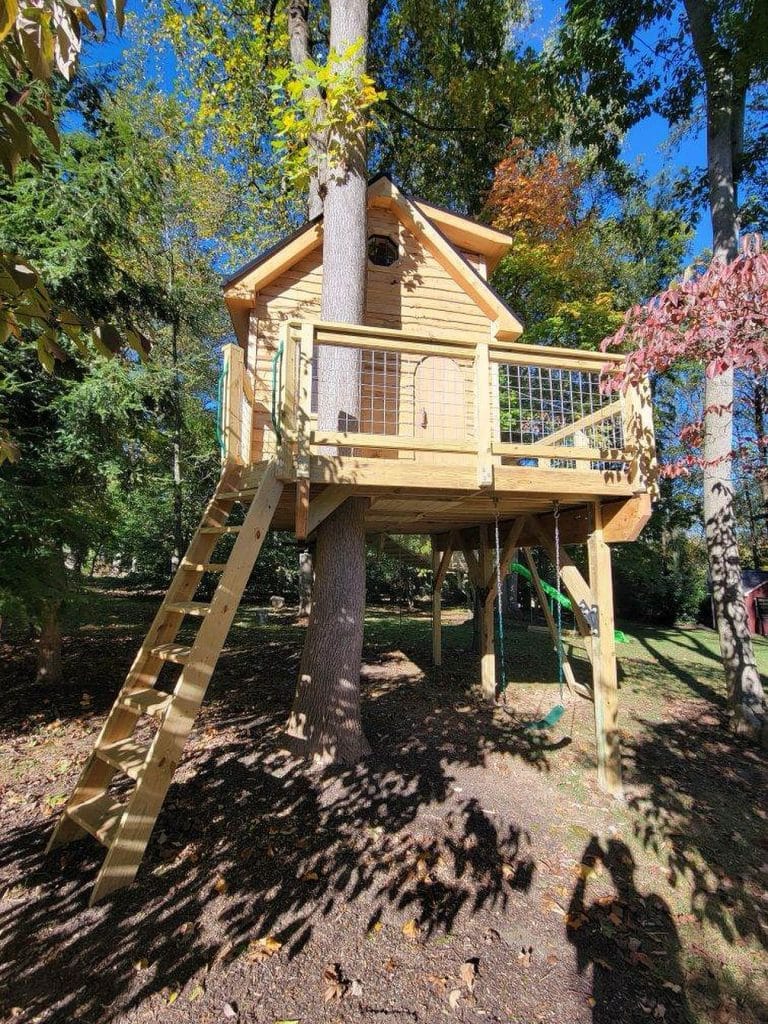
Choosing a bold exterior color like deep charcoal instead of leaving wood natural gives a diy treehouse a striking, modern look that stands out against green leaves in every season. It signals intention, the kind of design choice that turns a backyard project into a real architectural feature.
Exterior-grade paint matters here more than color choice alone, since the structure needs to withstand sun, rain, and temperature swings across every season. BHG has pointed to exterior paint quality as one of the most overlooked details in outdoor builds.
Budget Guide: A gallon of quality exterior paint typically costs $35 to $60 and covers a small to mid sized structure. Home Depot, Lowes, and Sherwin Williams all carry weather rated options.
What Building Our Own Treehouse Taught Me About Backyard Projects
Every single photo I saved before our build looked polished and finished, which turned out to be the most misleading part of the whole process. Real building happens in stages, often messier and slower than any photo ever shows.
I learned to expect weekends that produced almost no visible progress, followed by sudden bursts where everything finally clicked into place. That uneven rhythm is normal, even when it feels discouraging in the moment.
Real Talk
Most guides make building a treehouse sound like a single weekend project, and for most families it simply is not. Give yourself permission to build in stages across an entire season. A diy treehouse built slowly and correctly beats a rushed one every single time.
Choosing the right tree mattered more than any single design decision we made. A diy treehouse only works as well as the branch structure supporting it, so that assessment deserves real time before any lumber gets purchased.
I also learned that kids do not care nearly as much about perfection as parents do. Ours loved the platform the same day it was framed, long before paint or railings were finished.
Enjoyed this post?
Share the love with another mom!
Every share helps this little blog grow — thank you so much