
Make sure to join my list for Weekly Tips and Recipes to Your Inbox
Farmhouse Wrap-around Porches Ideas That Make a Farmhouse Feel Like Home

A little note: Some images in this post may come from third-party sources and are shared purely to inspire you. All credit goes to their original creators. Visit our Image Credits Policy for more information.
I stood at the end of our gravel driveway last spring, staring at a photo of a wrap-around porch farmhouse and picturing my own kids running laps around it barefoot all summer. Our porch back then was a narrow slab of concrete with room for exactly one chair. It never felt like anywhere to actually gather.
I had been dreaming about a bigger porch for years, the kind with rocking chairs on one side and a swing on the other. It felt like a small, silly thing to want so badly. It also felt like the one change that would make our whole house feel different.
So I started saving photos the way I always do when something is worth remembering. Farmhouse after farmhouse, all with that same wraparound shape, all somehow feeling completely different from each other. Some were painted crisp white. Some leaned into stone and cedar shake instead.
What struck me was how much life happened on those porches in every single photo. Kids on swings, dogs stretched out in the shade, rocking chairs angled toward each other for actual conversation. None of it looked staged for the camera.
I started noticing the small choices that made each porch feel so lived in. A stone path leading up to the steps. A porch swing hung at just the right height for an afternoon nap. String lights or simple lanterns for evenings that stretched later than planned.
That is the thing about a porch built to wrap the whole house. It never runs out of room, no matter how many kids or neighbors show up. There is always another corner, another chair, another spot to sit down.
I kept collecting ideas all spring, the kind I wanted to bring to our own builder eventually, once the budget allowed. I am sharing that same list here, the way I would text it to a friend who is dreaming about her own front porch right now.
If a big, welcoming porch has ever made you pause while scrolling, these ideas are for you. Every single one came from a real farmhouse, built by a real family who clearly spent their evenings outside.
What We're Exploring
- 01 A Classic White Wrap Around Porch Welcomes the Whole Family
- 02 A Porch Shaded by Old Oaks Feels Cool All Summer Long
- 03 The Mega Mom Moment
- 04 A Covered Entry With Stone Details Adds Character to Any Wrap-Around Porch
- 05 A Pink Front Door Gives a Wrap-Around Porch Personality
- 06 The Real Talk
- 07 A Two-Story Wrap-Around Porch Adds Room for Every Season
- 08 What Makes a Wrap Around Porch Worth Building
- 09 The Family Win
A Classic White Wrap Around Porch Welcomes the Whole Family
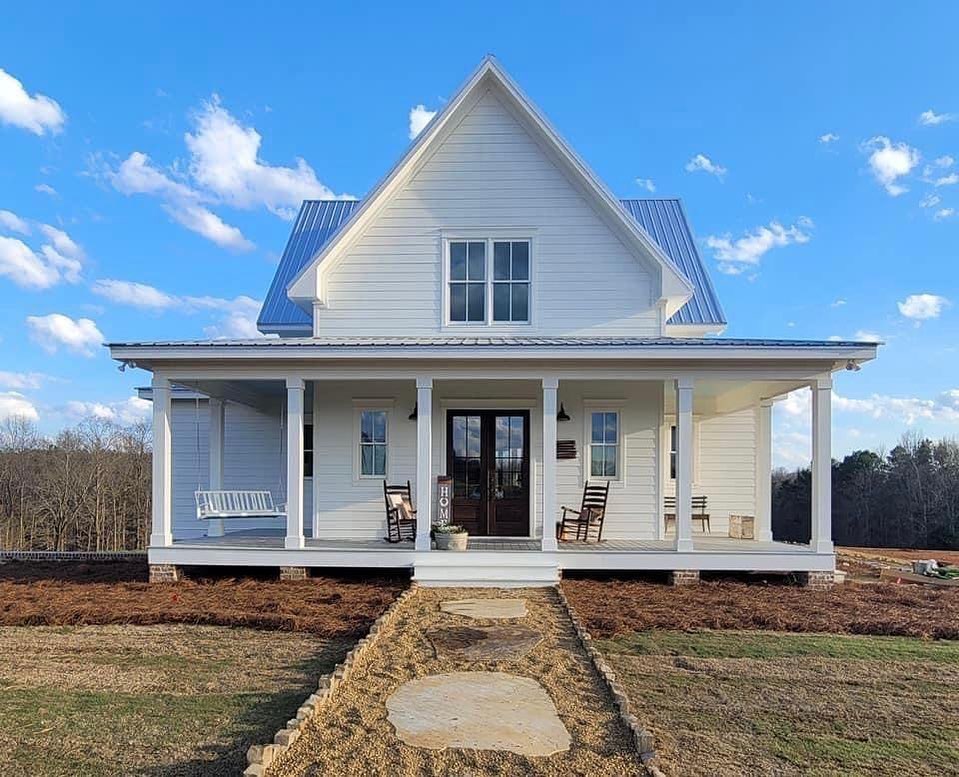
A crisp white farmhouse with a metal roof and a porch swing on one end is the classic starting point for anyone dreaming about wrap-around porches. Simple wood columns and a stone path leading to the front steps keep the whole look timeless instead of trendy. It is the version most people picture first when they imagine porch living.
This style works because it never competes with the landscape around it. White siding and a light metal roof reflect the sky and surrounding trees instead of standing out against them. Design writers at farmhouse exterior guides often point to this classic combination as one of the most enduring choices for a family home.
Budget Guide: Porch swings typically run $150 to $400, and a pair of rocking chairs costs $200 to $500 total. You can find good options at Home Depot, Amazon, or Walmart. A simple stone or gravel path finishes the entry for $300 to $800, depending on length.
A Porch Shaded by Old Oaks Feels Cool All Summer Long
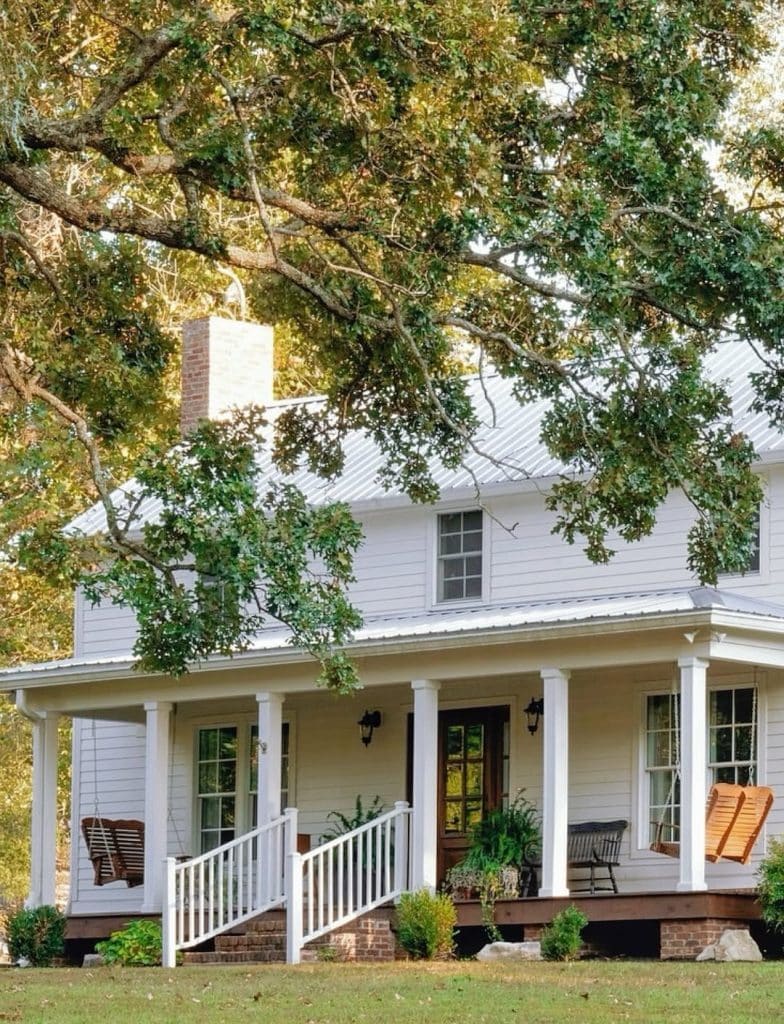
Building or buying a home where mature oak trees already shade the porch is one of the smartest ways to keep wrap-around porches comfortable through the hottest months. The natural canopy blocks direct sun without needing awnings or curtains. It also gives the whole front yard a softer, more established feeling right away.
This idea works because shade changes how a porch actually gets used. A cool, tree-covered porch invites people to sit for hours instead of retreating indoors by midafternoon. A brick chimney paired with white siding, as seen in many classic farmhouse features, adds warmth against all that surrounding green.
Budget Guide: Established shade trees are difficult to add quickly, but a retractable canvas awning costs $300 to $900 as an alternative. You can find awning kits at Home Depot, Amazon, or Lowe’s. Planting a fast-growing shade tree now, for $50 to $150, is a smart long-term investment for future summers.
The Mega Mom Moment
I used to think a beautiful porch needed a big budget and a brand new house. What I actually needed was one comfortable chair in a shady spot where I could sit for five quiet minutes with my coffee. That is where the whole porch dream really started for me.
A Covered Entry With Stone Details Adds Character to Any Wrap-Around Porch
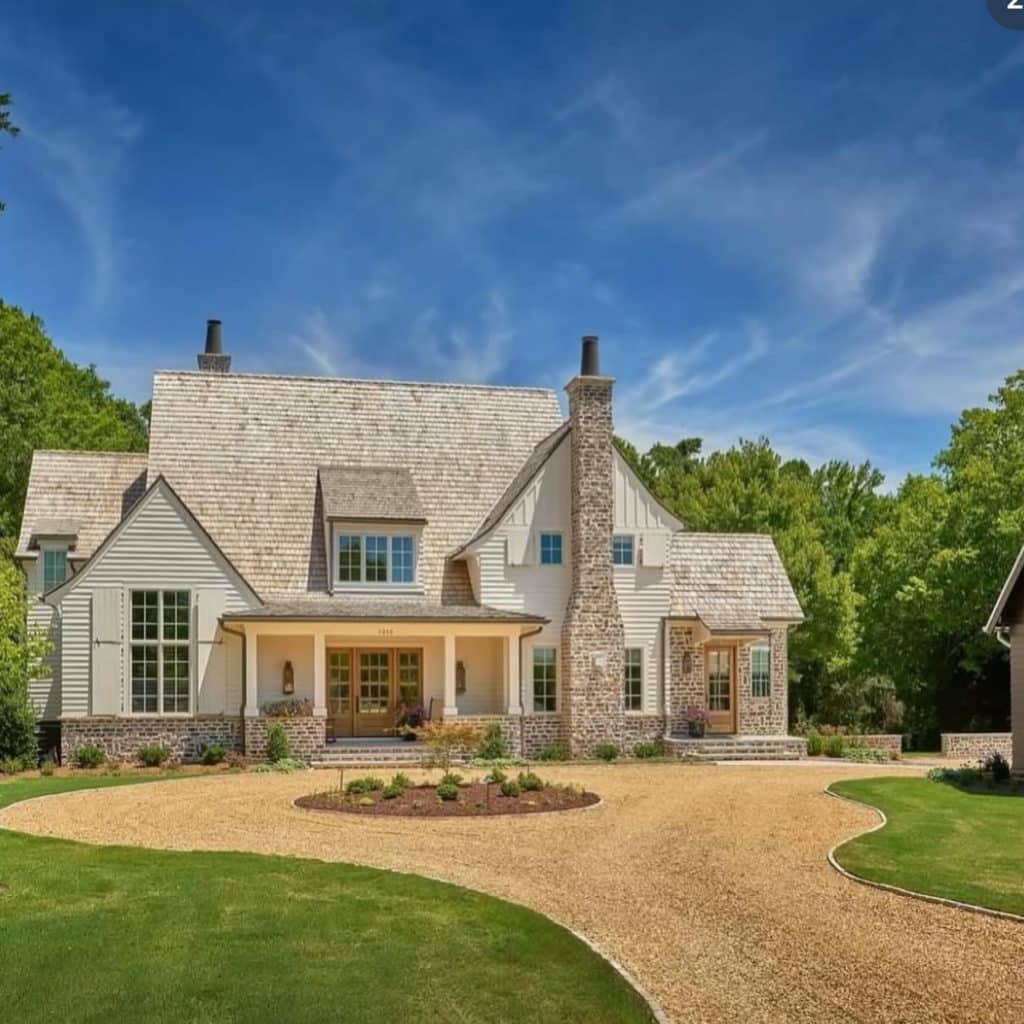
Pairing a covered entry porch with natural stone chimneys and a curved gravel driveway gives a farmhouse serious curb appeal the moment you pull up. The mix of cedar shake roofing and stone accents feels collected rather than brand new. It is a detail that elevates even a simple wrap-around porch layout into something more distinctive.
This idea works because stone and wood siding play off each other beautifully without needing bold paint colors. A curved driveway naturally draws the eye toward the front door instead of straight at the garage. Architecture writers on exterior design features often highlight stone chimney details as one of the details that ages a home gracefully.
Budget Guide: Stone veneer for a chimney or entry accent typically runs $10 to $30 per square foot installed. Gravel for a circular driveway costs $1 to $3 per square foot depending on material. You can find gravel and landscaping supplies at Home Depot or through a local landscape supplier.
A Pink Front Door Gives a Wrap-Around Porch Personality
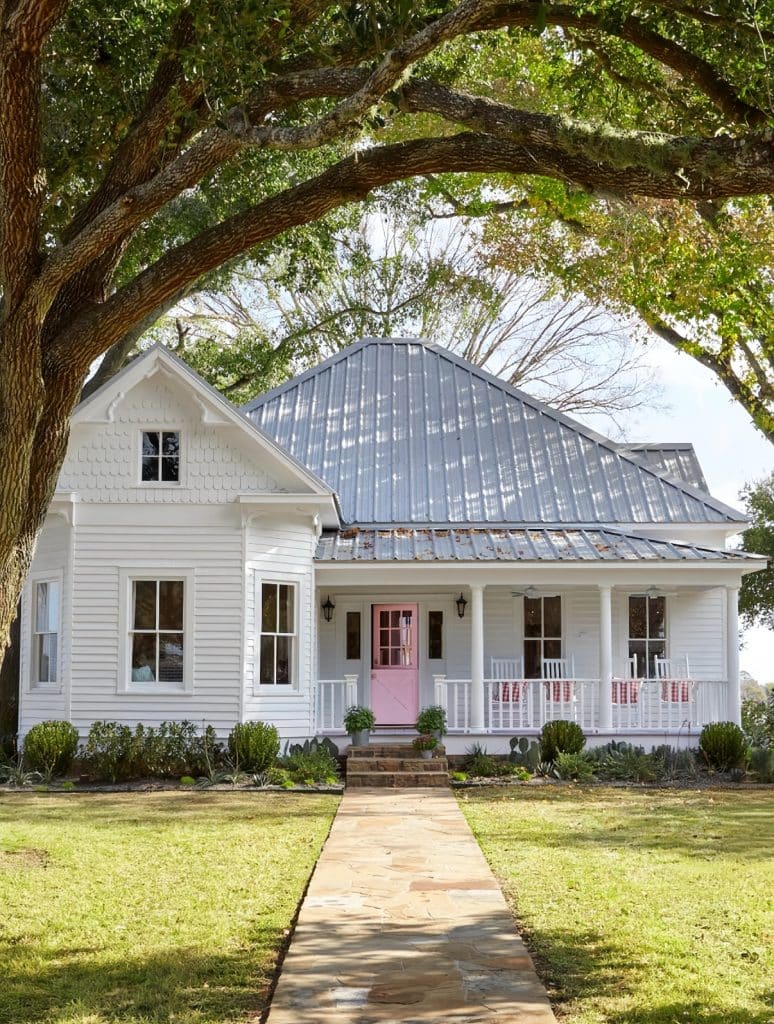
Painting the front door a soft, unexpected color like blush pink is one of the easiest ways to give a classic white farmhouse porch real personality. Paired with red gingham cushions on the porch furniture, the whole entry feels playful without looking overdone. It is a small, affordable update that makes wrap-around porches feel unmistakably personal.
This idea works because it takes almost no effort compared to a full exterior repaint. One door, one weekend, and the whole front of the house suddenly has a focal point worth noticing. Writers at front door color guides frequently point to a bold door as one of the highest-impact, lowest-cost updates a homeowner can make.
Budget Guide: A gallon of exterior door paint typically runs $25 to $45, and patterned porch cushions cost $20 to $50 per pair. You can find both at Home Depot, Target, or Walmart. Painting just the door is one of the most affordable upgrades on this entire list.
The Real Talk
Nobody tells you that a huge porch sounds better in theory than it feels in practice if there is nowhere comfortable to actually sit. A few great chairs matter more than square footage. Function first, decoration second, every single time.
A Two-Story Wrap-Around Porch Adds Room for Every Season
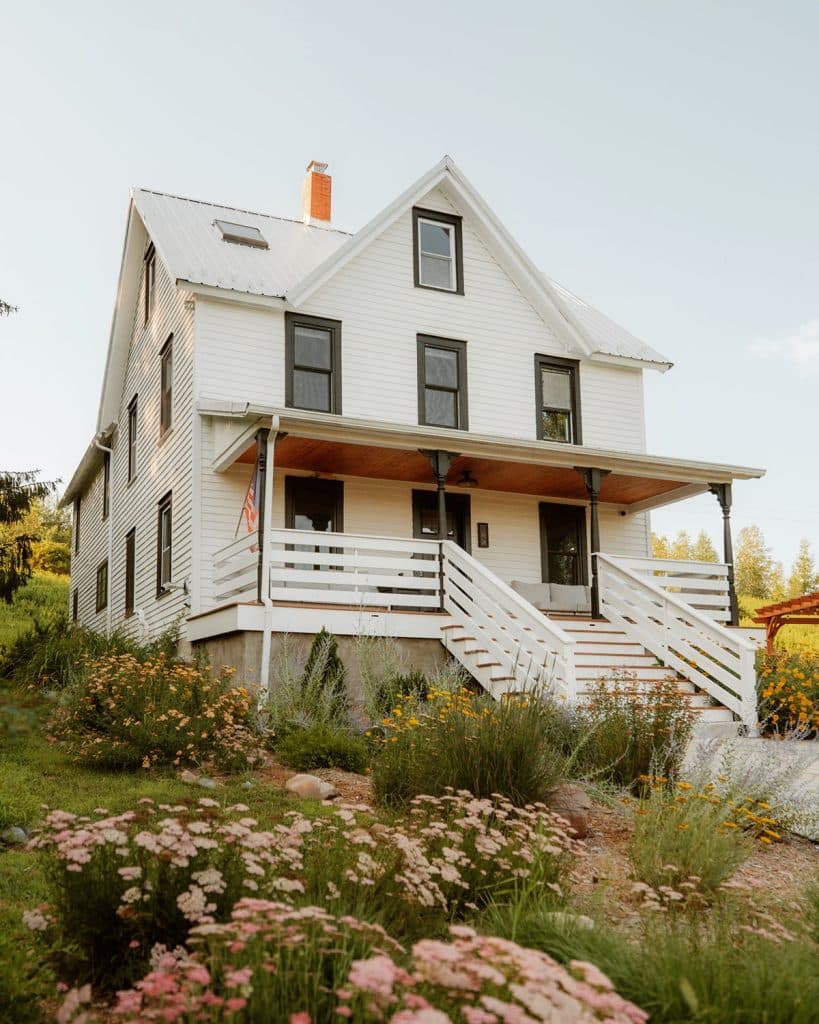
Building a covered porch that spans the full width of a taller farmhouse, complete with wide steps and a simple railing, gives a family a serious outdoor living space through every season. The wood ceiling detail overhead adds warmth that a plain painted underside never quite achieves. This layout represents one of the most ambitious versions of wrap-around porches on this whole list.
This idea works because the extra height and depth create real usable square footage, not just a narrow strip for walking past. Wildflower beds planted along the base soften all those straight architectural lines. Landscape writers at cottage garden features often recommend native wildflowers as a low-maintenance way to soften a tall foundation.
Budget Guide: A covered porch addition of this scale typically runs $15,000 to $40,000, depending on size and materials, best planned with a contractor. Wildflower seed mixes for the surrounding beds cost $10 to $30 per package. You can find seed mixes at Home Depot, Amazon, or a local garden center.
What Makes a Wrap Around Porch Worth Building
Wrap-around porches earn their reputation because they never limit a family to just one view or one spot to sit. Morning coffee on the east side, evening dinner on the west side, all without moving a single piece of furniture indoors. That flexibility is the whole point of the design.
Shade and shelter matter just as much as the shape of the porch itself. Mature trees, a deep roofline, or a simple awning all extend how many months a porch actually gets used each year. A porch that stays too hot or too exposed tends to sit empty no matter how beautiful it looks in photos.
The Family Win
Three easy ways to start building this feeling at home. Add one comfortable swing or rocking chair set before anything else. Paint the front door a color that makes you smile every time you walk up. Plant one bed of low maintenance flowers along the porch foundation for instant softness.
Personal touches make the biggest difference for the smallest cost. A painted door, a patterned cushion, or a well-placed swing can turn a plain porch into the favorite spot in the whole house. Those details are almost always more affordable than any structural change.
Scale should match how a family actually lives outside. A smaller porch with two great chairs beats a huge one filled with furniture nobody uses. Building for real daily habits, not just curb appeal, is what makes a porch worth the investment.
Enjoyed this post?
Share the love with another mom!
Every share helps this little blog grow — thank you so much