
Make sure to join my list for Weekly Tips and Recipes to Your Inbox
Fence Edging Ideas I Keep Saving For Our Never-Ending Yard Project

A little note: Some images in this post may come from third-party sources and are shared purely to inspire you. All credit goes to their original creators. Visit our Image Credits Policy for more information.
I stood at the edge of my yard on a Sunday afternoon, staring at the strip of bare dirt running along the fence line. Fence edging had been on my list for over a year, right behind a dozen other things that always felt more urgent.
Every time I mowed, that same strip looked worse. Grass crept toward the fence, weeds filled in the gaps, and nothing about it ever looked intentional, no matter how many times I trimmed it back.
I finally got tired of ignoring it. One afternoon I started scrolling through yard after yard, looking for something that felt doable instead of professionally installed.
What I noticed first was how much a clean border changed the whole feel of a fence line. A little fence edging did more visual work than any plant I had tried adding on its own.
I started saving every photo that made that connection between fence and lawn look deliberate. Rocks, mulch, metal strips, even simple curved lines cut straight into the grass. None of it required a full landscaping crew.
I tried a small section myself that fall, just enough to test whether I actually liked maintaining it. It held up better than I expected, and it made the rest of the yard look less finished by comparison.
That was the real lesson. Fence edging is one of those small, unfinished-looking details that quietly makes an entire yard feel considered once it is actually there.
I kept collecting the ideas that made me stop scrolling, the kind I would genuinely send to a friend staring at her own bare fence line. Every idea below came from that list, tested against our own real, sometimes muddy, very lived-in backyard. These are the ones that finally worked.
What We're Exploring
- 01 Boulder Lined Beds Give A Fence Line Real Weight
- 02 Brick Bordered Beds Add A Classic Finish Under A Shade Tree
- 03 Two Tone Gravel Edging Turns A Border Into A Design Feature
- 04 A Mulched Border With A Shepherd Hook Accent Feels Warm And Welcoming
- 05 A Low Block Wall Turns Fence Edging Into A Raised Planting Bed
- 06 River Rock Channels Solve Fence Line Drainage And Look Great Doing It
- 07 A Poured Concrete Curb Gives Turf A Crisp, Permanent Edge
- 08 Corten Steel Edging Brings A Modern Industrial Line To A Garden Bed
- 09 A Clean Mulch Curve Against Turf Needs Almost No Extra Materials
- 10 Layered Gravel And Wood Slats Create A Contemporary Fence Border
- 11 What A Finished Fence Line Actually Does For A Family Yard
- 12 The Mega Mom Moment
Boulder Lined Beds Give A Fence Line Real Weight
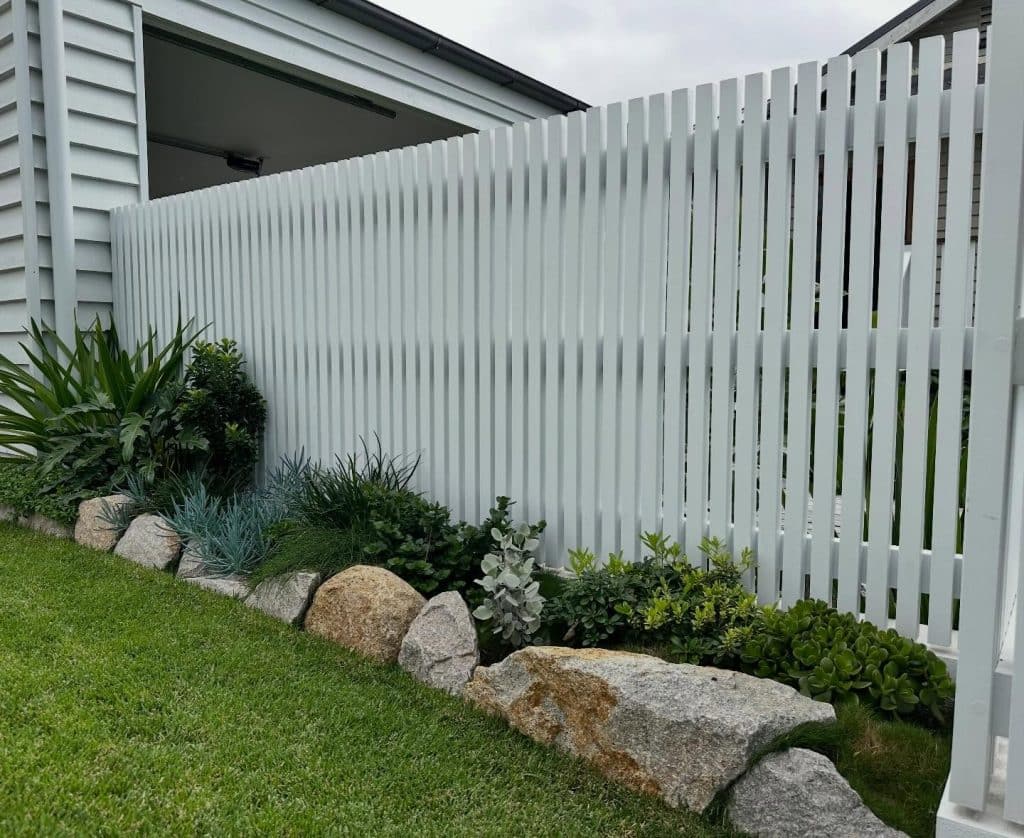
Lining the base of a fence with a row of large, natural boulders is one of the sturdiest forms of fence edging you can build, and it requires almost no ongoing maintenance once placed. The boulders hold soil in place while giving the bed a grounded, permanent feeling that smaller edging materials cannot match. That solidity is part of what makes this idea worth the initial effort.
Choosing boulders with at least one flat side to rest against the ground, a placement tip often mentioned in outdoor design coverage on BHG.com, keeps them from shifting over time. That small detail saves you from having to reposition stones every spring.
Budget Guide: Medium-sized landscape boulders typically cost $40 to $120 each depending on size. You can find good options at a local landscape supply yard or through a stone retailer. Buying a few extra small stones to fill gaps is worth the minor added cost.
Brick Bordered Beds Add A Classic Finish Under A Shade Tree
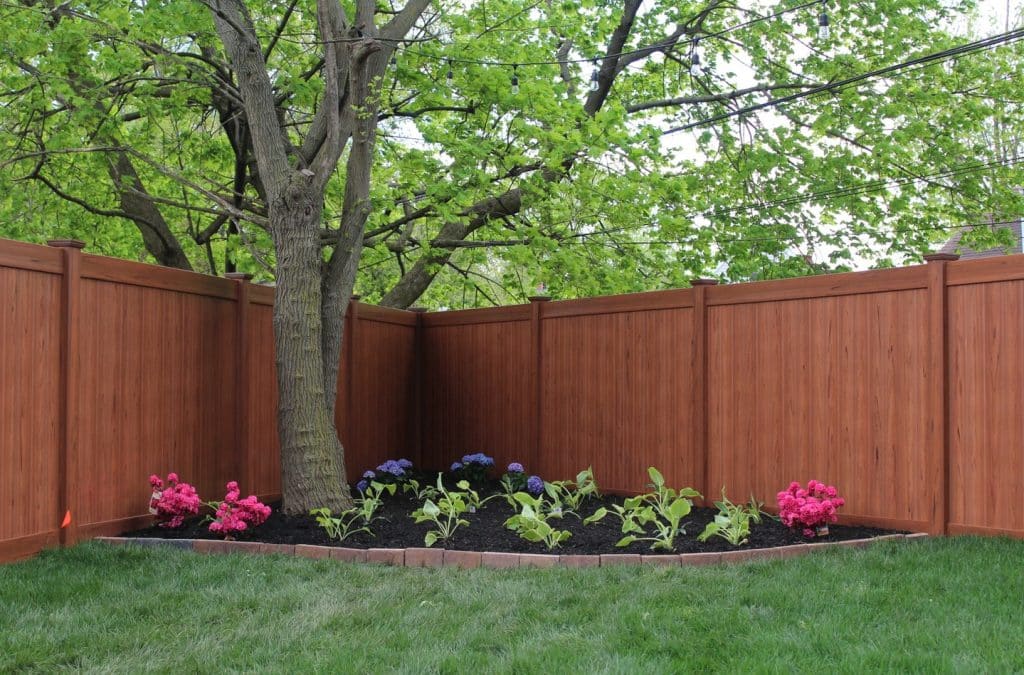
This idea works particularly well for a family yard where a shade tree already anchors one corner of the fence line. Bright annuals planted inside the brick border pop against the darker mulch, giving the whole corner a cheerful, tended look. It becomes the kind of spot people naturally gather near in the evening.
Setting bricks at a slight angle rather than perfectly flat, a detail often shown in classic garden border designs on Garden Design, adds subtle texture without much extra effort. That small tilt catches light differently than a flat brick ever could.
Budget Guide: Standard landscape bricks typically cost $0.50 to $1.50 each, so a full border usually runs $30 to $80 depending on bed size. You can find them at Home Depot, Lowe’s, or a local masonry supplier.
Two Tone Gravel Edging Turns A Border Into A Design Feature
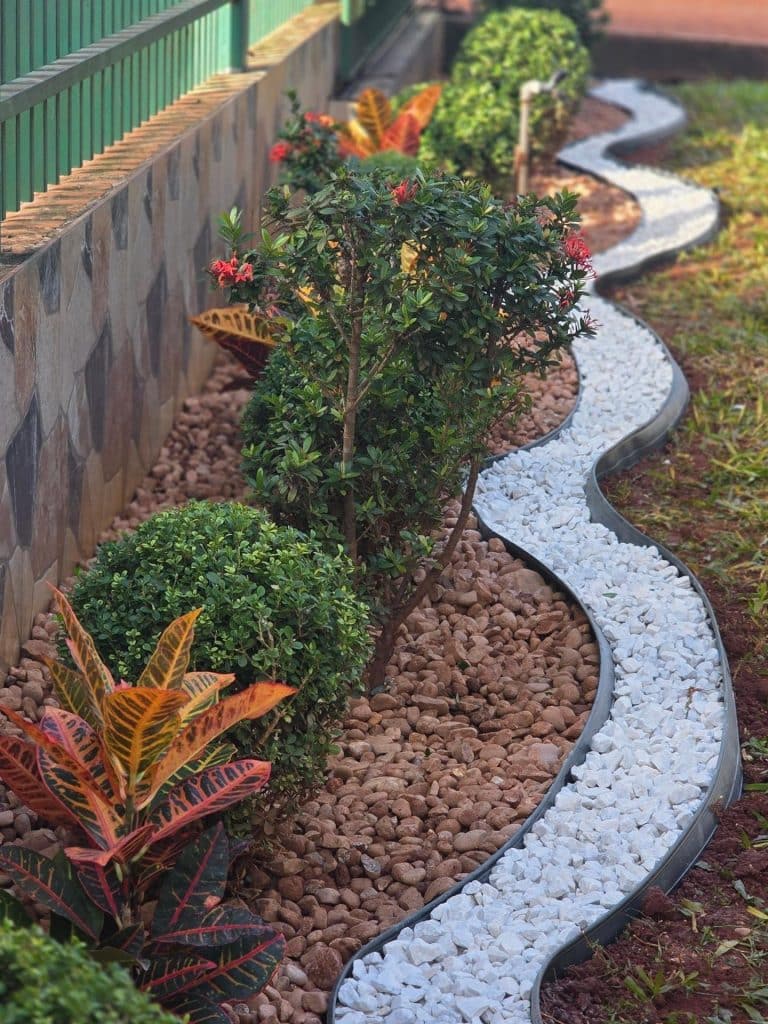
Combining two different gravel colors along a curved metal edge is one of the more decorative approaches to fence edging, and it turns a simple border into something that looks professionally designed. The contrast between the darker and lighter stone creates a clear visual path that guides the eye along the entire fence line. It is a detail that makes even a small side yard feel intentional.
Using flexible metal landscape edging to hold the curve, a material frequently recommended in DIY hardscaping guides on FamilyHandyman.com, keeps the two gravel colors from mixing together over time. That clean separation is what makes the whole design read as polished.
Budget Guide: Decorative gravel typically costs $40 to $70 per half-ton bag depending on color and stone size. Flexible metal edging runs about $15 to $30 per twenty-foot roll at Home Depot or Amazon.
A Mulched Border With A Shepherd Hook Accent Feels Warm And Welcoming
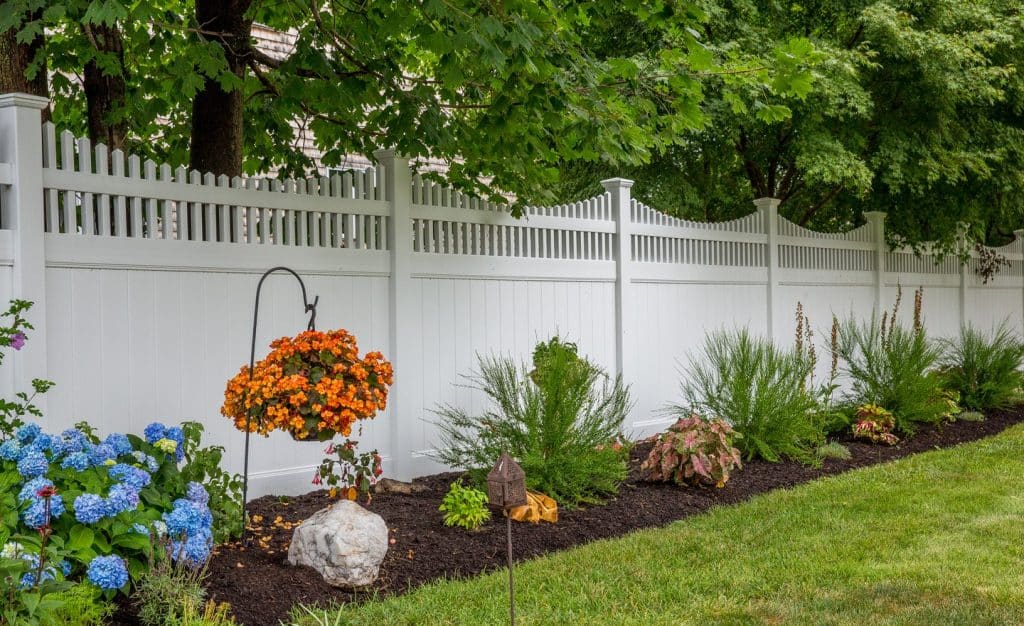
A clean mulched bed running along a picket fence, dressed up with a single shepherd hook and a hanging planter, is one of the simplest forms of fence edging to maintain season after season. Fresh dark mulch alone gives the fence line a finished look, and the hanging planter adds height without needing another shrub. That balance of low effort and real charm is exactly why this idea keeps showing up.
Refreshing the mulch layer once or twice a year, a maintenance habit often recommended in seasonal yard guides on The Spruce, keeps the border looking crisp without much ongoing work. That small yearly task is really all this style asks of you.
Budget Guide: Bagged mulch typically costs $4 to $6 per bag, with most residential beds needing eight to fifteen bags depending on length. A decorative shepherd hook runs $15 to $30 at Home Depot, Target, or Amazon.
A Low Block Wall Turns Fence Edging Into A Raised Planting Bed
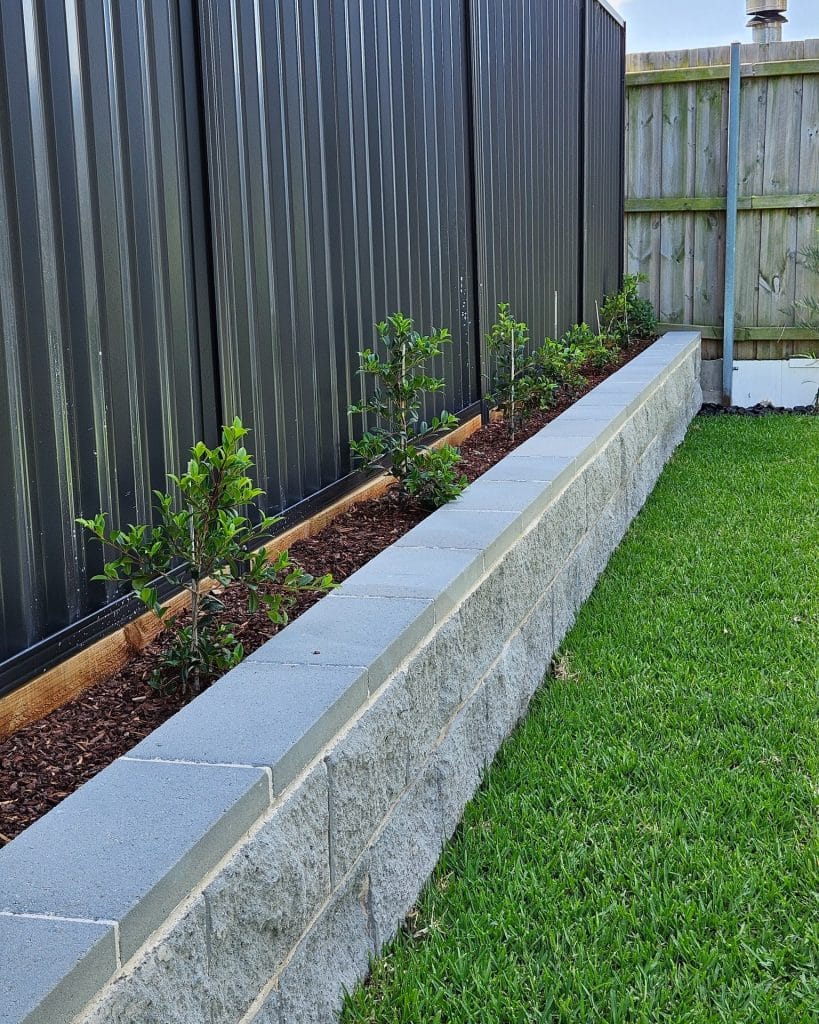
Building a low concrete block wall along the base of a fence transforms simple fence edging into an actual raised planting bed, giving new shrubs and small trees a defined space to establish roots. The wall holds mulch and soil in place far better than loose edging ever could. That structure matters most in a yard where drainage or soil quality has been a struggle.
Choosing interlocking blocks designed for low walls, a product type often covered in outdoor renovation content on HGTV.com, means no mortar is required for a wall this height. That makes it a genuinely approachable weekend project for most families.
Budget Guide: Interlocking concrete blocks for a low wall typically cost $3 to $7 per block. A full run along a standard fence section usually costs $150 to $350 depending on length, available at Home Depot or a local landscape supply store.
River Rock Channels Solve Fence Line Drainage And Look Great Doing It
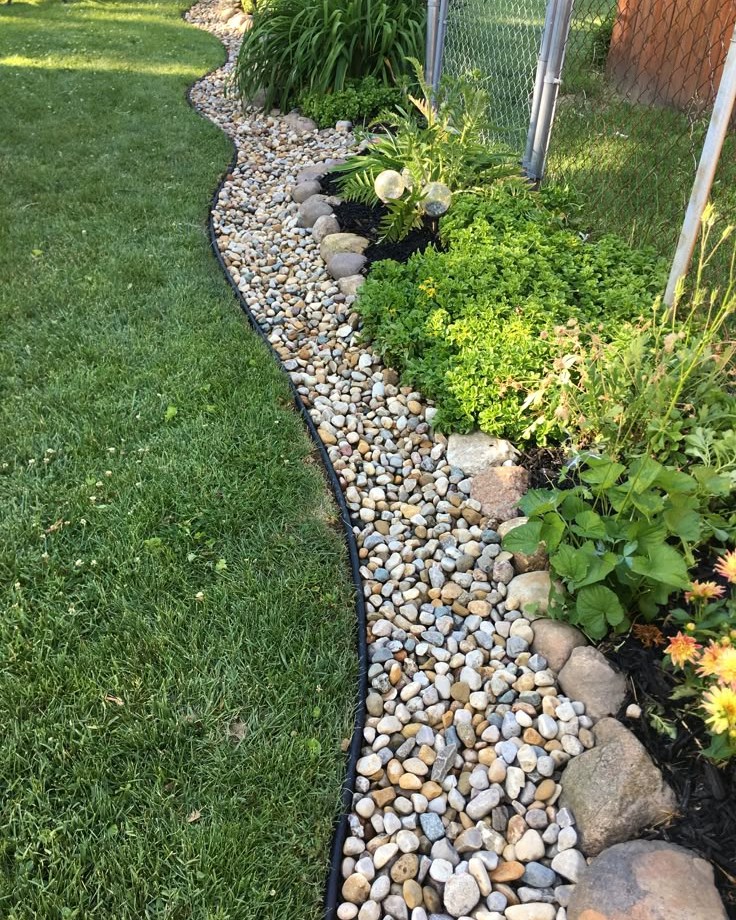
Filling a shallow channel along the fence with smooth river rock is one of the most practical types of fence edging, especially in a spot where water tends to pool after heavy rain. The rocks allow water to drain naturally instead of pooling against the fence posts, which protects both your lawn and the fence itself over time. That functional benefit is part of what makes this idea worth prioritizing.
Lining the channel with black plastic edging before adding rock, a technique frequently mentioned in drainage-focused landscaping guides on FamilyHandyman.com, keeps the grass from creeping back into the rock bed. That small barrier saves significant maintenance time later.
Budget Guide: River rock typically costs $50 to $90 per half-ton bag depending on size and finish. Plastic landscape edging runs about $10 to $20 per twenty-foot roll at Home Depot, Lowe’s, or Amazon.
A Poured Concrete Curb Gives Turf A Crisp, Permanent Edge
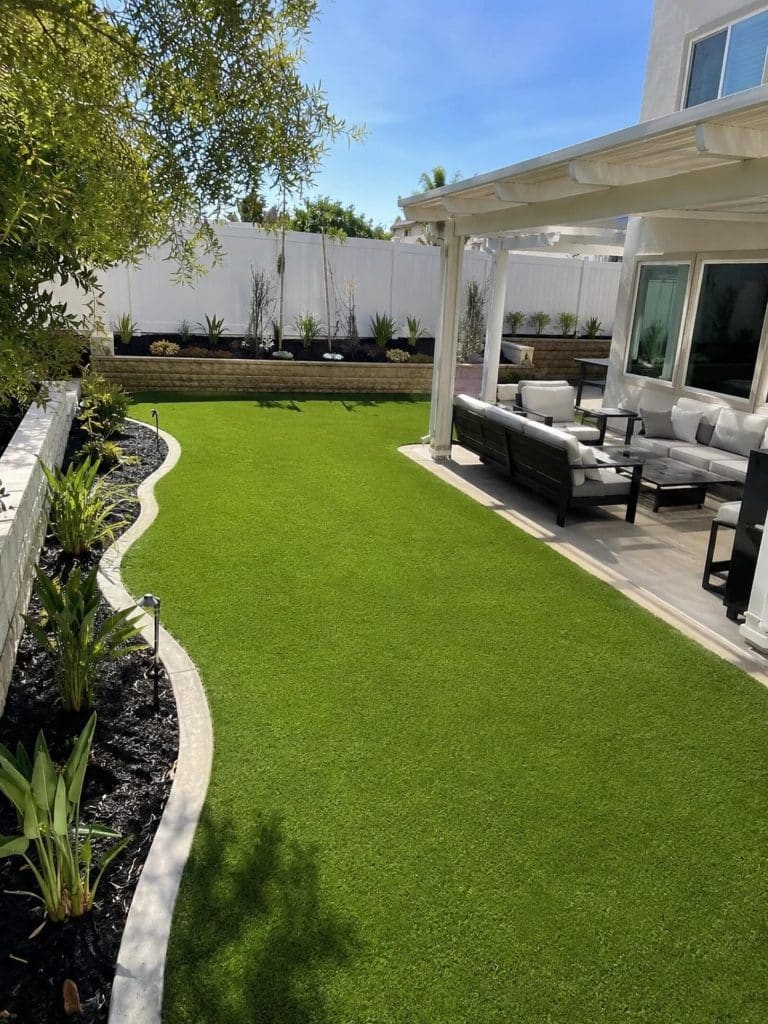
A poured concrete curb running the full length of a fence line is one of the most permanent solutions to fence edging, and it holds its clean line better than almost any other material over the long term. The smooth curve keeps turf and mulch beds completely separated, which means far less trimming along the fence itself. That reduction in upkeep is a real gift for a busy family.
Hiring a professional for the concrete pour itself, guidance often echoed in outdoor renovation advice on FamilyHandyman, is worth considering here since a poorly poured curb can crack within a year or two. This is one project where the finish quality really depends on the installer’s experience.
Budget Guide: Poured concrete curbing typically costs $8 to $15 per linear foot when professionally installed. For a standard backyard fence line, total costs usually run $400 to $1,200 depending on length and curve complexity.
Corten Steel Edging Brings A Modern Industrial Line To A Garden Bed
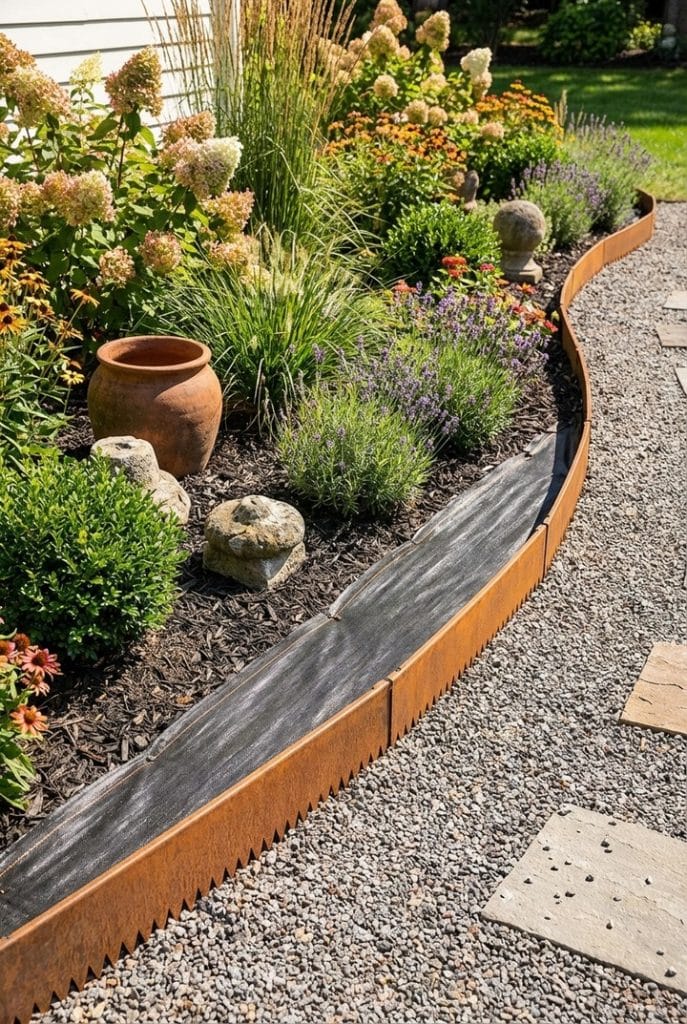
A ribbon of weathered Corten steel curving along a gravel path is one of the more striking modern takes on fence edging, and the rusted patina actually improves with age rather than needing to be maintained. The material holds a crisp, sculptural line that softer materials like mulch or gravel simply cannot achieve on their own. That architectural quality is what makes this idea feel so distinctive.
Sourcing pre-rusted steel edging rather than waiting for raw steel to weather naturally, a shortcut often mentioned in modern landscape design coverage on Dwell, saves months of waiting for the color to develop. That patience saved is worth the slightly higher upfront cost.
Budget Guide: Corten steel landscape edging typically costs $8 to $18 per linear foot depending on thickness and style. It is available through specialty landscape suppliers or online retailers specializing in metal garden edging.
A Clean Mulch Curve Against Turf Needs Almost No Extra Materials
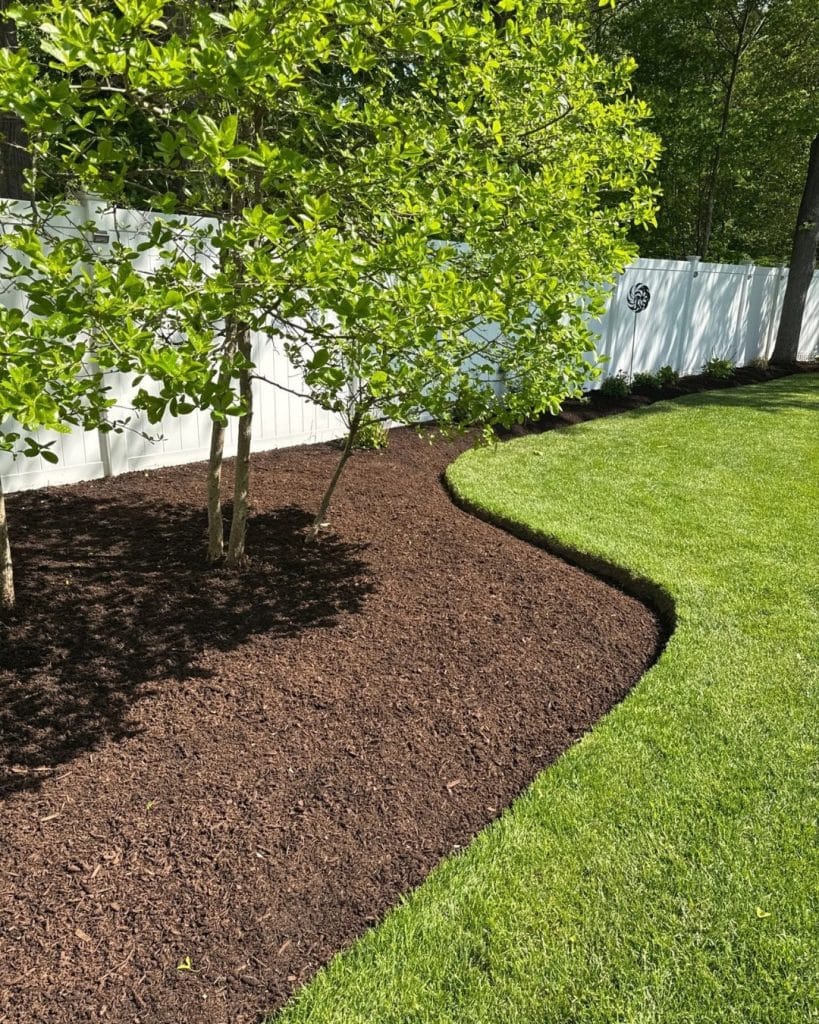
Sometimes the simplest fence edging solution is also the most effective, and a clean curved line where mulch meets turf proves exactly that. No stone, brick, or metal is required at all, just a sharp, well-maintained edge cut directly into the lawn. That simplicity keeps costs low while still giving the fence line a defined, tended border.
Re-cutting the edge with a half moon edger once or twice a season, a basic lawn care habit often recommended in yard maintenance guides on BHG.com, is really all this style requires to stay crisp. That small recurring task keeps the whole border looking freshly done.
Budget Guide: A half moon lawn edger typically costs $15 to $30 at Home Depot or Amazon, and bagged mulch runs $4 to $6 per bag depending on how much bed area you are covering.
Layered Gravel And Wood Slats Create A Contemporary Fence Border
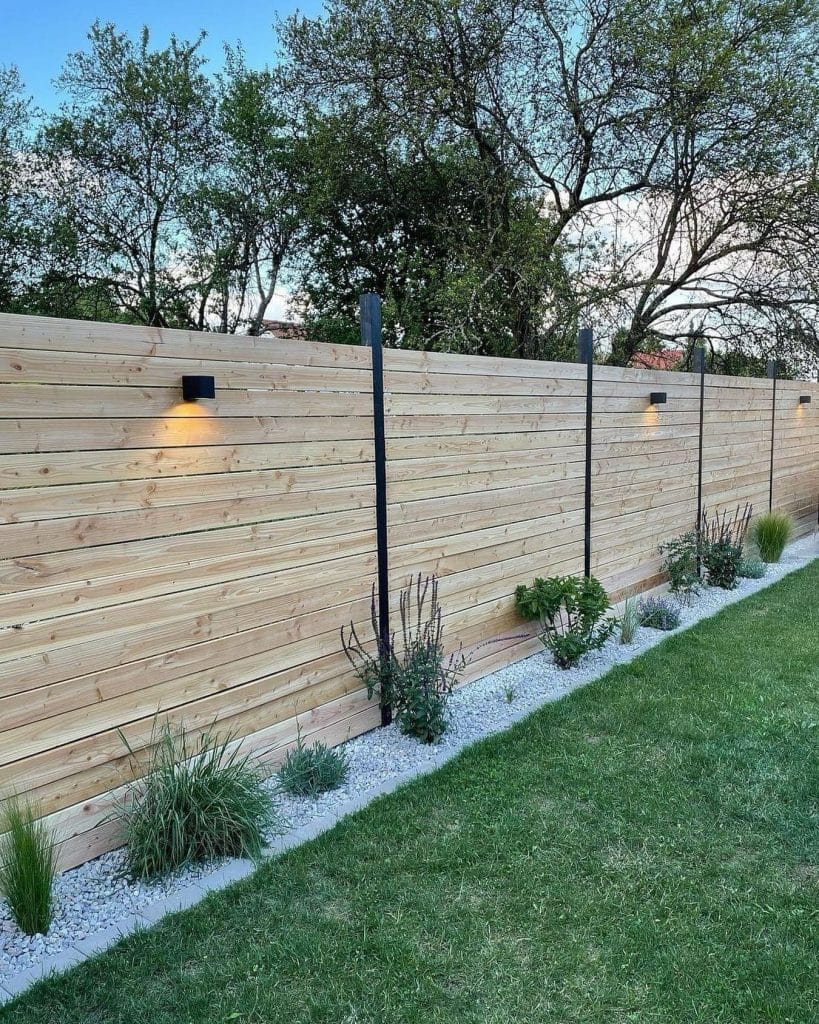
Pairing a wide band of white gravel with a contemporary wood slat fence is one of the cleanest, most modern approaches to fence edging available right now. The bright stone reflects light back up toward the fence, which makes the whole boundary feel open rather than closed in. That brightness is especially valuable in a smaller backyard.
Using a landscape fabric barrier beneath the gravel, a step frequently emphasized in modern hardscape guides on Apartment Therapy, keeps weeds from working their way up through the stone. That single layer saves hours of maintenance over the following years.
Budget Guide: White decorative gravel typically costs $50 to $80 per half ton bag, and landscape fabric runs about $15 to $25 per fifty foot roll at Home Depot or Amazon.
What A Finished Fence Line Actually Does For A Family Yard
There is a reason fence edging ends up mattering more than people expect once it is actually in place. A defined border along the fence line does the quiet work of making an entire yard look cared for, even on the weeks nothing else gets done. That single strip carries more visual weight than most homeowners realize.
Part of what makes this project worth prioritizing is how much easier it makes regular yard maintenance. Once fence edging separates lawn from garden bed, mowing along the fence becomes fast and simple instead of a slow, careful trim job every single week. That time savings adds up over an entire season.
The Mega Mom Moment
I used to think our yard needed more plants to look finished. What it actually needed was a clear line between the lawn and the fence. Once I added simple **fence edging** along that one strip, the whole yard looked twice as tended, even on the weeks I had not touched a single flower bed.
This kind of border also protects the fence itself in ways that are easy to overlook. Grass and weeds growing directly against fence posts trap moisture, which speeds up rot in wood fencing over time. A little fence edging keeps that moisture, and the maintenance headache that comes with it, at a real distance.
For a family already juggling a full yard of projects, fence edging is one of the few upgrades that pays off almost immediately. The visual difference shows up the same weekend it gets installed, long before slower projects like new plantings ever mature.
Enjoyed this post?
Share the love with another mom!
Every share helps this little blog grow — thank you so much