
Make sure to join my list for Weekly Tips and Recipes to Your Inbox
IKEA Nursery Hacks That Make A Small Baby Room Actually Function

A little note: Some images in this post may come from third-party sources and are shared purely to inspire you. All credit goes to their original creators. Visit our Image Credits Policy for more information.
I stood in the doorway of the nursery at two in the morning holding a very unhappy newborn, searching for the wipes I swore I had left right there. That single moment taught me more about nursery hacks than every baby registry checklist combined. Nothing in that room was actually set up for real life yet.
I had spent weeks picking out the softest rug and the sweetest little mobile. I had not spent nearly enough time thinking about where diapers, lotion, or spare pajamas would actually live.
That first exhausted week rearranged my priorities fast. Suddenly the prettiest nursery in the world meant nothing if I could not find a clean onesie in the dark.
So I started paying closer attention to how other moms set up their spaces online. Not the picture-perfect reveal photos, but the practical ones showing drawers, carts, and shelves actually being used.
I noticed how many small changes made a real difference once a baby actually moved in. A dresser doubling as a changing table. A rolling cart holding everything within arm’s reach.
None of these ideas required a full nursery overhaul or a big budget. Most of them worked with furniture many families already owned or could find secondhand easily.
What mattered most was function over fantasy. A drawer organized by size beats a drawer that simply looks tidy in a photo but takes ten minutes to search through at midnight.
I slowly started applying these small shifts to our own space, one drawer and one shelf at a time. Every change made those overwhelming first weeks feel just slightly more manageable.
So here are the ideas that genuinely changed how our nursery functioned day to day. Every single one came from watching real families figure out real solutions, not from a showroom.
What We're Exploring
- 01 A Dresser Changing Table Combo Is Still The Smartest Nursery Hack Around
- 02 A Rolling Cart Turns Diaper Changes Into An Easy Nursery Hack Anywhere
- 03 The Family Win Box
- 04 A Round Rattan Shelf Makes Nursery Hacks Feel Personal Instead Of Practical Only
- 05 Cube Shelving Units Solve Almost Every Nursery Hack Storage Problem At Once
- 06 The Real Talk Box
- 07 An Open Slat Wardrobe Brings A Playful Nursery Hack Into A Tight Corner
- 08 A Simple Pine Wardrobe Keeps This Nursery Hack Timeless And Budget Friendly
- 09 A Built-In Wardrobe And Changer Combo Is The Ultimate Space-Saving Nursery Hack
- 10 The Nursery Hacks Habit That Actually Saves New Parents Time
- 11 The Mega Mom Moment
A Dresser Changing Table Combo Is Still The Smartest Nursery Hack Around
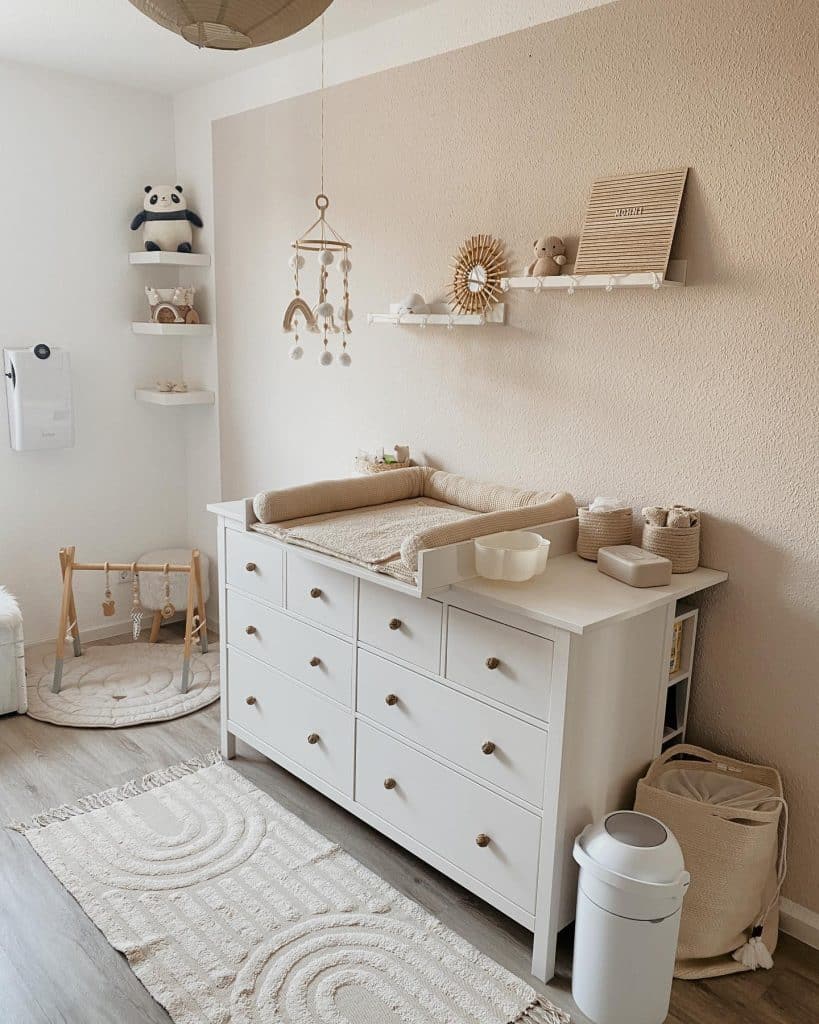
Turning a standard dresser into a changing station by adding a simple topper remains one of the most practical nursery hacks available. It gives diapering supplies a permanent home without dedicating a whole separate piece of furniture to the task. Once baby outgrows diapers, the topper comes off, and a regular dresser remains.
Keeping baskets and small bins along the top surface for diapers, wipes, and lotion turns the whole area into a self-contained station. Nothing needs to be searched for across the room during a middle-of-the-night change. That alone makes exhausted 2 am parenting noticeably easier.
Budget Guide: A six-drawer dresser typically runs from two hundred to five hundred dollars at IKEA or Target. A changing topper alone costs around thirty to sixty dollars if bought separately. Small woven baskets for organizing supplies run about eight to fifteen dollars each at HomeGoods.
A Rolling Cart Turns Diaper Changes Into An Easy Nursery Hack Anywhere
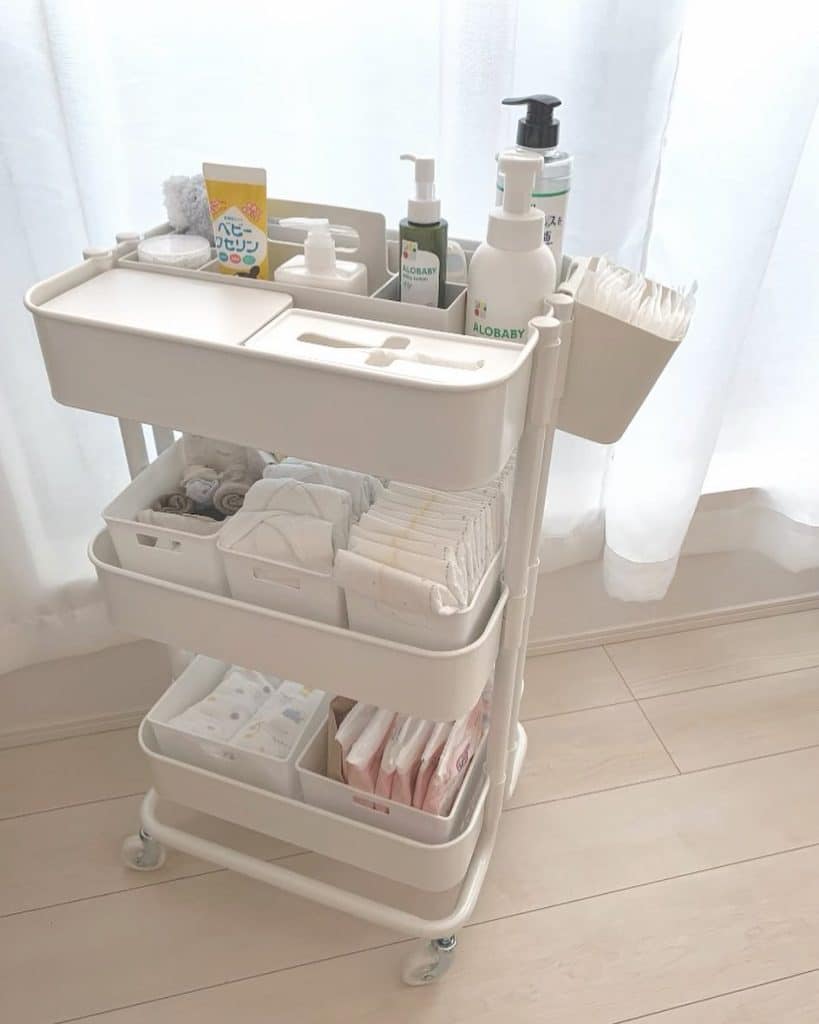
A simple three-tier rolling cart solves the problem of needing supplies in more than one room. Instead of building a second changing station, the whole setup rolls wherever it is needed most that day. It works just as well beside a crib as it does next to the living room couch.
Filling each tier with small labeled bins keeps diapers, wipes, and skincare items separated and easy to grab quickly. The wheels make late-night changes faster since nothing needs to be carried from another room. This is especially useful for families without a lot of extra floor space for a full station.
Budget Guide: A basic three-tier rolling cart typically costs between forty and eighty dollars at IKEA or Target. Small plastic or fabric bins for organizing run about three to seven dollars each at Amazon. The whole setup usually stays under one hundred dollars total.
The Family Win Box
Stock two identical changing stations instead of one if your home has multiple levels. Duplicate diapers, wipes, and a spare outfit in each spot so nobody has to carry a screaming baby up a flight of stairs at three in the morning just to find a clean sleeper.
A Round Rattan Shelf Makes Nursery Hacks Feel Personal Instead Of Practical Only
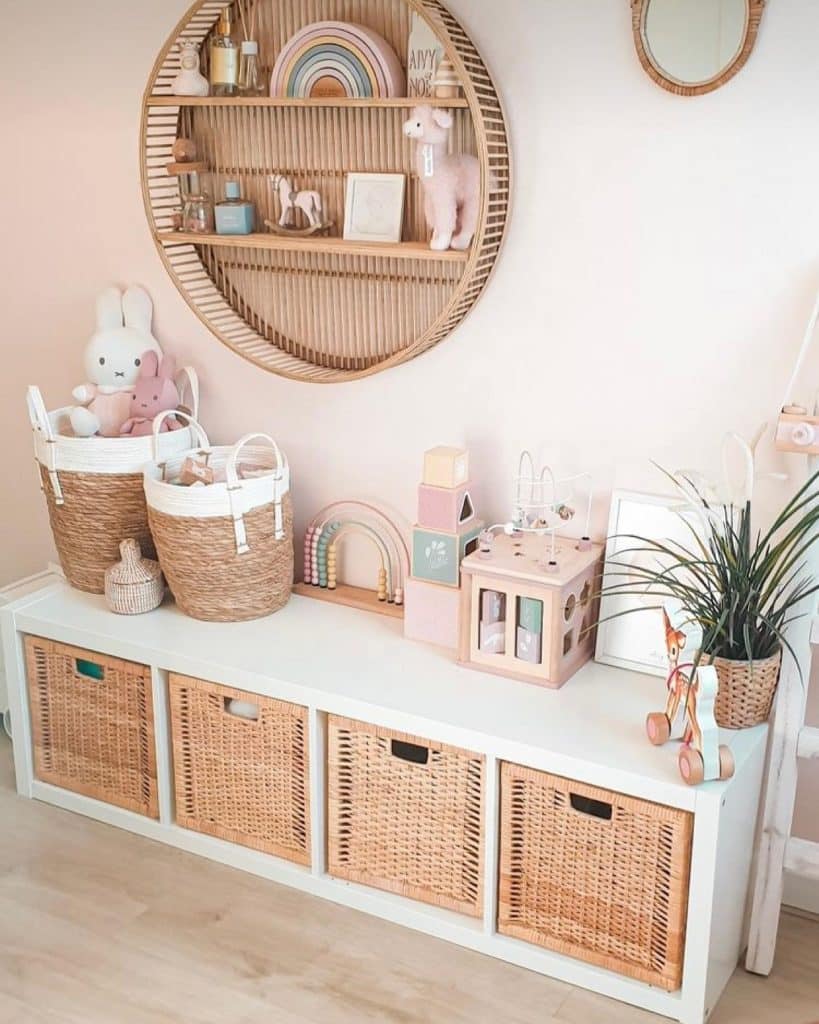
Not every nursery hack needs to be purely functional, and this one proves that beautifully. A round rattan shelf mounted above a storage bench gives small keepsakes and favorite toys a proper place to be displayed. It adds warmth and texture to a wall that would otherwise sit empty.
Pairing the shelf with woven storage baskets below keeps the whole area from feeling cluttered even with toys constantly rotating in and out. The mix of soft textures and neutral tones photographs beautifully but also holds up to daily use. It is the kind of detail that makes a nursery feel personal rather than generic.
Budget Guide: Round rattan wall shelves typically run between sixty and one hundred twenty dollars at Target or Wayfair. Woven storage baskets cost around fifteen to thirty dollars each at HomeGoods. A storage bench with cubbies underneath runs from one hundred to two hundred fifty dollars at IKEA.
Cube Shelving Units Solve Almost Every Nursery Hack Storage Problem At Once
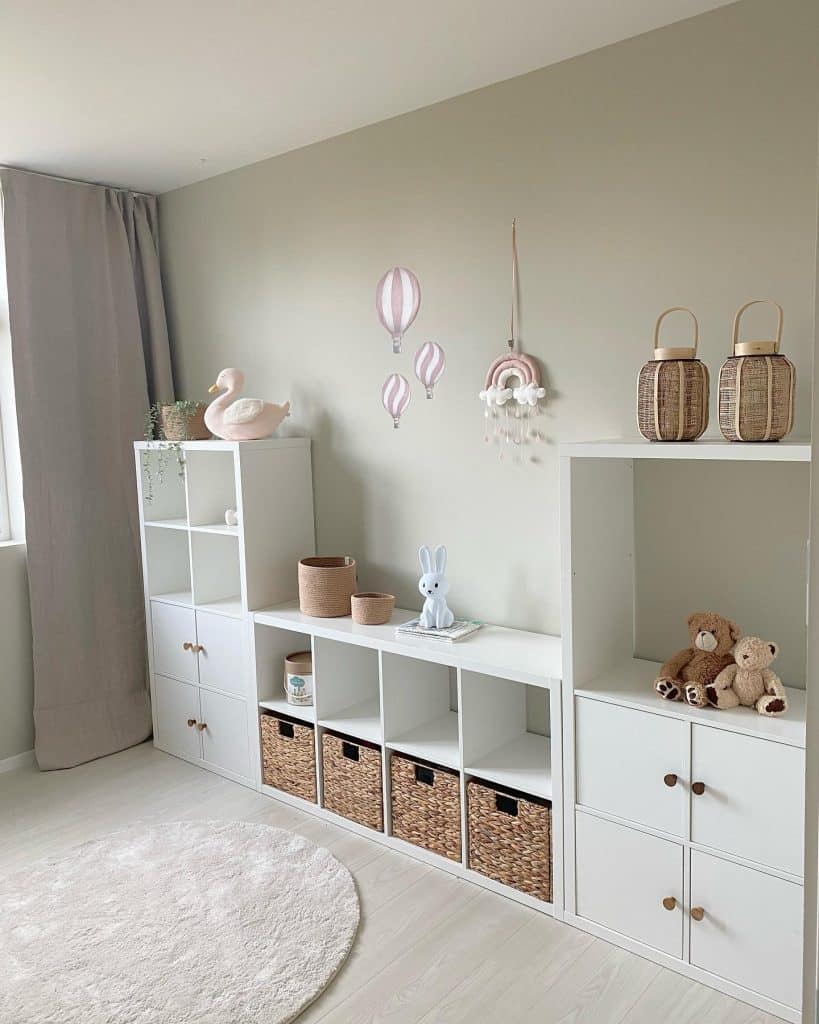
A wall of connected cube shelving units remains one of the most flexible nursery hacks for families dealing with an ever-growing pile of toys, blankets, and books. Mixing open cubbies with closed door sections lets you decide what stays visible and what gets hidden away. It adapts easily as a child grows from infant to toddler.
Woven baskets tucked into the open cubbies keep smaller items contained without needing to label every single bin. Taller sections on either side can hold larger toys, extra blankets, or seasonal clothing swaps. This kind of modular setup rarely needs replacing even as a child’s needs change dramatically over the years.
Budget Guide: Cube shelving units typically cost between seventy and two hundred dollars per section at IKEA. Water hyacinth storage baskets run around ten to twenty dollars each at Target or Amazon. A full wall setup usually lands between two hundred and five hundred dollars total.
The Real Talk Box
Most nursery articles make storage sound like a one time project you finish before baby arrives. It really is not. The best setups get adjusted constantly during the first year as you learn what your family actually needs, and that is completely normal.
An Open Slat Wardrobe Brings A Playful Nursery Hack Into A Tight Corner
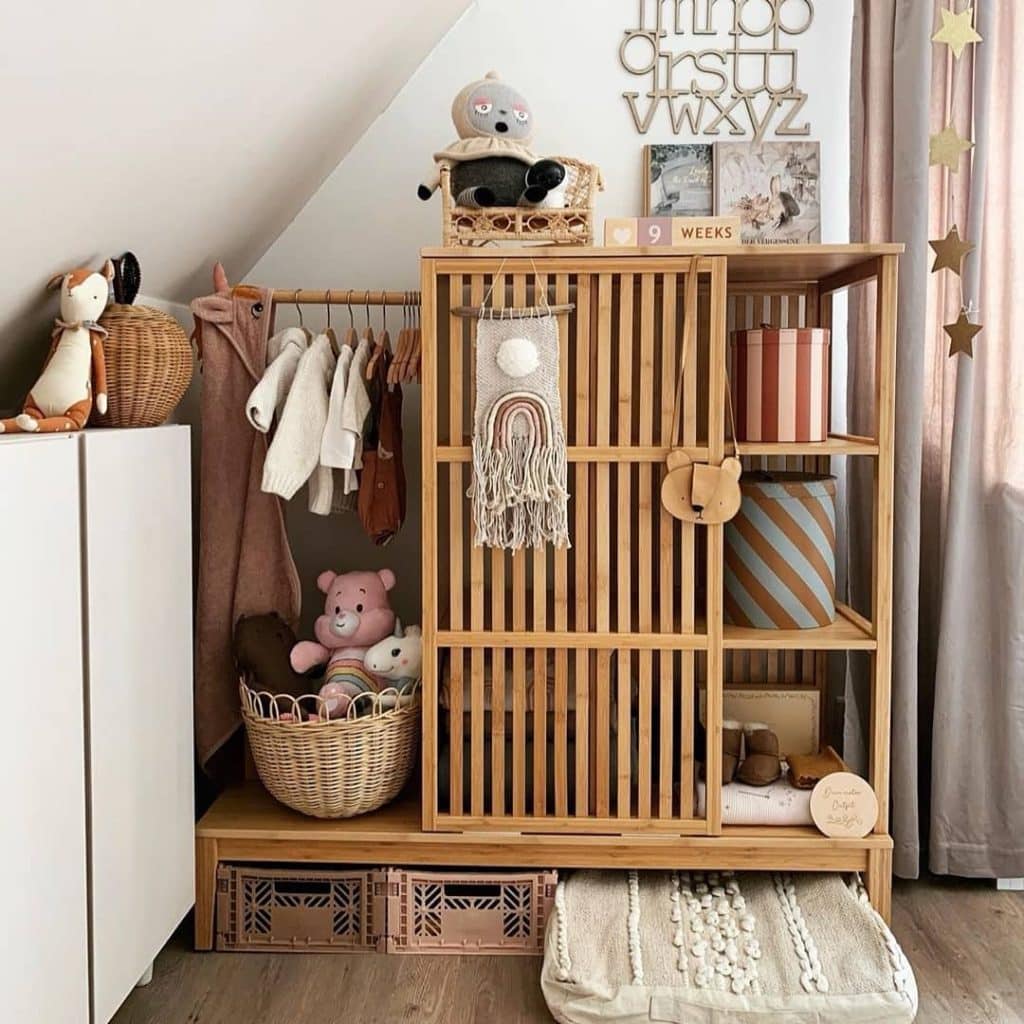
This kind of open storage works particularly well for moms who want quick visual access without digging through drawers. A quick glance shows exactly what is folded, hung, or tucked into baskets below. It removes the friction of opening multiple doors just to find one small item.
This nursery hack also adds genuine character to a tight or awkwardly shaped corner of a room. The natural wood tone pairs easily with almost any nursery color palette. It turns an underused space into one of the most functional corners in the whole room.
Budget Guide: Bamboo slat wardrobe units typically cost between one hundred fifty and three hundred dollars depending on size, often found at Wayfair or specialty baby stores. Small woven baskets for the open shelves run about ten to twenty dollars each. A floor cushion underneath adds another thirty to sixty dollars at IKEA.
A Simple Pine Wardrobe Keeps This Nursery Hack Timeless And Budget Friendly
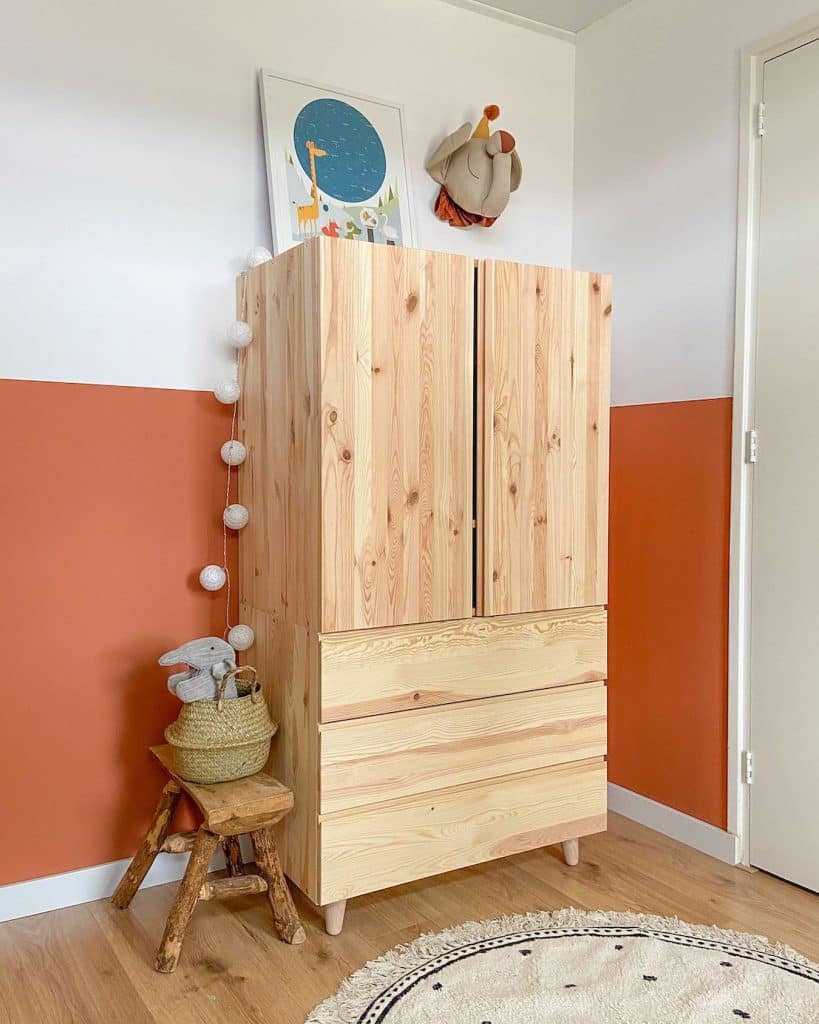
Leaving the wood unpainted keeps costs down while adding warmth that plastic storage bins simply cannot match. A small wooden stool nearby doubles as extra seating or a spot for a basket of stuffed animals. According to Apartment Therapy, natural wood tones continue to be one of the most requested nursery style choices among new parents.
This piece also transitions easily into a toddler room later without needing to be replaced. Unlike trend-driven furniture, plain wood rarely feels dated a few years down the road. It is a smart long-term investment disguised as a simple starter piece.
Budget Guide: Unfinished pine wardrobes typically run between one hundred fifty and three hundred dollars at IKEA. A small wooden stool costs around twenty to forty dollars at the same store. Optional paint or stain adds another fifteen to twenty-five dollars if you want to customize the finish later.
A Built-In Wardrobe And Changer Combo Is The Ultimate Space-Saving Nursery Hack
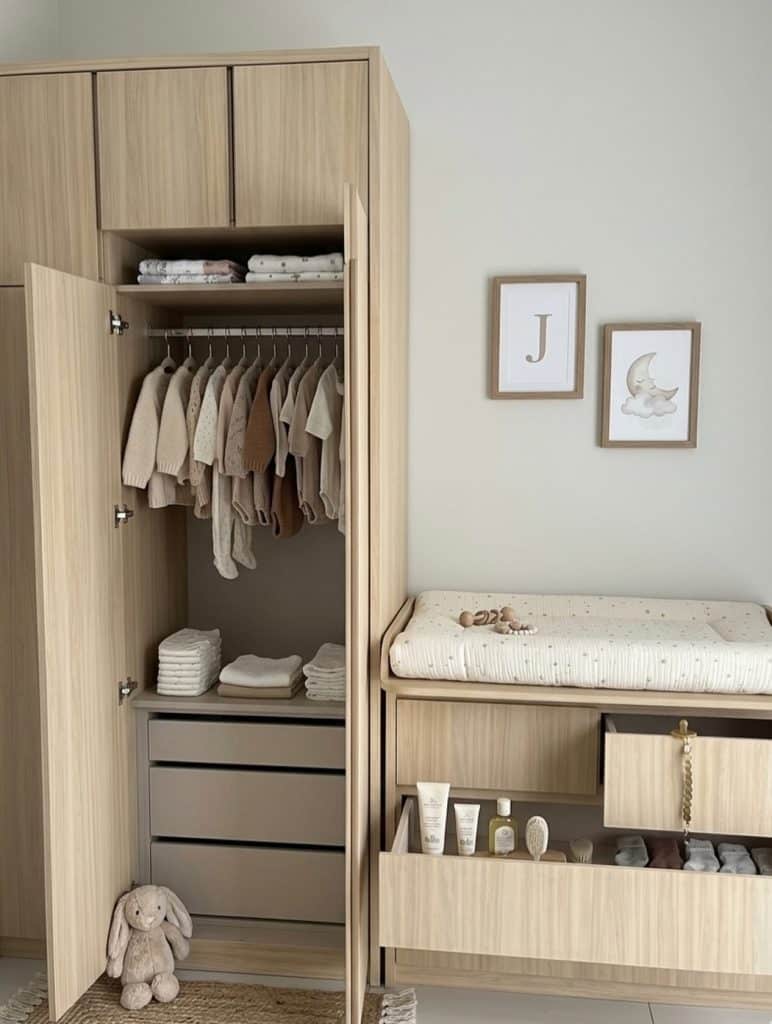
Drawers built directly beneath the changing pad keep lotion, diapers, and tiny socks within arm’s reach during every single change. The wardrobe above holds everything from swaddles to seasonal clothing without needing a second closet. This level of built-in organization removes so much of the daily searching that eats up time with a newborn.
For families short on square footage, this nursery hack delivers the most function per square foot on this entire list. It consolidates three or four separate furniture needs into one cohesive wall. That kind of efficiency matters most in the exhausting early months.
Budget Guide: A combined wardrobe and changing unit typically costs between four hundred and eight hundred dollars depending on size and material. Standalone versions of similar combo units can be found at IKEA or through custom furniture makers for a similar range. Drawer organizers for the changing station run about ten to twenty dollars at Target.
The Nursery Hacks Habit That Actually Saves New Parents Time
The most functional nurseries rarely come from one big shopping trip before baby arrives. They come from small adjustments made during the first few exhausted weeks of actually living in the space. What looks organized on day one rarely stays that way once real life moves in.
Nursery hacks that last are usually about proximity, not aesthetics. Keeping supplies close to where they get used matters far more than how coordinated everything looks in photos. That single shift changes how manageable daily routines feel almost immediately.
The Mega Mom Moment
I used to think a beautifully finished nursery meant I was ready for the baby. What actually made me ready was knowing exactly where every single item lived, even in the dark, even half asleep, even during a diaper blowout at four in the morning.
Storage that adapts as a baby grows tends to outperform anything bought with only the newborn stage in mind. A dresser, a cube shelf, or a simple wardrobe all continue serving a room well past the first year. Flexibility beats a perfectly matched nursery set every time.
Every family ends up rearranging at least once during that first year, and that is completely normal. The setup that works during month one rarely stays exactly right by month six. Adjusting as needs change is part of the process, not a sign anything was done wrong.
Enjoyed this post?
Share the love with another mom!
Every share helps this little blog grow — thank you so much