
Make sure to join my list for Weekly Tips and Recipes to Your Inbox
Minimalistic Spreads You Need To Try Every Week

A little note: Some images in this post may come from third-party sources and are shared purely to inspire you. All credit goes to their original creators. Visit our Image Credits Policy for more information.
I sat down with my journal on a random Tuesday night and just stared at the blank page. I had spent an hour the week before drawing a spread so detailed it took longer than the actual week did. A minimalistic spread felt like the only honest option left.
I had tried the heavily decorated layouts for months. Every page had stickers, washi tape, hand-lettered headers, and little illustrations tucked into every corner. It looked beautiful in photos, but it never once made my week easier to plan.
Somewhere along the way, I stopped enjoying my own journal. Opening it felt like starting a small art project instead of grabbing five quiet minutes to sort my week. That was never the point.
I started scrolling through simpler layouts almost by accident one night. A plain lined page here, a quiet grid there, nothing fancy, and something about them felt like relief. A minimalistic spread did not ask anything extra of me.
I began saving every clean, uncluttered page I came across. Some were completely blank lines waiting to be filled. Others had just enough structure to guide me without boxing me in.
I tried a few that week, mostly out of curiosity more than commitment. What surprised me was how much faster planning felt once the page stopped competing for my attention. The journal finally started working for me again instead of the other way around.
I noticed something else too. A minimalistic spread still holds real personality, just quieter. A single illustration, one soft color, or a short handwritten quote can carry a whole page without a single sticker in sight.
I kept collecting the layouts that made me want to open my journal again, the kind I would genuinely send to a friend who felt as overwhelmed by her own notebook as I once did. Every idea below came from that list. These are the pages that finally made journaling feel simple again.
What We're Exploring
- 01 A Structured Daily Layout Keeps Focus Without Feeling Crowded
- 02 The Family Win Box
- 03 A Simple Two Column List Turns Any Favorites Page Into A Keepsake
- 04 A Clean Weekly Spread With A Meal Column Solves Two Problems At Once
- 05 Boxed Weekly Columns Give Each Day Its Own Quiet Space
- 06 The Real Talk Box
- 07 A Lined Monthly Overview Keeps The Whole Month In One Glance
- 08 A Reflective Weekly Spread With Simple Bar Tracking Adds Meaning Without Mess
- 09 A Grid Of Labeled Boxes Turns Big Life Categories Into One Simple Page
- 10 Why A Simpler Page Ends Up Working Harder Than A Decorated One
- 11 The Mega Mom Moment
A Structured Daily Layout Keeps Focus Without Feeling Crowded
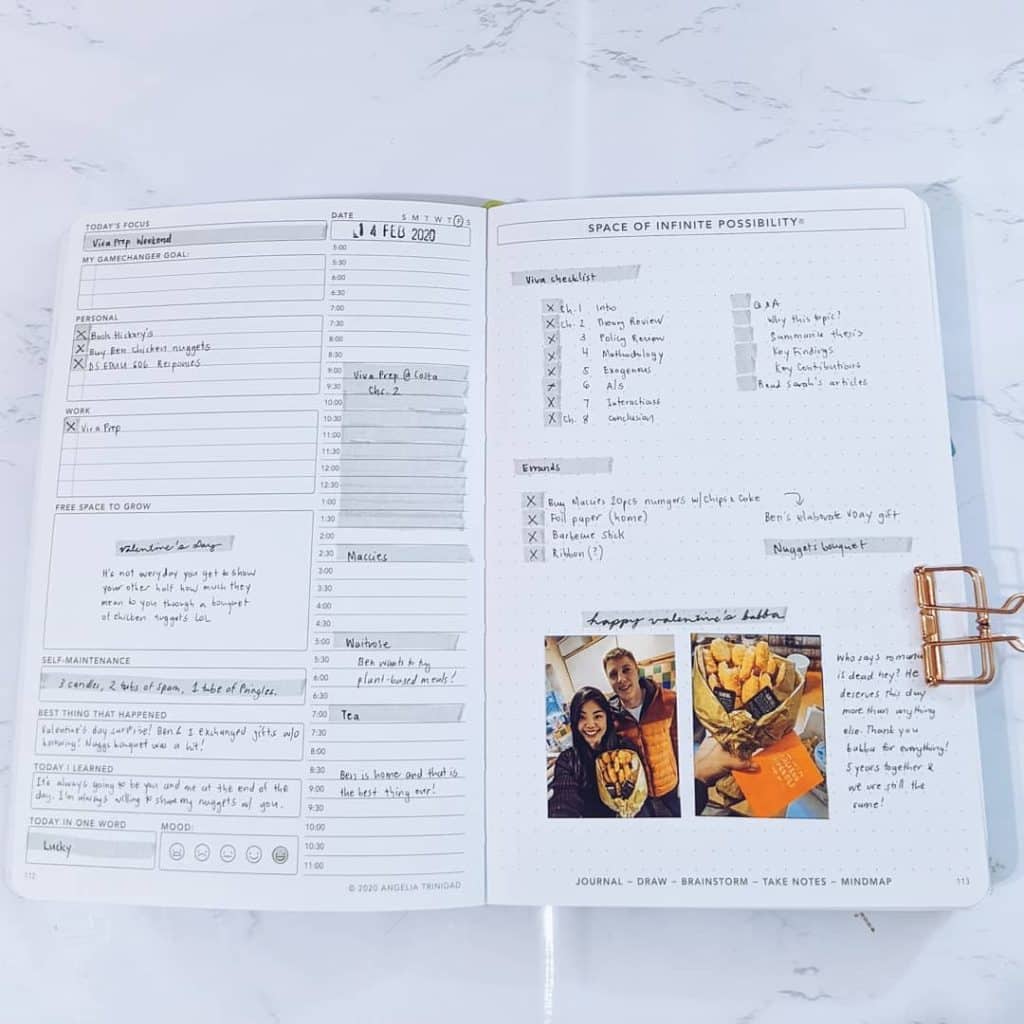
Dividing a page into clear sections like personal tasks, work tasks, and one main focus for the day is one of the most effective ways to build a minimalistic spread that still does real work. Every category gets exactly the room it needs and nothing more. That kind of restraint is what keeps a busy day from feeling scattered on paper.
Adding a small mood check or a single line for the best thing that happened, a reflection habit often mentioned in wellness content on Real Simple, gives the page a little warmth without adding clutter. One honest sentence does more than a whole decorated border ever could.
Budget Guide: A dot grid notebook for this kind of layout typically costs $12 to $22, and a simple black fine liner pen runs about $4 to $8 at Amazon or Target. No extra supplies are really needed beyond that.
The Family Win Box
If you want to try a minimalistic spread this week, start small. Pick one page, one accent color, and one simple structure like a grid or a lined list. Skip the decoration entirely for the first attempt and only add it back in if the page genuinely feels like it needs something more.
A Simple Two Column List Turns Any Favorites Page Into A Keepsake
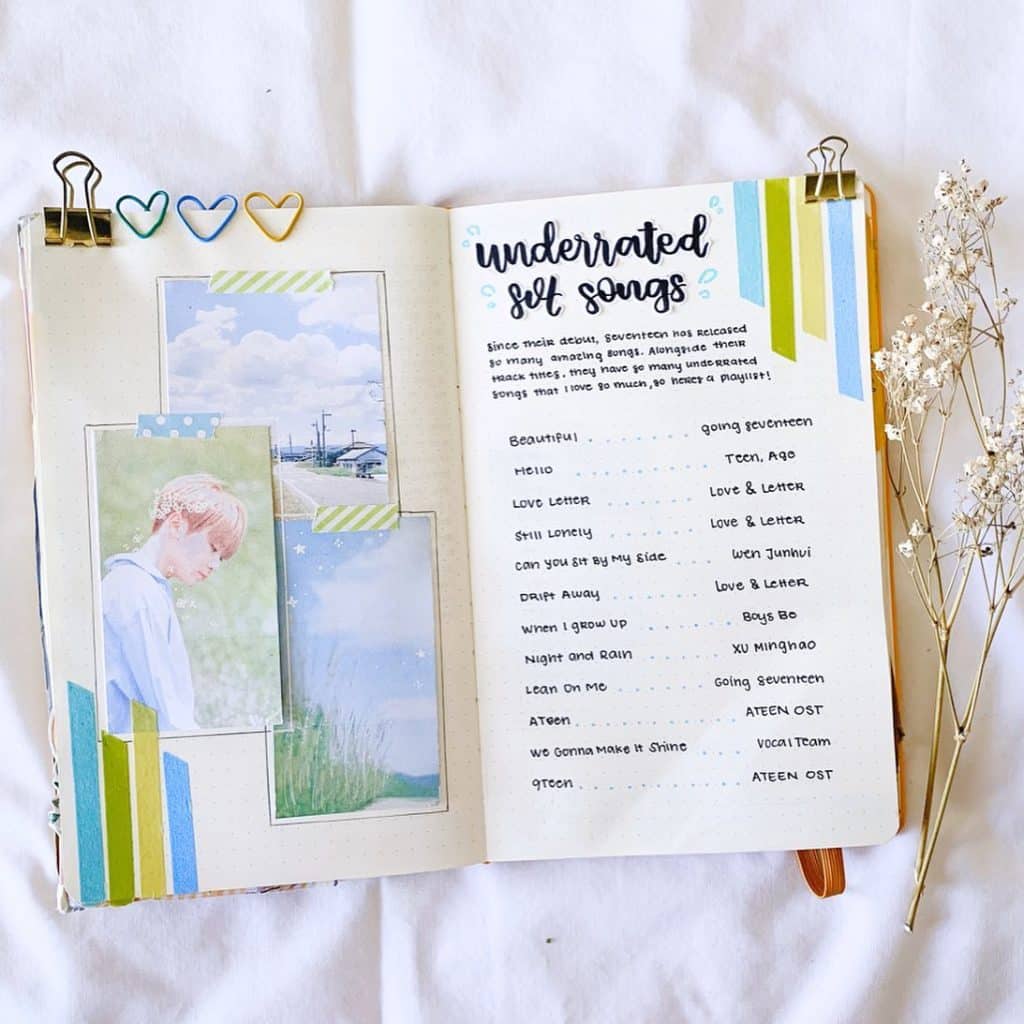
This idea is a lovely one to build with kids or teenagers who want to keep their own lists without committing to a full scrapbook-style spread. One small photo tucked in the corner, rather than a full page of collage, keeps the focus on the list itself. It becomes a page they will actually want to look back on later.
Leaving generous white space between each line, a principle frequently highlighted in minimalist design coverage on Apartment Therapy, is what keeps a list page from feeling cramped. Breathing room does more visual work than any added decoration.
Budget Guide: A basic notebook with dot grid or lined pages runs about $10 to $18, and a set of two or three coordinating gel pens costs $6 to $12 at Amazon or Michaels.
A Clean Weekly Spread With A Meal Column Solves Two Problems At Once
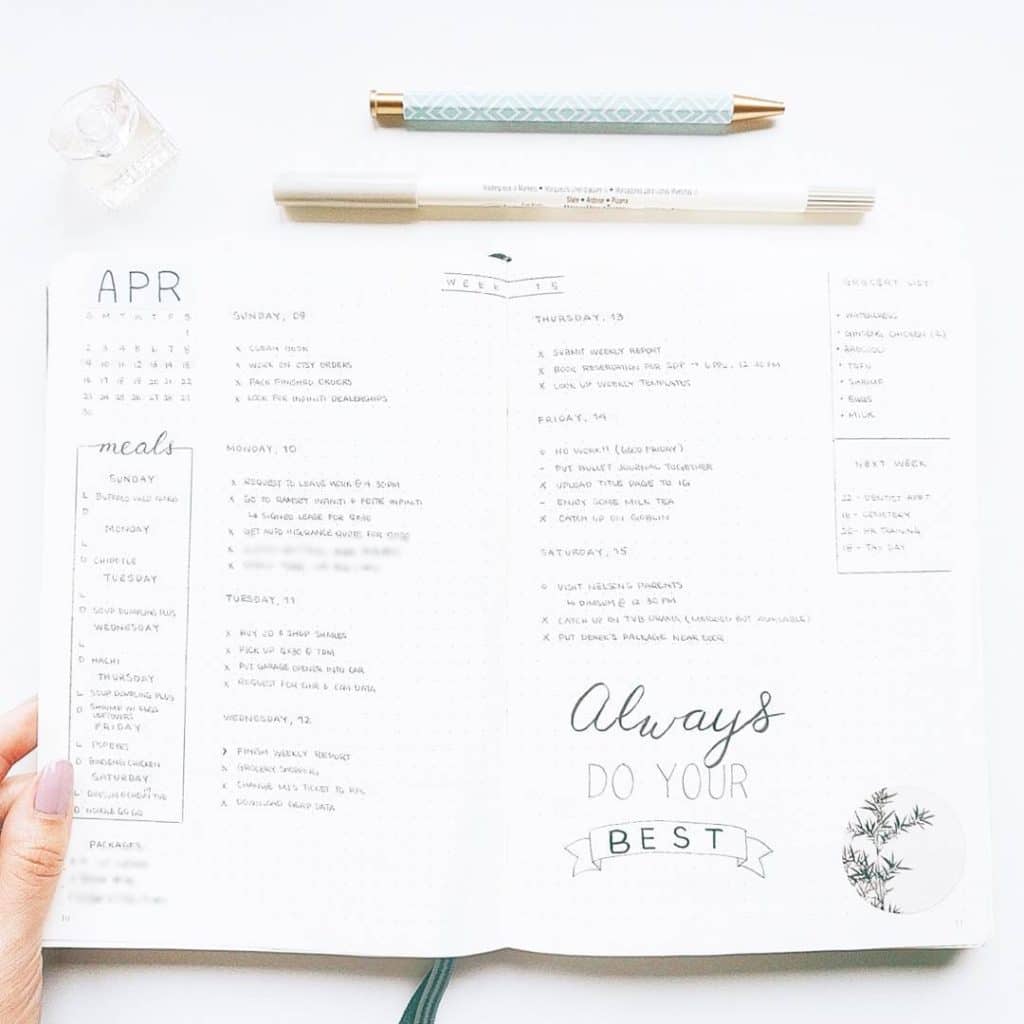
Pairing a straightforward weekly task list with a small meal planning column and grocery list is one of the most practical minimalistic spread ideas a busy household can use. Everything you need to plan the week lives on two facing pages instead of scattered across separate lists. That single view alone saves real time.
Keeping the grocery list in a fixed spot on the same spread, a habit often recommended in meal planning guides on Food Network, means you are never hunting for a scrap of paper before heading to the store. Everything stays in one predictable place.
Budget Guide: A notebook with lined weekly layouts typically costs $10 to $20, and a set of fine-tip pens for organizing categories runs about $8 to $14 at Amazon or Walmart.
Boxed Weekly Columns Give Each Day Its Own Quiet Space
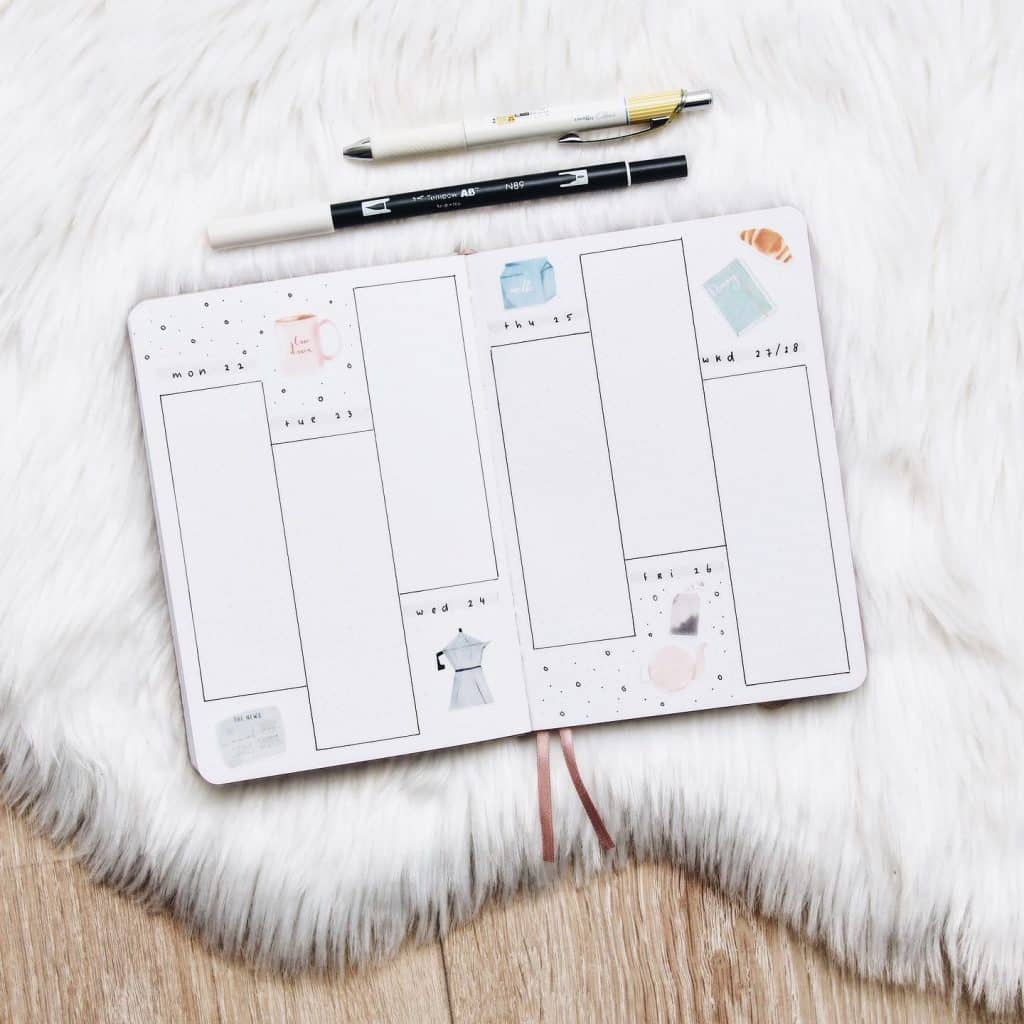
Drawing each day of the week as its own tall rectangle, with just a small sticker or icon marking the date, is one of the calmest versions of a minimalistic spread you can build. The empty boxes do not demand anything until you actually need to write something in them. That openness is part of what makes the layout feel so restful.
Leaving each box tall enough to grow throughout the week, a spacing choice often used in flexible planner layouts on The Kitchn style organizing content, keeps the spread useful no matter how full or light your week ends up being. The structure adapts to you instead of the other way around.
Budget Guide: A blank notebook suited for hand-drawn grids costs about $10 to $16, and a small sheet of simple icon stickers runs $3 to $7 at Amazon or a local craft store.
The Real Talk Box
Most articles about journaling act like more decoration always means more value. It does not. A **minimalistic spread** is not something you settle for when you run out of time. For a lot of women, it is genuinely the better system, and there is nothing wrong with never going back to the busier pages once you notice the difference.
A Lined Monthly Overview Keeps The Whole Month In One Glance
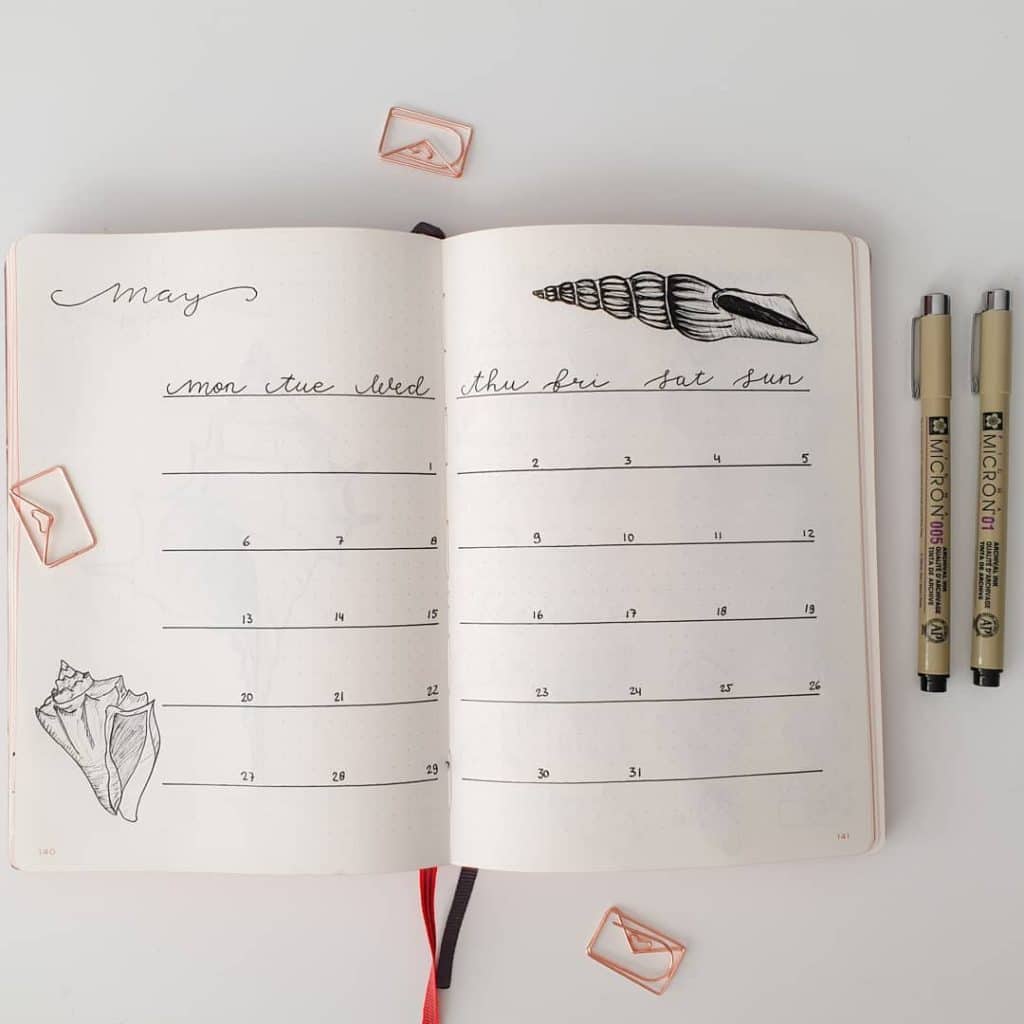
A monthly overview built from nothing more than a title, a row of days, and a single line per date is one of the purest forms of a minimalistic spread. There are no boxes to fill in perfectly and no color coding system to maintain. Just a clean line waiting for whatever that day actually holds.
Using a light script for the month title and keeping everything else in plain print, a contrast often seen in calm planner spreads on BHG.com, keeps the page feeling elegant instead of busy. That single font contrast carries more visual interest than a fully illustrated header ever would.
Budget Guide: A dot grid or plain notebook for this style runs about $12 to $20, and a fine tip black pen for the lettering costs $4 to $9 at Amazon or a bookstore.
A Reflective Weekly Spread With Simple Bar Tracking Adds Meaning Without Mess
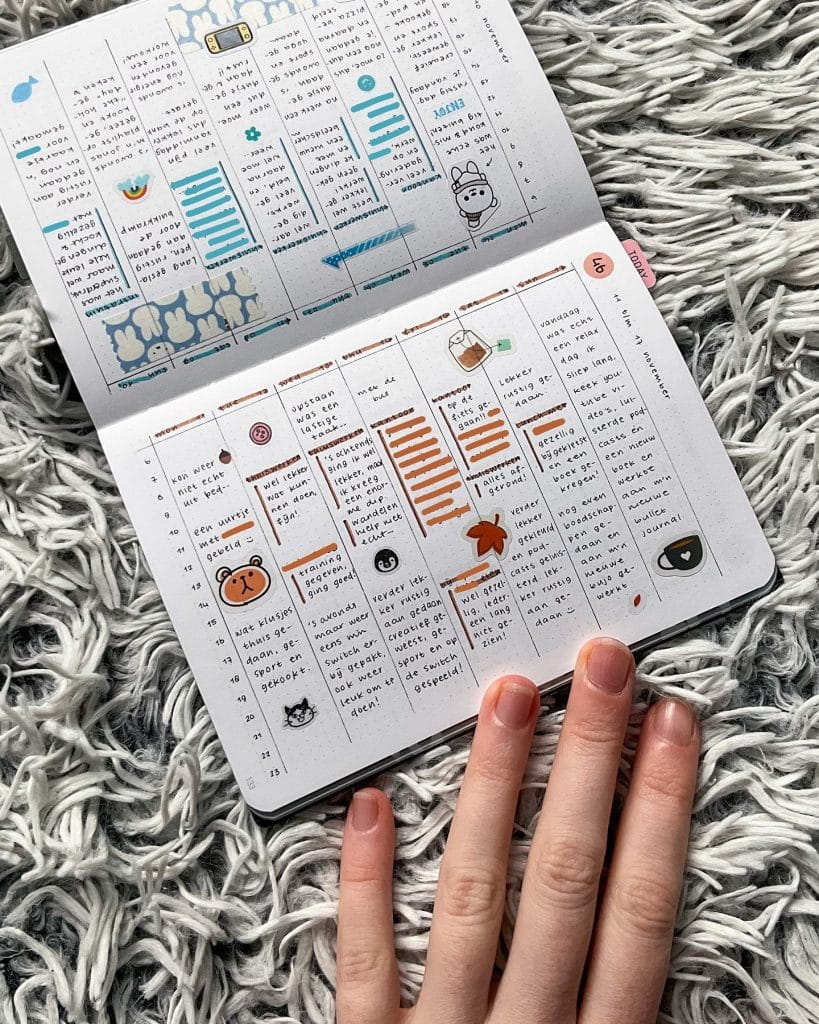
Combining short daily reflection notes with a small bar chart for mood or energy is a way to bring real depth into a minimalistic spread without piling on decoration. A single colored bar per day says more at a glance than paragraphs of writing ever could. It keeps reflection quick enough to actually stick with.
Sticking to one accent color for the bars throughout the whole spread, a restraint often praised in reflective journaling guides on Good Housekeeping, keeps the page calm even when the content itself covers a full range of emotions. Simplicity in color lets the honesty of the writing stand out.
Budget Guide: A set of two or three coordinating brush pens for the bars costs about $8 to $15, and a dot grid notebook runs $12 to $20 at Amazon or Target.
A Grid Of Labeled Boxes Turns Big Life Categories Into One Simple Page
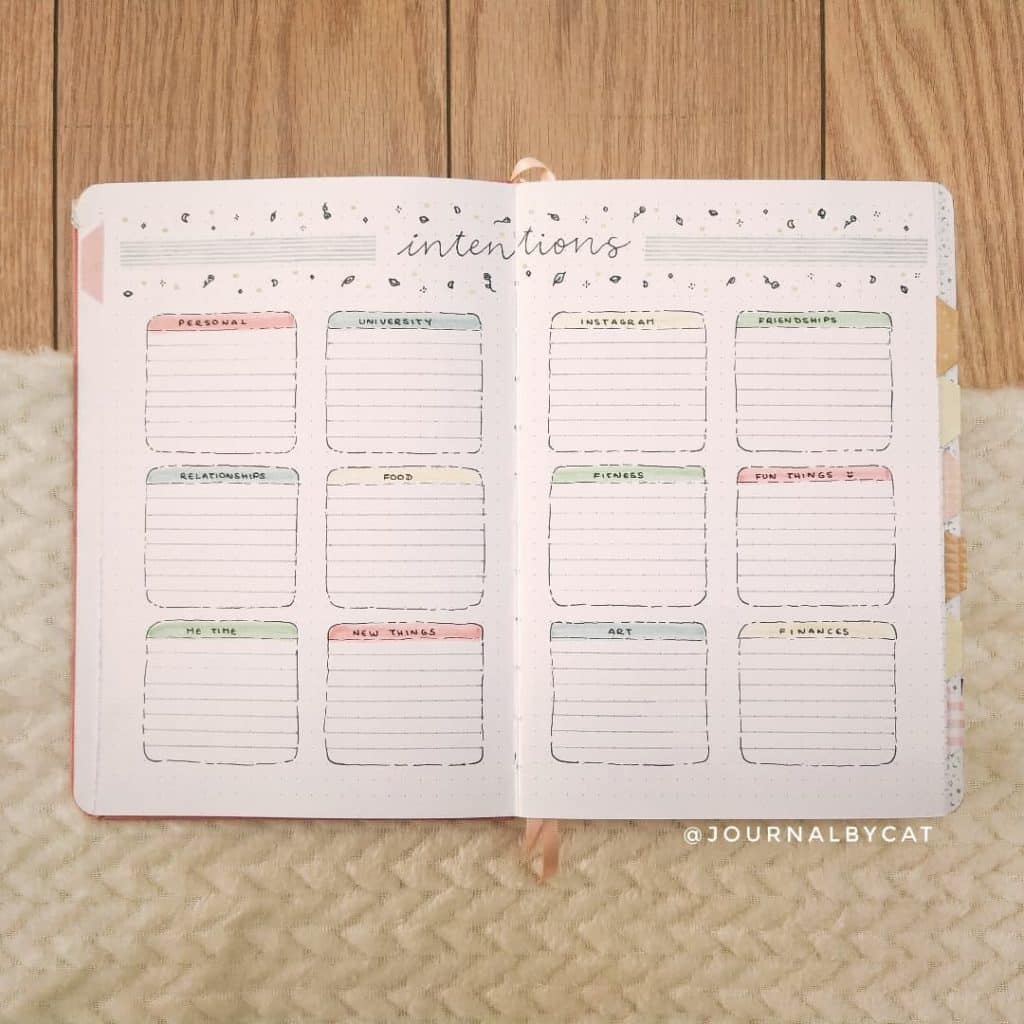
This layout is wonderful for a mom who wants to check in with her priorities without writing an overwhelming journal entry. A short colored header on each box, paired with a few lined rows underneath, keeps every category quick to fill in during a short quiet moment. It becomes a page you can return to and adjust as priorities shift.
Keeping each box the same size and spaced evenly across the page, a layout principle frequently used in intentional planning spreads on Parents.com, gives the whole page a sense of order even before a single word is written. That visual balance is what makes the grid feel calming rather than like a to-do list.
Budget Guide: A notebook with enough page space for a full grid layout costs about $12 to $18, and a small set of pastel highlighters for the box headers runs $6 to $12 at Amazon or Michaels.
Why A Simpler Page Ends Up Working Harder Than A Decorated One
There is a real reason a minimalistic spread tends to outlast the elaborate ones. A page with less visual noise is simply faster to use in the middle of a busy week. You are not hunting through stickers and washi to find the actual information you need.
Part of what makes this style sustainable is how little pressure it puts on you to keep up appearances. A minimalistic spread does not fall apart if you skip decorating it one week, because there was never much decoration to maintain. That forgiving quality is exactly what keeps a journaling habit alive long-term.
The Mega Mom Moment
I used to think a prettier journal page meant I was doing this whole planning thing right. What I learned instead is that the plainest page in my notebook is almost always the one I actually use. A minimalistic spread is not a lesser version of journaling. It is often the version that survives your busiest weeks.
This approach also tends to age better than trend-driven layouts. A plain grid or a simple lined page looks just as useful a year from now as it does today, while heavily themed spreads can start to feel dated fast. Simplicity has a way of staying relevant.
For a mom especially, a minimalistic spread respects the reality that time is limited most days. It gives you exactly the structure you need and nothing that asks for more than you have to give. That balance is worth more than any perfectly styled page.
Enjoyed this post?
Share the love with another mom!
Every share helps this little blog grow — thank you so much