
Make sure to join my list for Weekly Tips and Recipes to Your Inbox
12 Best Strawberries Companion Plants

A little note: Some images in this post may come from third-party sources and are shared purely to inspire you. All credit goes to their original creators. Visit our Image Credits Policy for more information.
I bought some strawberries to grow with my asparagus, since both are well-known companion plants. But then came the question: how do you actually space them? Some gardeners suggest planting asparagus one foot apart with a strawberry crown in between each foot, and it turns out this method works because asparagus grows deep while strawberries spread shallow.
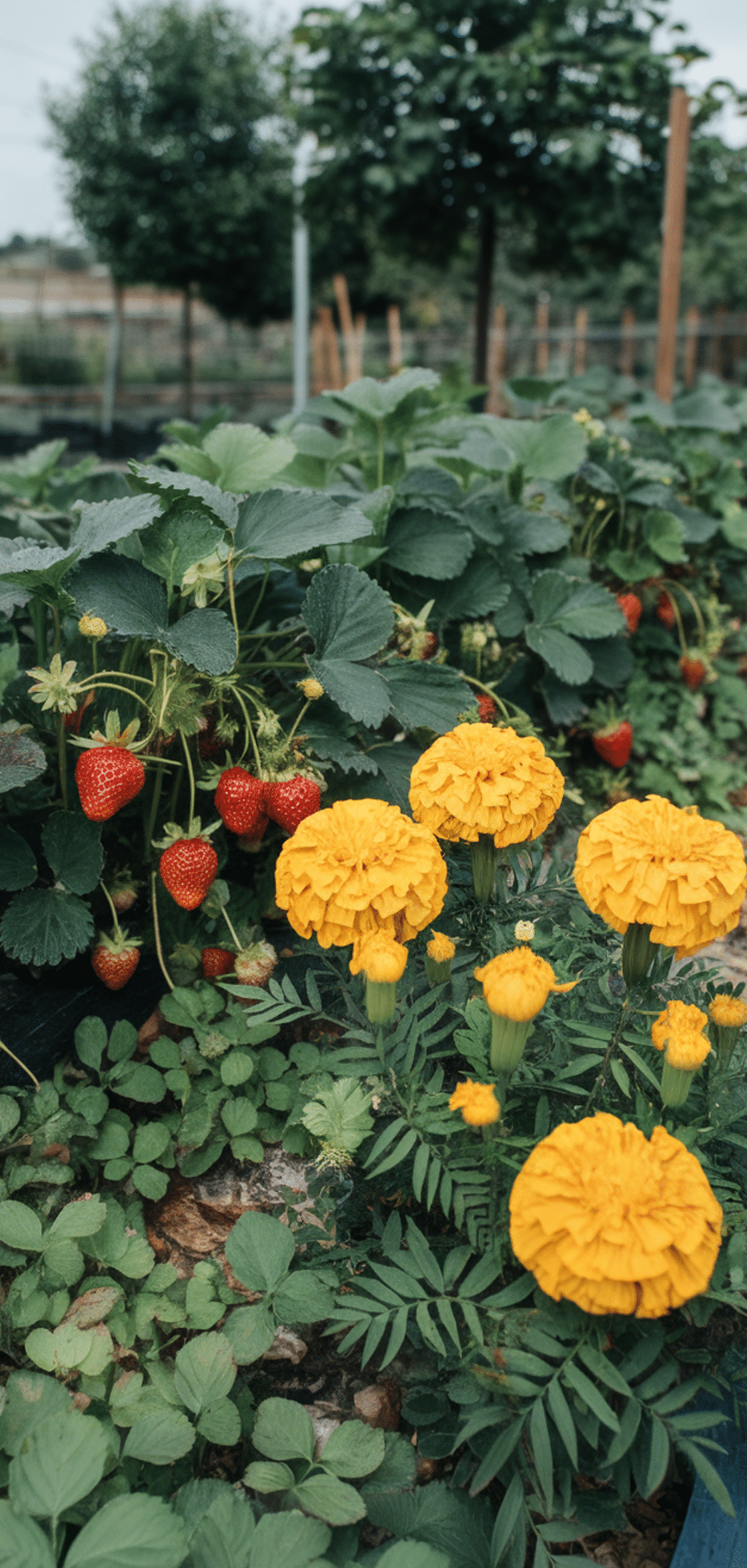
Strawberries benefit from friends like garlic, onions, and chives that deter pests, or borage and marigolds that attract pollinators. These companions make strawberries healthier, more flavorful, and less vulnerable to diseases.
The problem comes with bad companions. Strawberries struggle near brassicas, fennel, and potatoes because they either compete for nutrients or share the same pathogens.
Just like cedar-apple rust needs both apple and juniper trees to complete its fungal cycle, strawberries become more susceptible when planted near crops that harbor similar diseases. That’s why spacing and plant choice matter as much as soil and sunlight.
In my own 3×40-ft bed, I grew asparagus down the middle, strawberries along the sides, and garlic at the edges. With small fencing to hold up the tall asparagus bronze, the strawberries thrived underneath, shaded just enough, and guarded from pests.
Companion planting is about designing an ecosystem where plants work together, defend each other, and share resources. When done right, strawberries reward you with healthier growth, bigger harvests, and a garden that’s as productive as it is beautiful.
What We're Exploring
- 01 12. Spinach – The Ground Protector
- 02 11. Lettuce – A Gentle Companion
- 03 10. Bush Beans – Nitrogen Fixers
- 04 9. Borage – The Pollinator Magnet
- 05 8. Onions – Pest Deterrents
- 06 7. Thyme – Low-Growing Herb Barrier
- 07 6. Sage – Aromatic Defender
- 08 5. Chives – Aphid Control
- 09 4. Carrots – Space-Efficient Companions
- 10 3. Lupines – Soil Enrichers
- 11 2. Marigolds – Pest Repellent Flowers
- 12 1. Yarrow – Beneficial Insect Attractor
- 13 Conclusion
12. Spinach – The Ground Protector
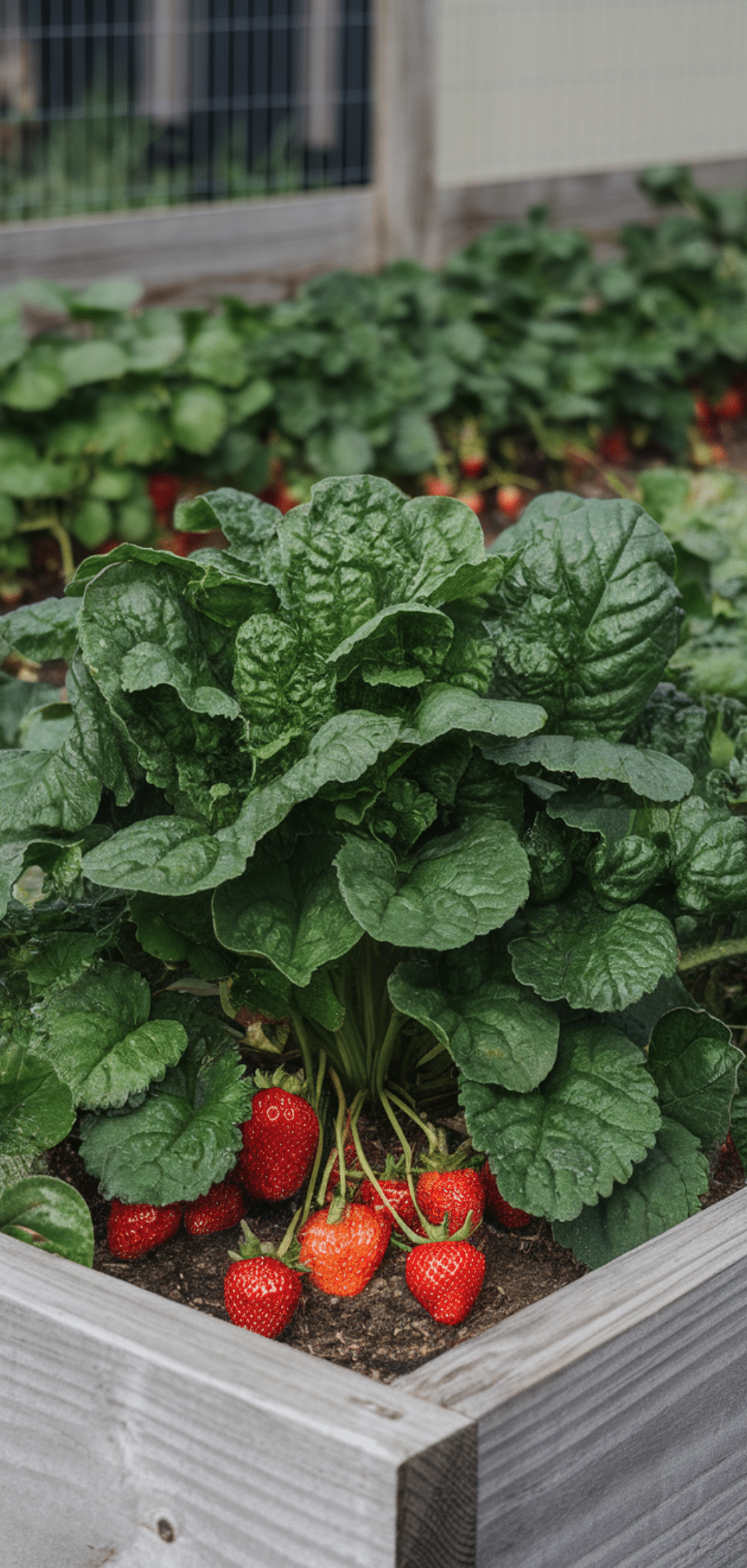
Spinach acts as a natural living mulch, keeping soil cool and moist around strawberries. Its broad leaves shade the soil, which helps reduce weed growth and water evaporation.
Tip: Plant spinach between strawberry rows to suppress weeds and improve soil fertility as the leaves break down.
11. Lettuce – A Gentle Companion
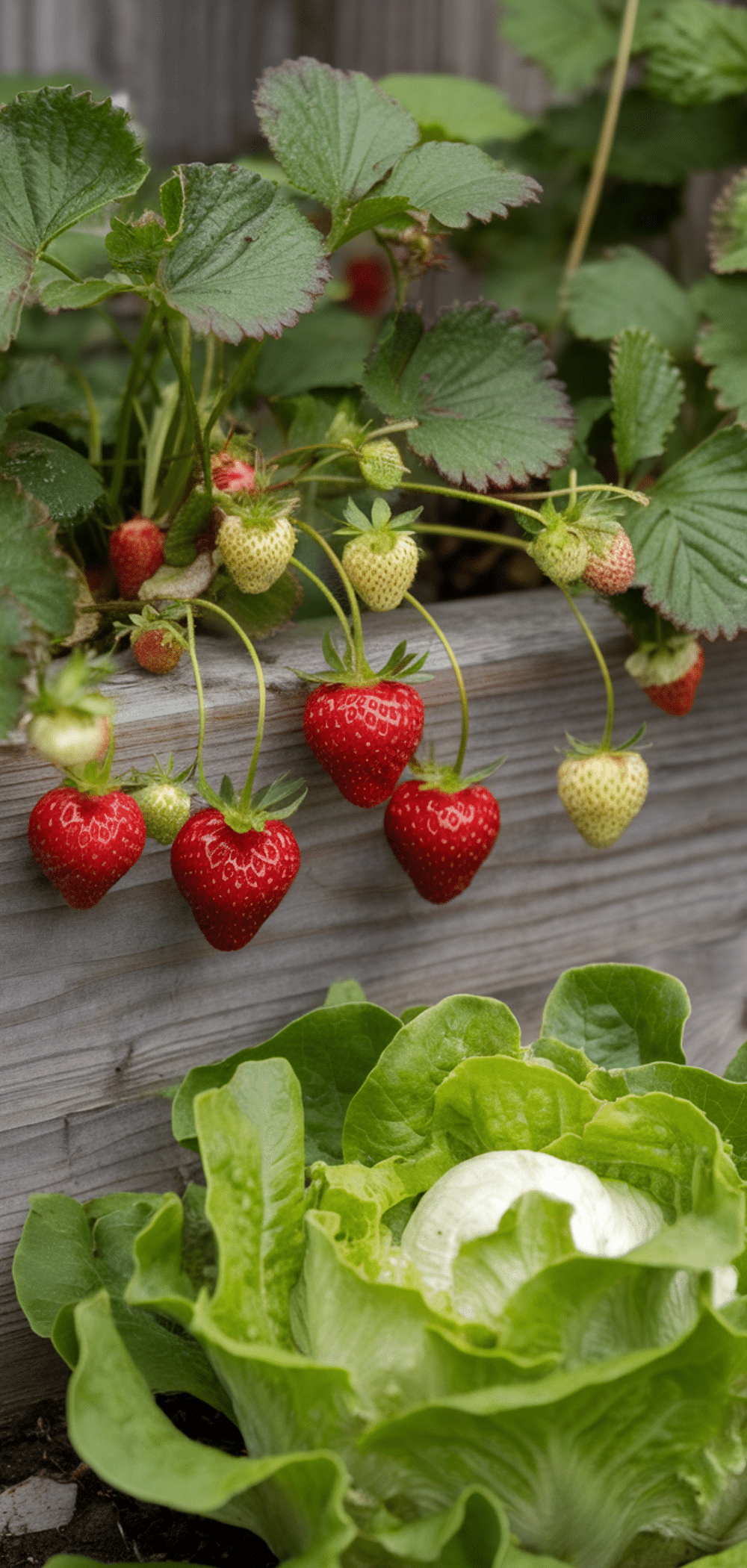
Lettuce has shallow roots, so it won’t compete with strawberries for nutrients. Its compact growth helps fill space without overshadowing strawberry plants.
Tip: Grow lettuce at the edges of strawberry beds for efficient use of space and extra harvest.
10. Bush Beans – Nitrogen Fixers
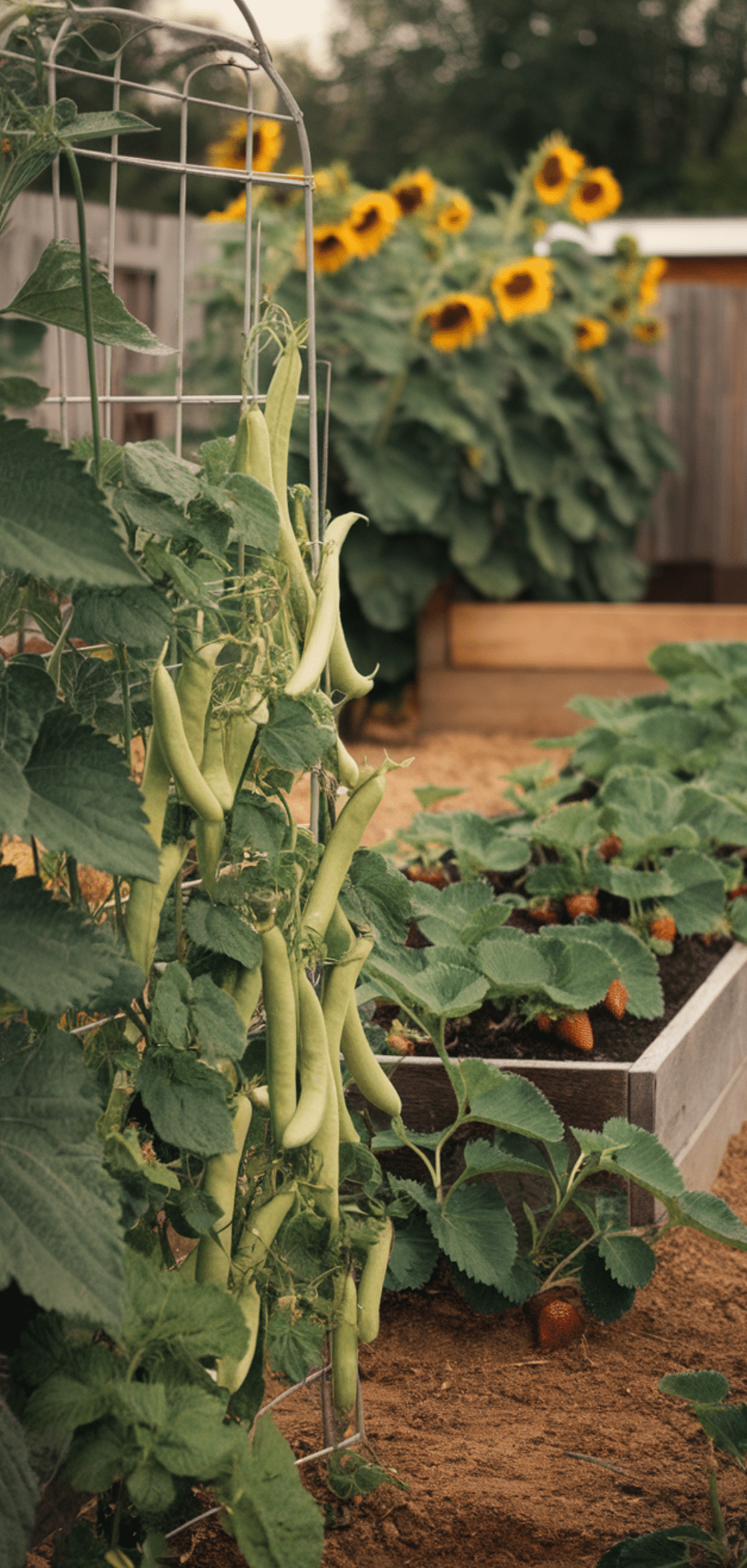
Beans enrich the soil by fixing nitrogen, which strawberries need for strong foliage and fruit production.
Tip: Choose bush varieties rather than pole beans to avoid shading strawberries. Rotate bean plantings annually to keep soil fertile.
9. Borage – The Pollinator Magnet
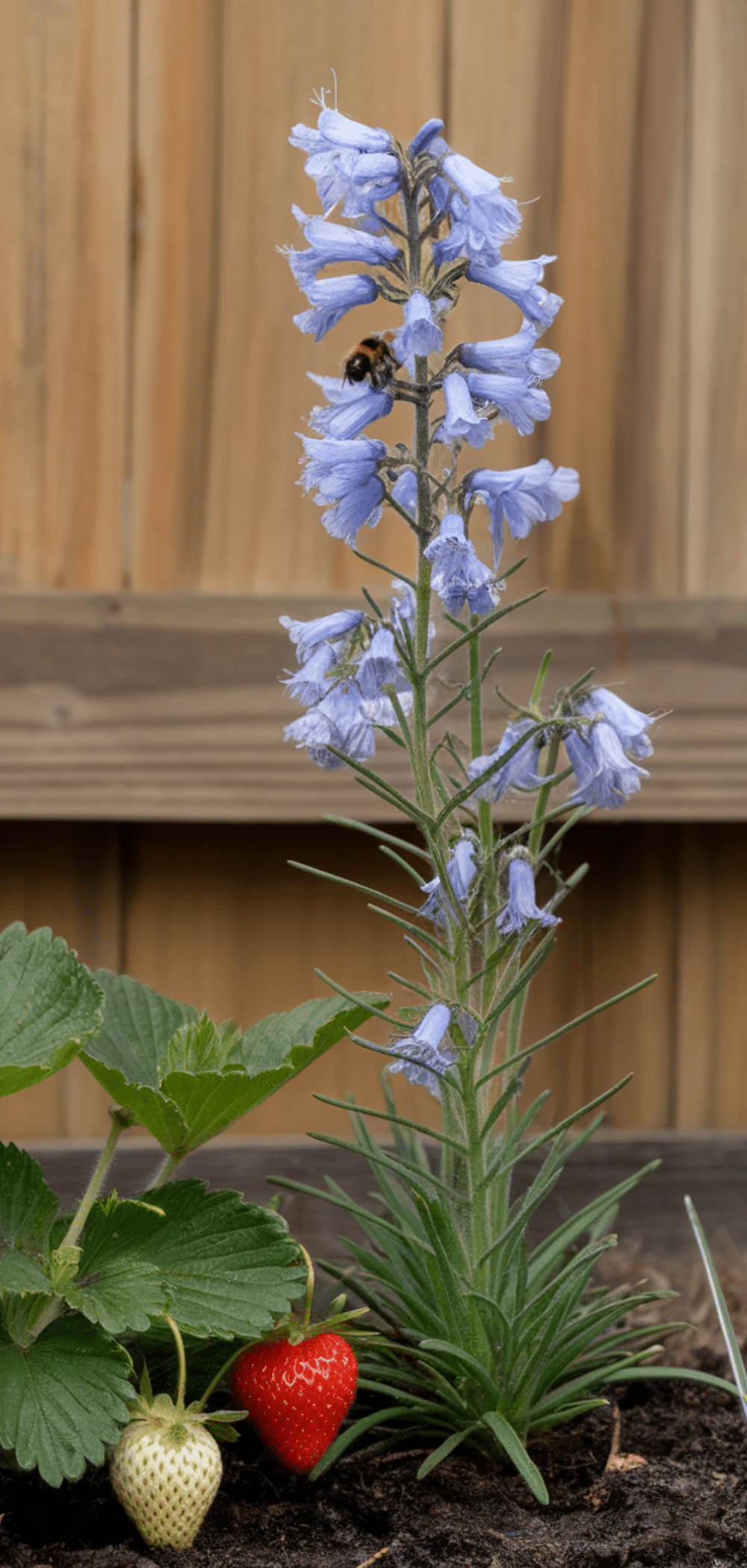
Borage produces bright blue flowers that attract bees and other pollinators, boosting strawberry pollination. Additionally, it deters common pests, such as hornworms.
Tip: Scatter borage plants throughout your strawberry patch. Their decomposed leaves also enrich the soil with trace minerals.
8. Onions – Pest Deterrents
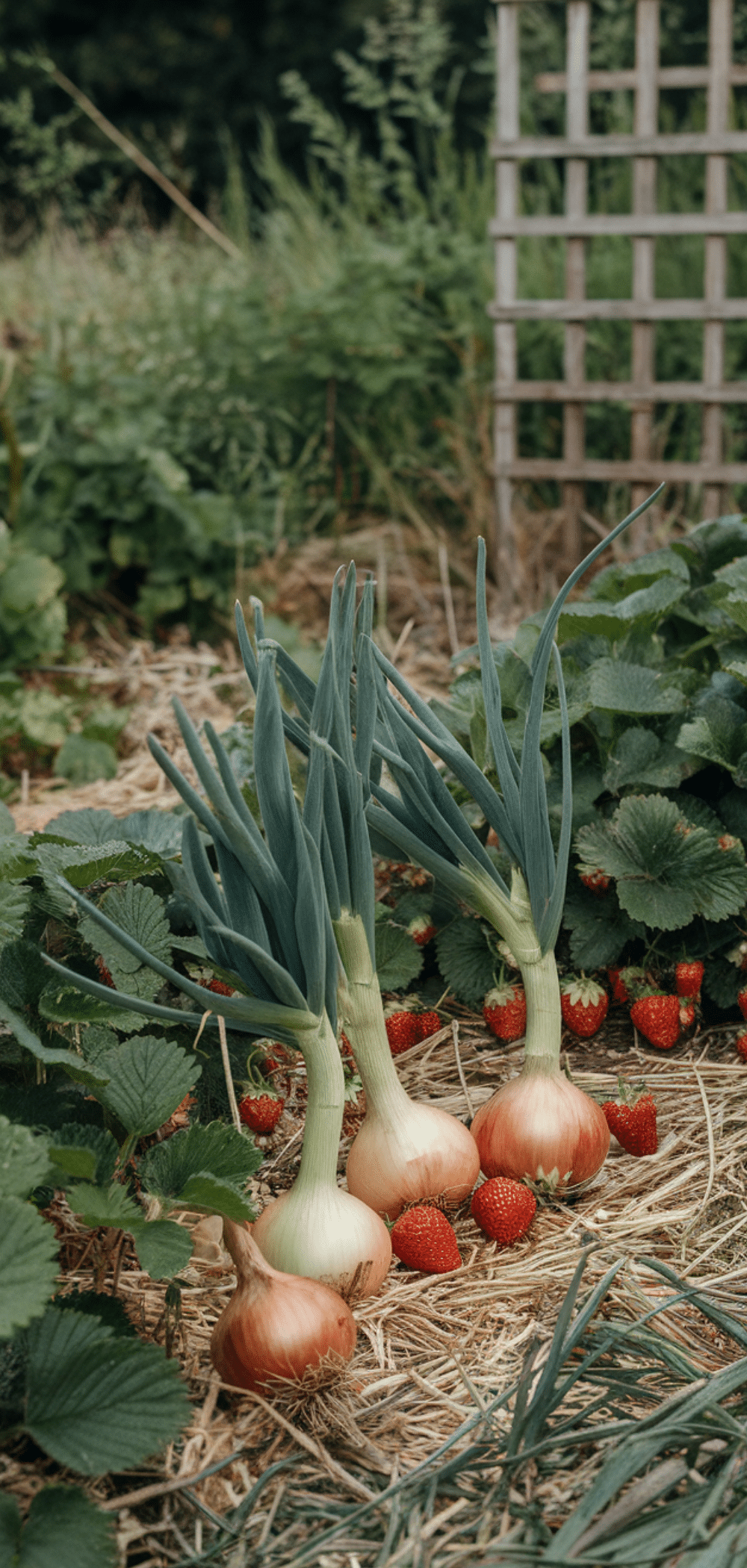
Onions release sulfur compounds that repel harmful insects such as aphids, slugs, and mites. They also fit neatly between strawberry rows due to their vertical growth.
Tip: Plant onions in alternating rows with strawberries for natural pest control.
7. Thyme – Low-Growing Herb Barrier
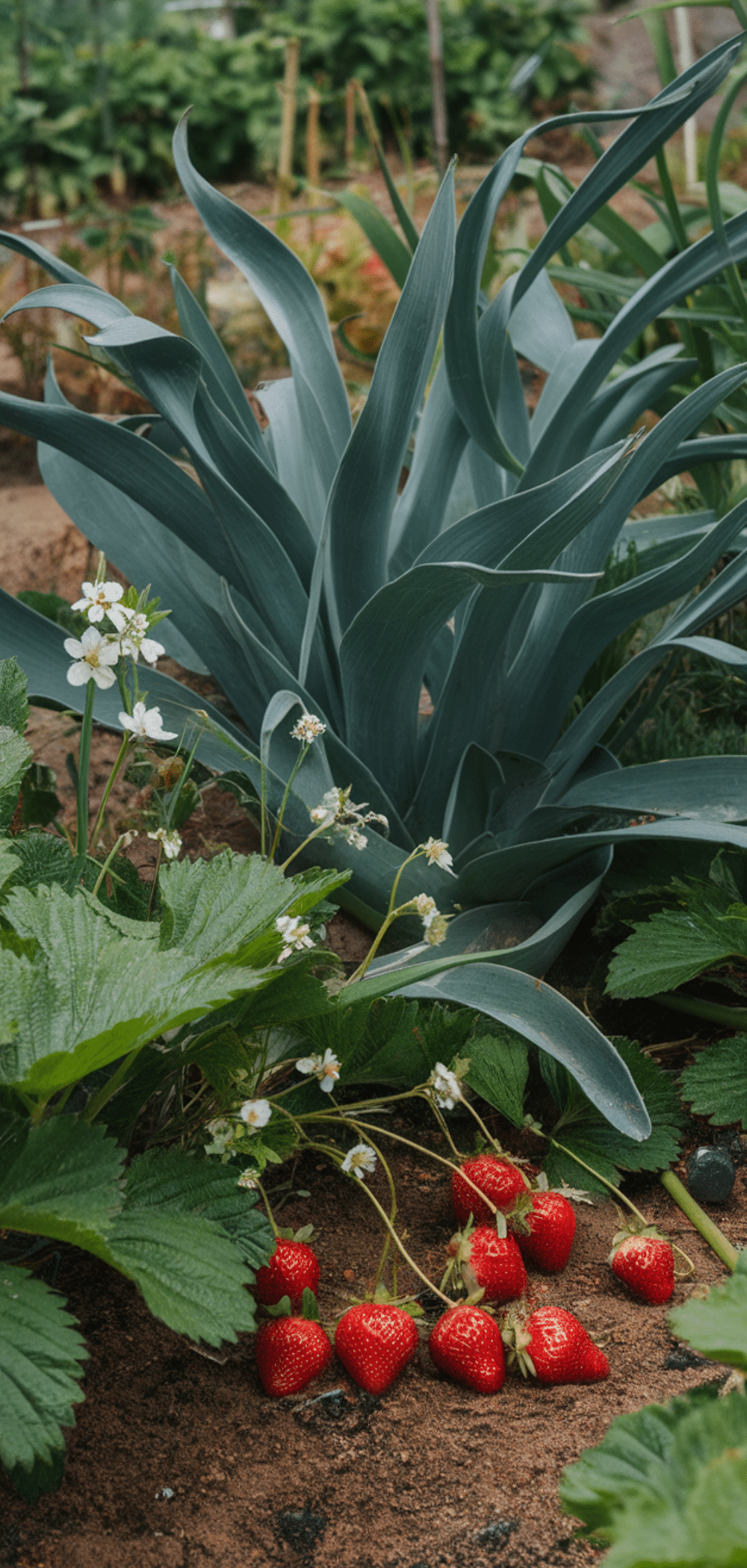
Thyme acts as a natural ground cover, protecting soil moisture and discouraging weeds. Its strong fragrance confuses pests and attracts beneficial insects.
Tip: Plant thyme along the strawberry bed borders to create a living pest-repellent barrier.
6. Sage – Aromatic Defender
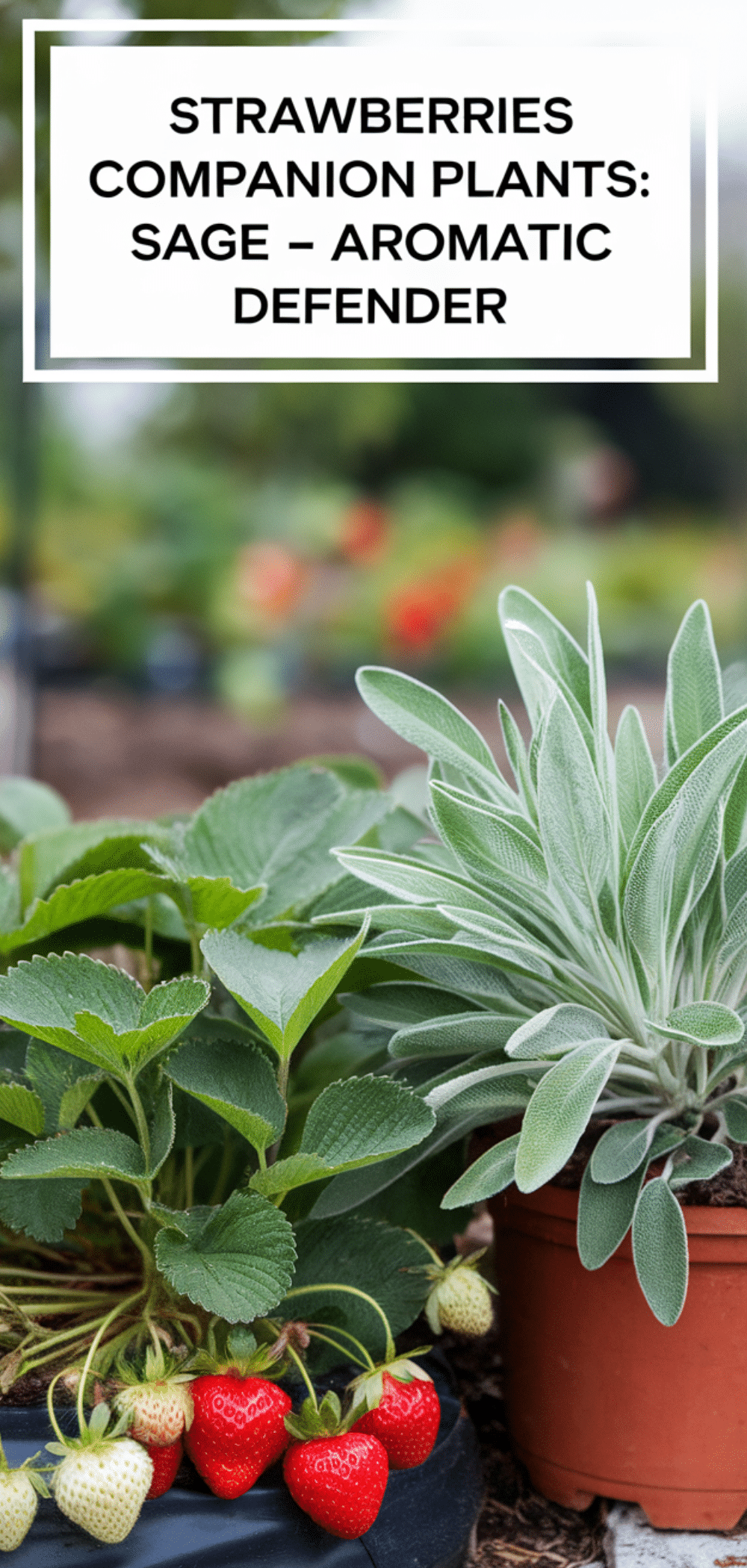
Sage is excellent at deterring cabbage moths and beetles that may damage strawberries. It also attracts pollinators when in bloom.
Tip: Position sage at the back of strawberry beds to avoid shading but maximize protection.
5. Chives – Aphid Control
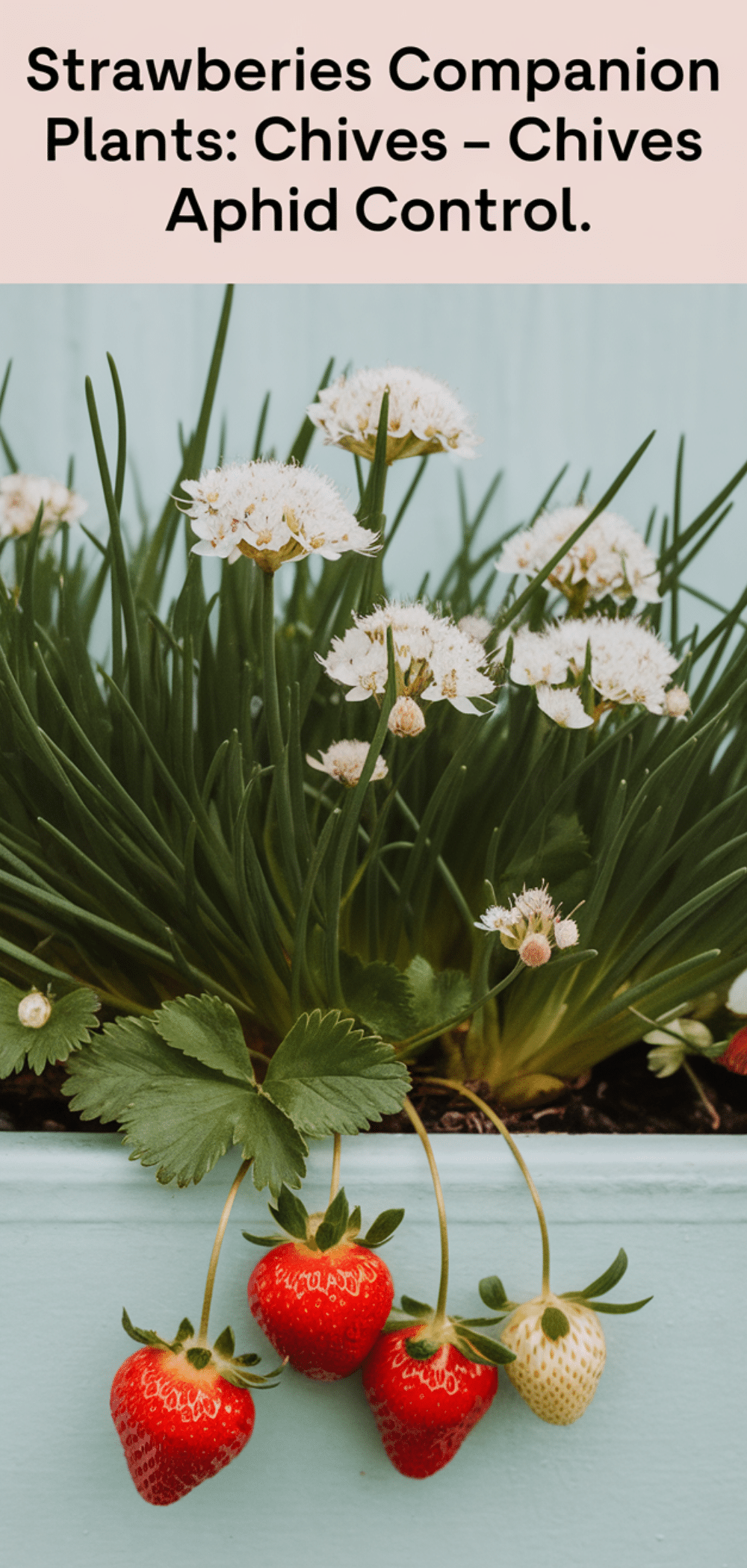
Chives repel aphids and thrips while attracting pollinators with their purple blossoms. They also improve strawberry flavor when grown nearby.
Tip: Interplant chives sparingly between strawberry clusters for maximum pest resistance.
4. Carrots – Space-Efficient Companions
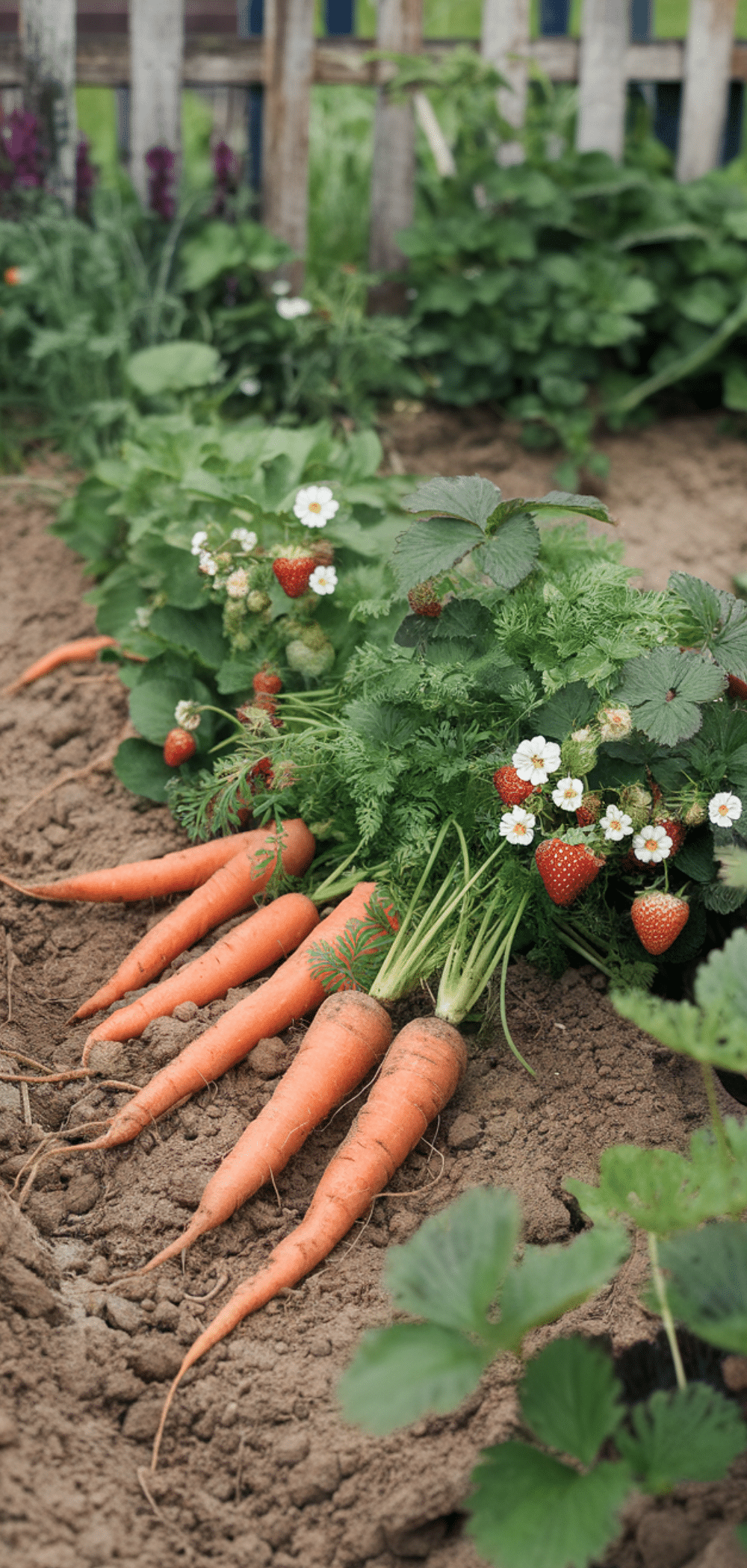
Carrots grow deep into the soil, leaving the top layer available for strawberries. They don’t compete for space, making them a perfect pairing.
Tip: Plant carrots between strawberry plants for a double harvest in small garden beds.
3. Lupines – Soil Enrichers
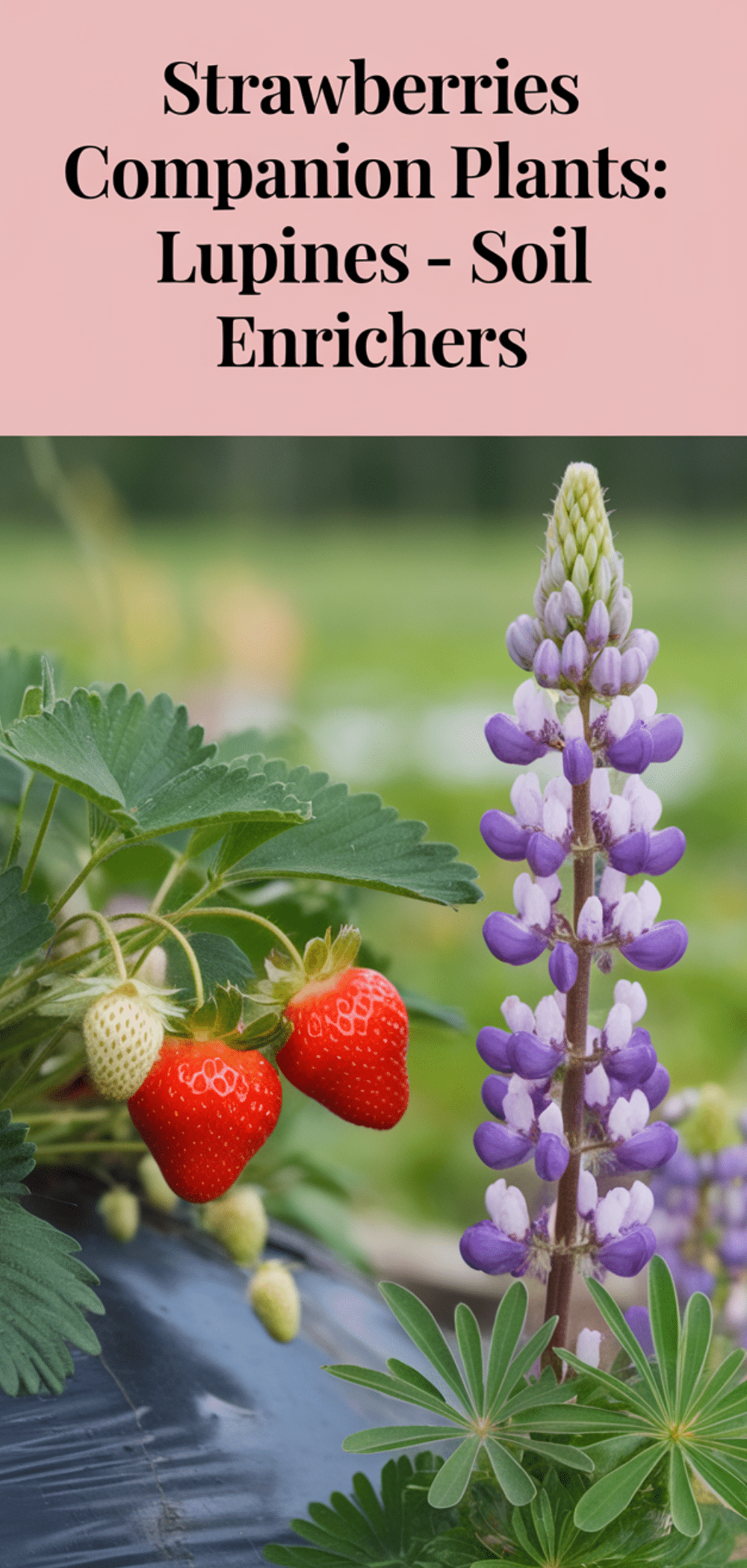
Lupines are nitrogen-fixing plants that improve soil fertility while offering ornamental beauty. Their flowers also attract pollinators.
Tip: Plant lupines near strawberries, but not too close, as their tall stalks may shade the berries.
2. Marigolds – Pest Repellent Flowers
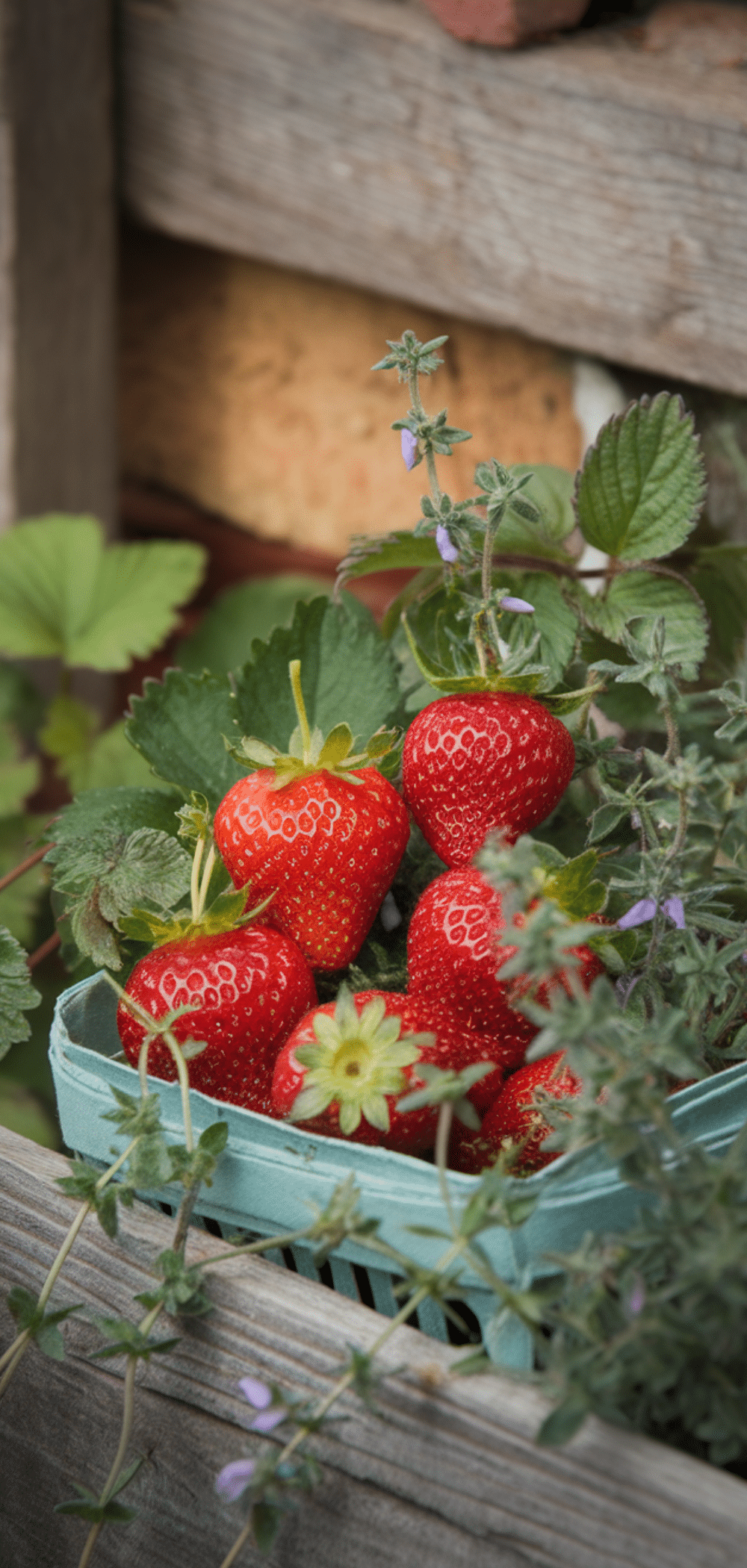
Marigolds release natural chemicals that repel nematodes, beetles, and aphids. Their bright blooms also lure beneficial pollinators.
Tip: Plant marigolds around the outer edges of strawberry beds for a protective and decorative border.
1. Yarrow – Beneficial Insect Attractor
Yarrow’s small clustered flowers attract ladybugs, lacewings, and parasitic wasps, which control pests naturally. It also improves soil health by adding organic matter.
Tip: Grow yarrow nearby to enhance biodiversity and strengthen the strawberry ecosystem.
Conclusion
Companion planting strawberries with these 14 plants creates a healthier, more productive, and naturally protected garden. By mixing pest-repelling herbs, nitrogen-fixing vegetables, and pollinator-friendly flowers, we can achieve abundant strawberry harvests while maintaining ecological balance.
Enjoyed this post?
Share the love with another mom!
Every share helps this little blog grow — thank you so much