
Make sure to join my list for Weekly Tips and Recipes to Your Inbox
13 Genius DIY Self-Watering Planters

A little note: Some images in this post may come from third-party sources and are shared purely to inspire you. All credit goes to their original creators. Visit our Image Credits Policy for more information.
When I recently planted my first Pothos, I was satisfied, but also a little stressed. I travel often and forget to water my plants more than I’d like to admit.
That’s when I started looking into self-watering planters, wondering if they could be the solution to my problem. At first, the idea of the soil being “constantly moist” worried me; would I be dooming my plant to root rot
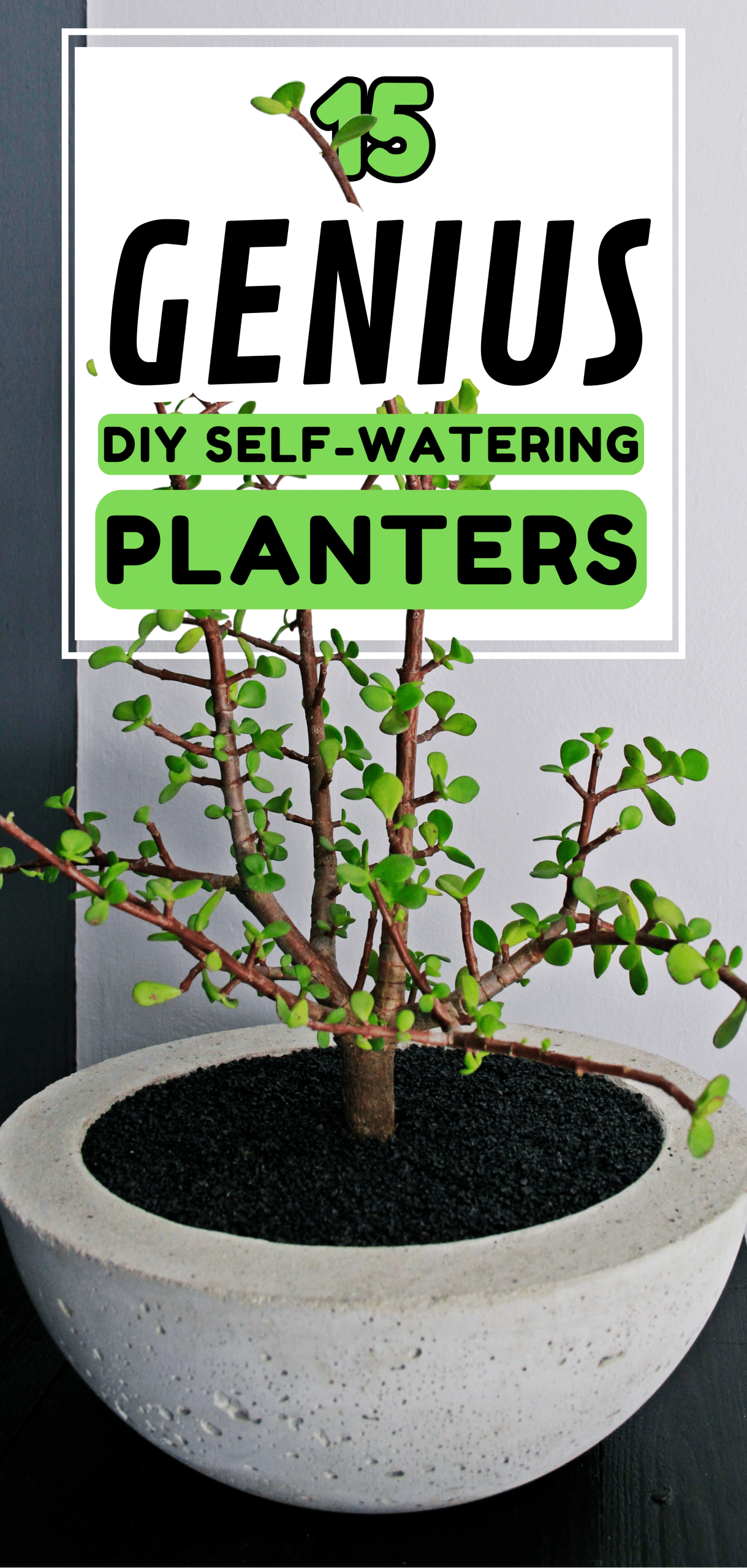
However, I found the idea of a reservoir pumping water upward through a wick to be amazing. I realized that if I could DIY a version tailored to my space and needs, I might finally keep my Pothos happy without overthinking every watering session.
After reading many success stories on Reddit, I was inspired and decided to create my self-watering planters using basic materials from home: a plastic container and, of course, a soil mix rich in perlite for better aeration.
Many people don’t realize that most issues blamed on “overwatering” are caused by poor oxygen flow in the root zone. That was a lightbulb moment for me. Once I adjusted my soil mix and set up my wick correctly, thank god, my Pothos started thriving. No yellow leaves, no guessing games. Just consistent, healthy growth.
Now, I swear by this method for several of my plants, not just my Pothos. Self-watering planters have turned plant care from a stressor into a routine I enjoy. If you’re skeptical like I was, I recommend giving it a try, starting small and observing.
What We're Exploring
- 01 13. Two-Bucket Reservoir Planter
- 02 12. Plastic Bottle Wicking System
- 03 11. Bottle Planter Reservoir
- 04 10. Tote Bin Sub-Irrigated Planter
- 05 9. Mason Jar Herb Waterer
- 06 8. Upcycled Yogurt Cup Self-Watering Seed Starter
- 07 7. Self-Watering Clay Pot System
- 08 6. PVC Pipe Vertical Garden with Reservoir
- 09 5. Cork Wick Ceramic Planter
- 10 4. Gutter Garden with Central Watering Trough
- 11 3. Recycled Jug Gravity Feed Planter
- 12 2. Glass Jar with Capillary Matting
- 13 1. Hydro-Wick Hanging Basket
- 14 Conclusion
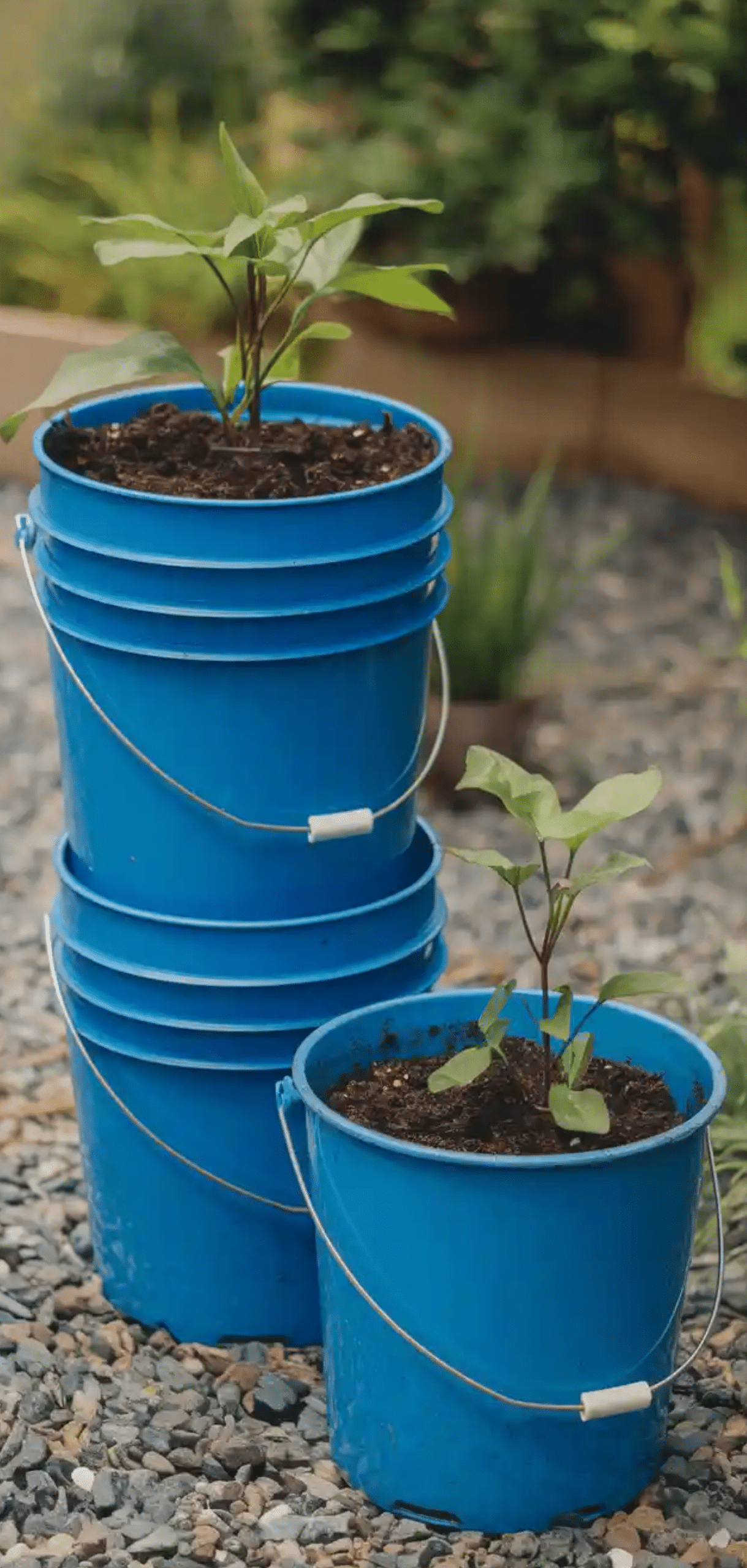
13. Two-Bucket Reservoir Planter
Materials:
- 2 five-gallon buckets
- PVC pipe (1-inch diameter, 12 inches long)
- Wicking fabric or cotton towel
- Drill
Instructions:
- Drill a drainage hole 3 inches from the bottom of the inner bucket.
- Cut the PVC pipe to reach the bottom when inserted through the soil.
- Line the bottom of the inner bucket with wicking fabric.
- Stack the inner bucket into the outer one. Fill with soil.
- Use the pipe to water directly into the reservoir.
Self-Watering Planters Tip: Add a water level indicator by inserting a small float inside the PVC pipe.
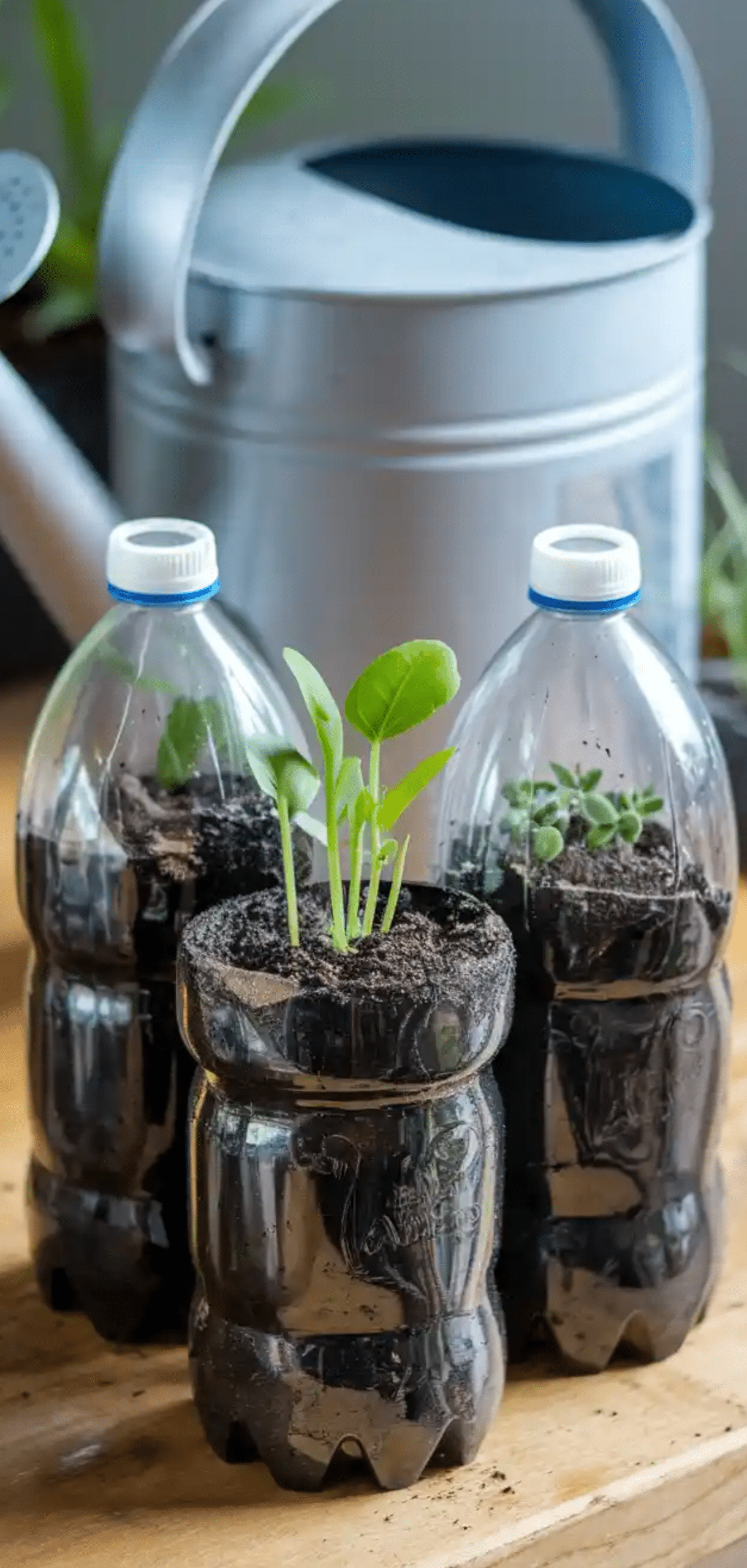
12. Plastic Bottle Wicking System
Materials:
- 2-liter soda bottle
- Cotton string
- Potting soil
- Knife
Instructions:
- Cut the bottle in half.
- Invert the top half and insert it into the bottom half.
- Thread the cotton string through the cap.
- Add soil to the top half. Fill the bottom with water.
Self-Watering Planters Tip: Use a mix of vermiculite and coco coir for better water absorption.
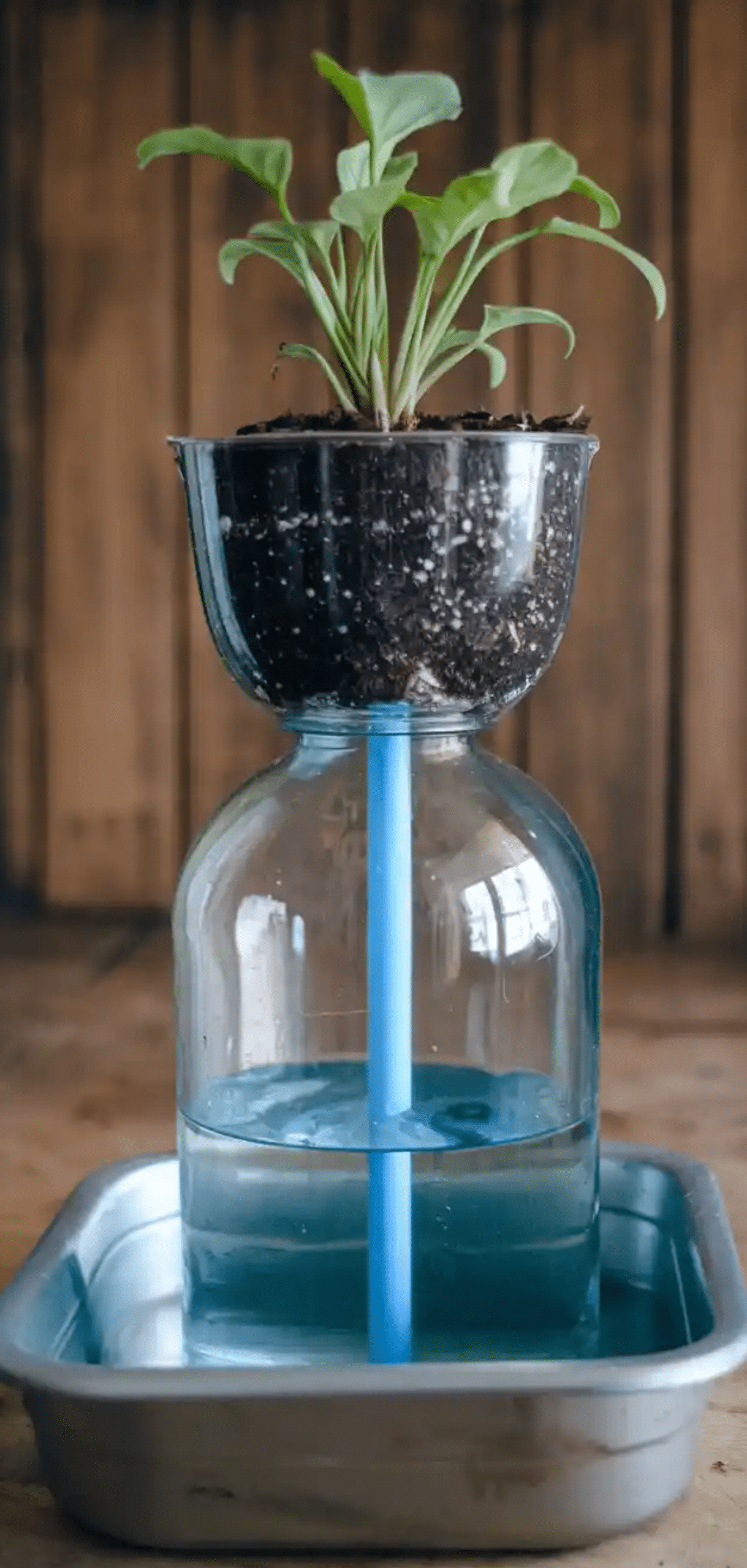
11. Bottle Planter Reservoir
Materials:
- bottle
- Terracotta spike
- Potted plant
Instructions:
- Fill the bottle with water.
- Insert the spike into the soil.
- Place the bottle upside down into the spike.
Self-Watering Planters Tip: Clean the bottle weekly to prevent algae buildup.
10. Tote Bin Sub-Irrigated Planter
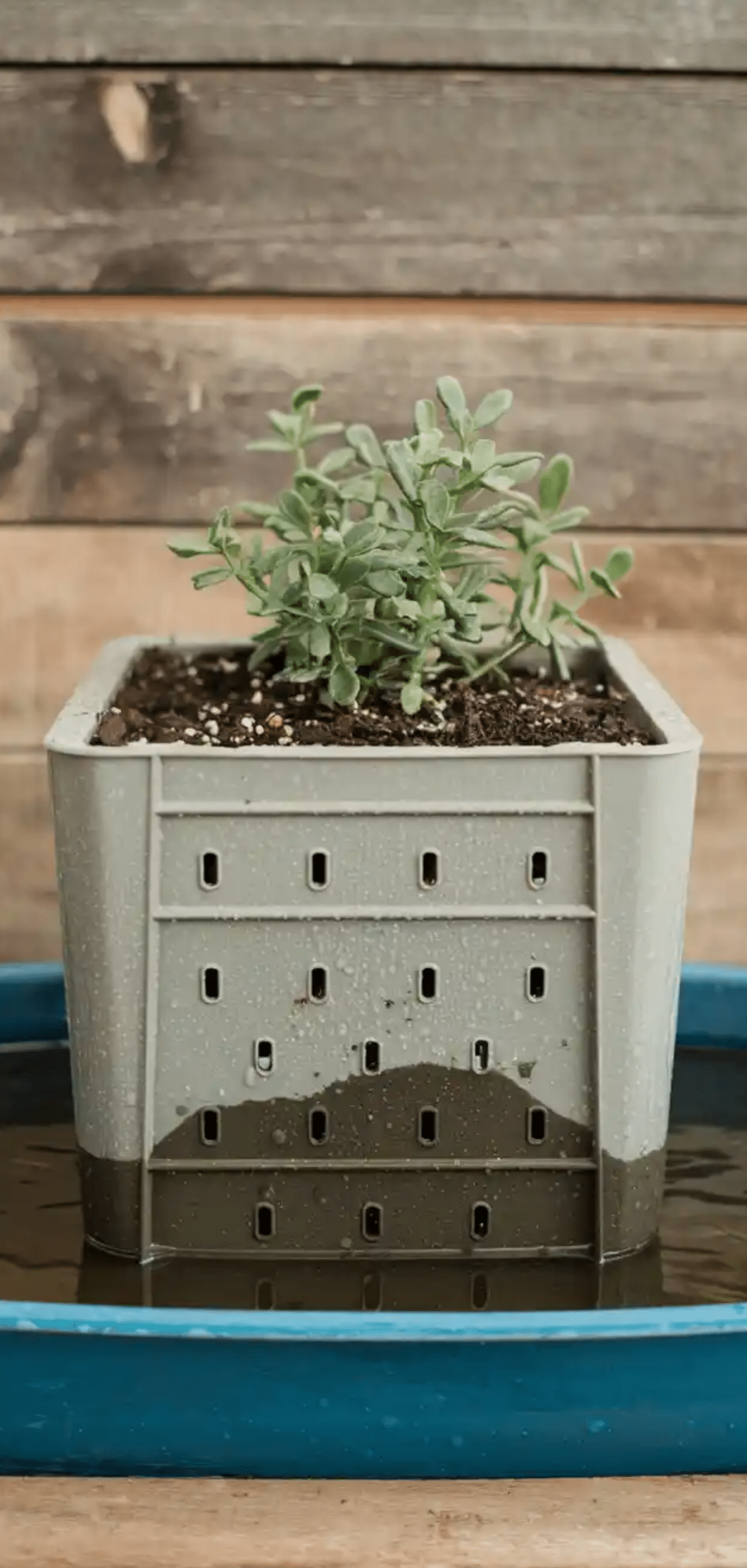
Materials:
- Storage tote with lid
- PVC pipe
- Plastic nursery pots
- Drill
Instructions:
- Cut holes in the lid for nursery pots to fit through.
- Use nursery pots as wicking chambers filled with soil.
- Insert PVC pipe for filling the reservoir.
- Add water to the base.
Self-Watering Planters Tip: Include a small overflow hole to prevent overfilling.
9. Mason Jar Herb Waterer
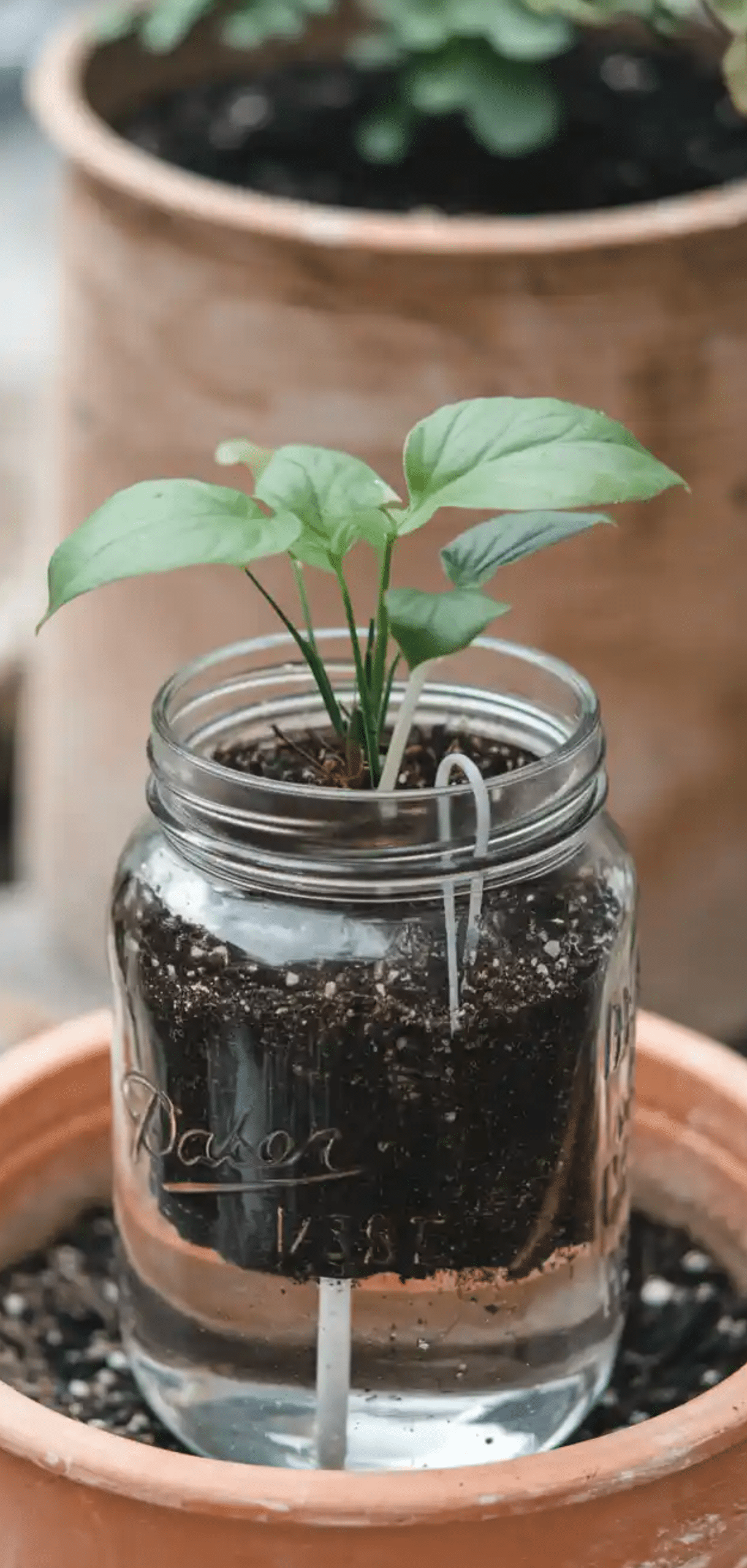
Materials:
- Mason jar
- Net pot
- Cotton rope
- Herbs and potting soil
Instructions:
- Thread cotton rope through net pot.
- Fill net pot with herbs and soil.
- Rest net pot in mouth of mason jar filled with water.
Self-Watering Planters Tip: Works best for small herbs like basil, mint, and thyme.
8. Upcycled Yogurt Cup Self-Watering Seed Starter
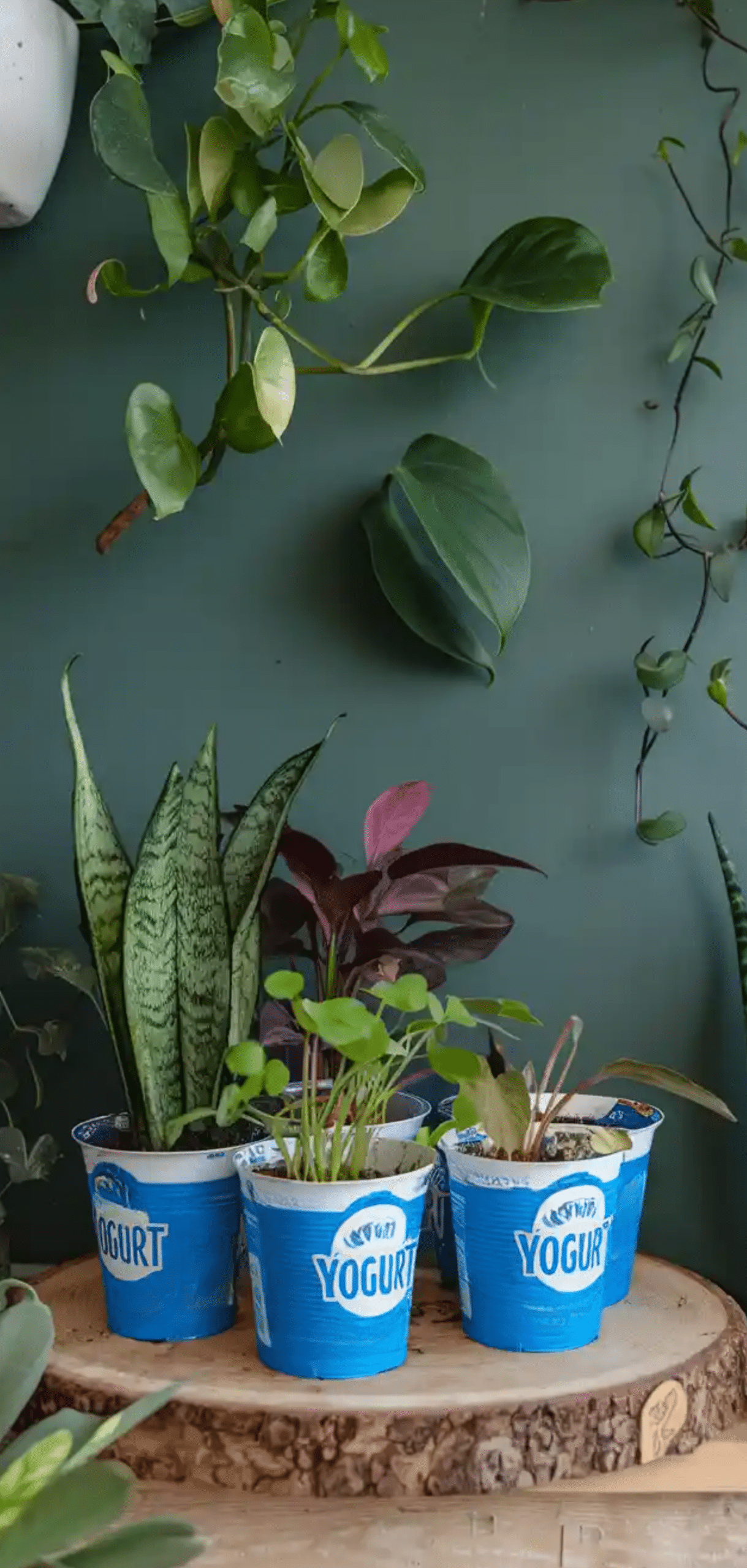
Materials:
- 2 yogurt cups
- Cotton string
- Soil and seeds
Instructions:
- Poke a hole in one cup and thread the string through.
- Stack inside a second cup with water.
- Add soil and seeds.
Self-Watering Planters Tip: Great for seedlings or microgreens.
7. Self-Watering Clay Pot System
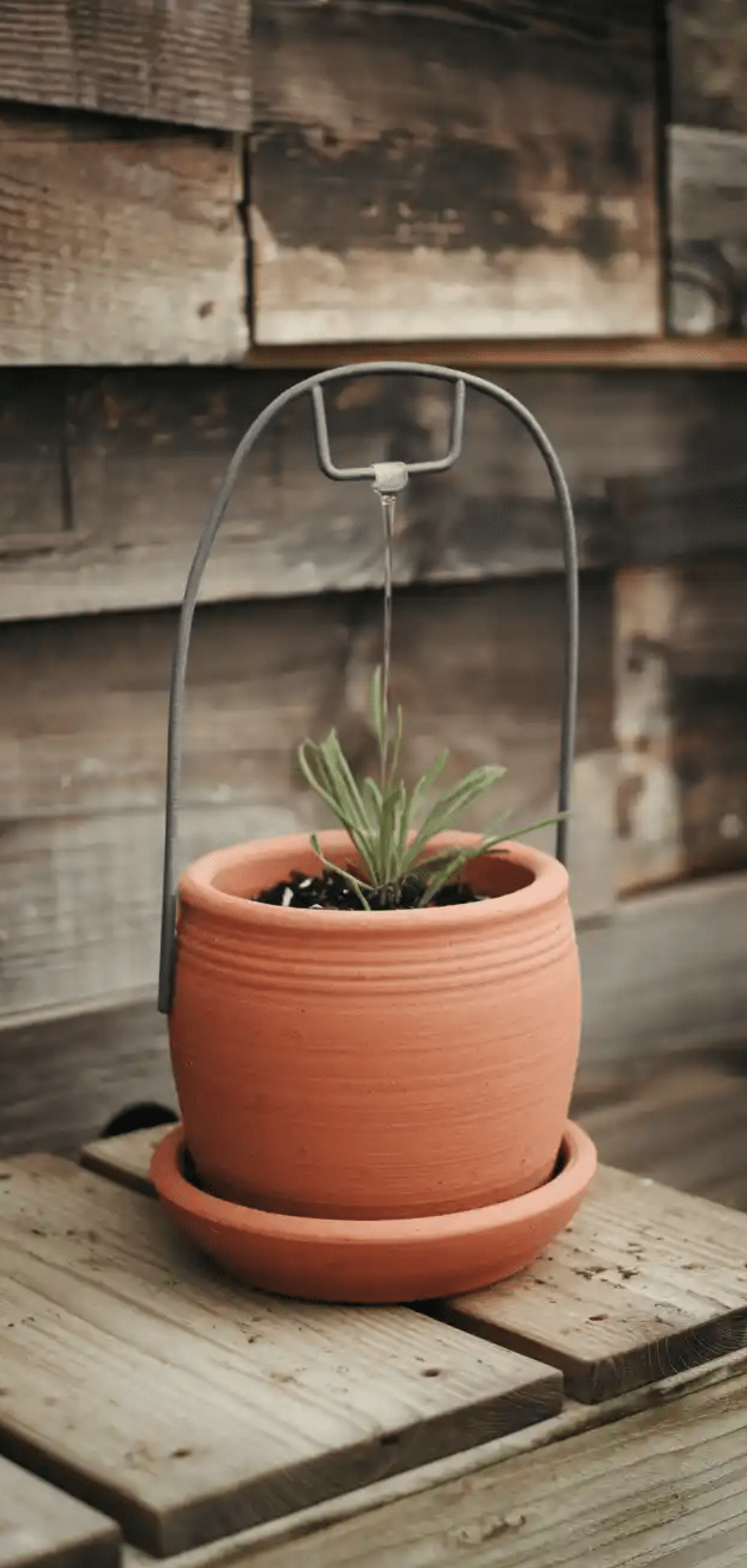
Materials:
- Unglazed terracotta pot
- Large planter
- Potting mix
Instructions:
- Plug drainage hole of the terracotta pot.
- Bury it in the center of the larger pot.
- Fill outer planter with soil and plants.
- Add water inside the terracotta pot.
Self-Watering Planters Tip: The porous clay allows gradual water seepage to nearby roots.
6. PVC Pipe Vertical Garden with Reservoir
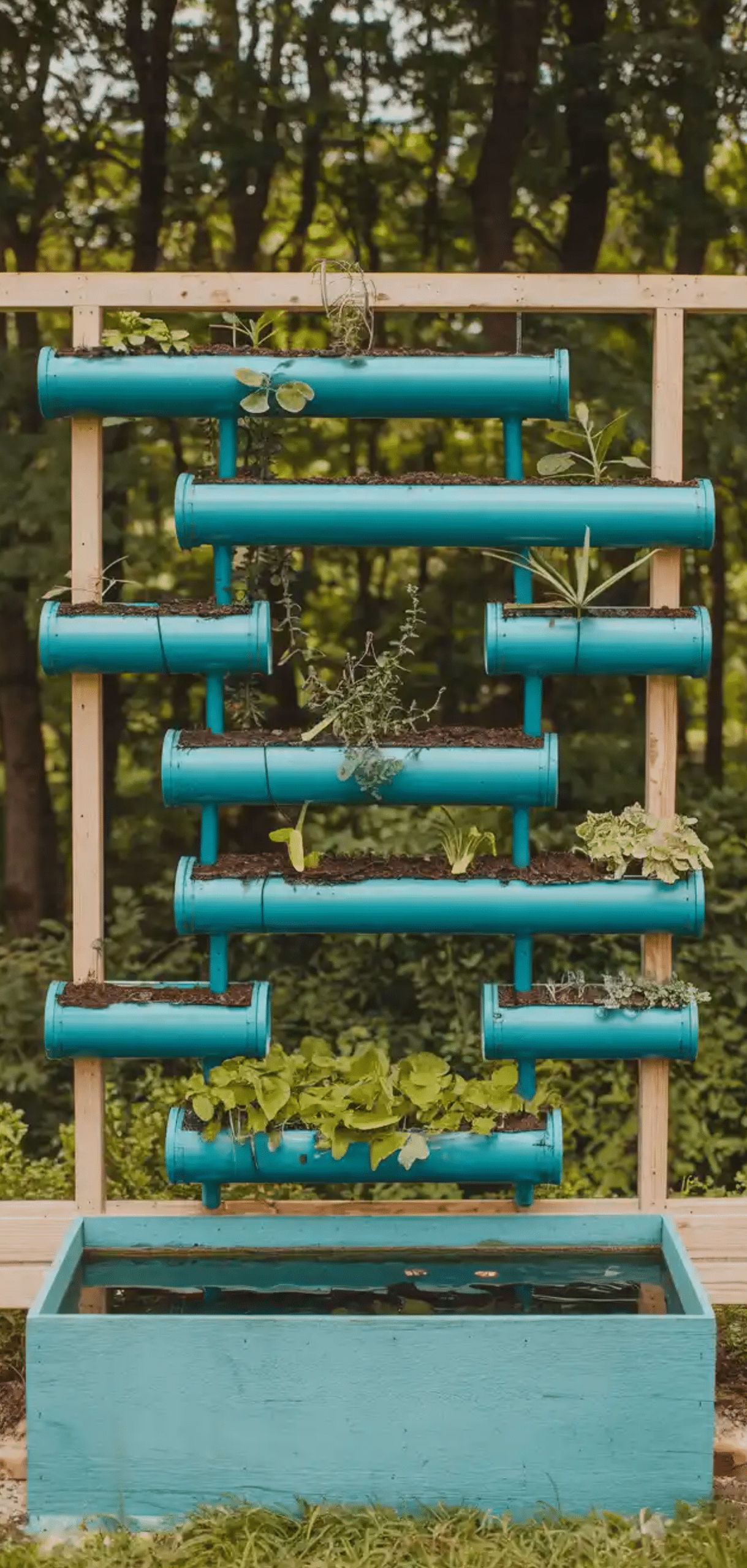
Materials:
- 4-inch diameter PVC pipe
- End caps
- Small planters
- Watering tube
- Drill
Instructions:
- Drill holes for small pots along the length of the pipe.
- Install end caps and fill base with water.
- Insert watering tube to refill as needed.
Self-Watering Planters Tip: Ideal for balcony or wall-mounted herb gardens.
5. Cork Wick Ceramic Planter
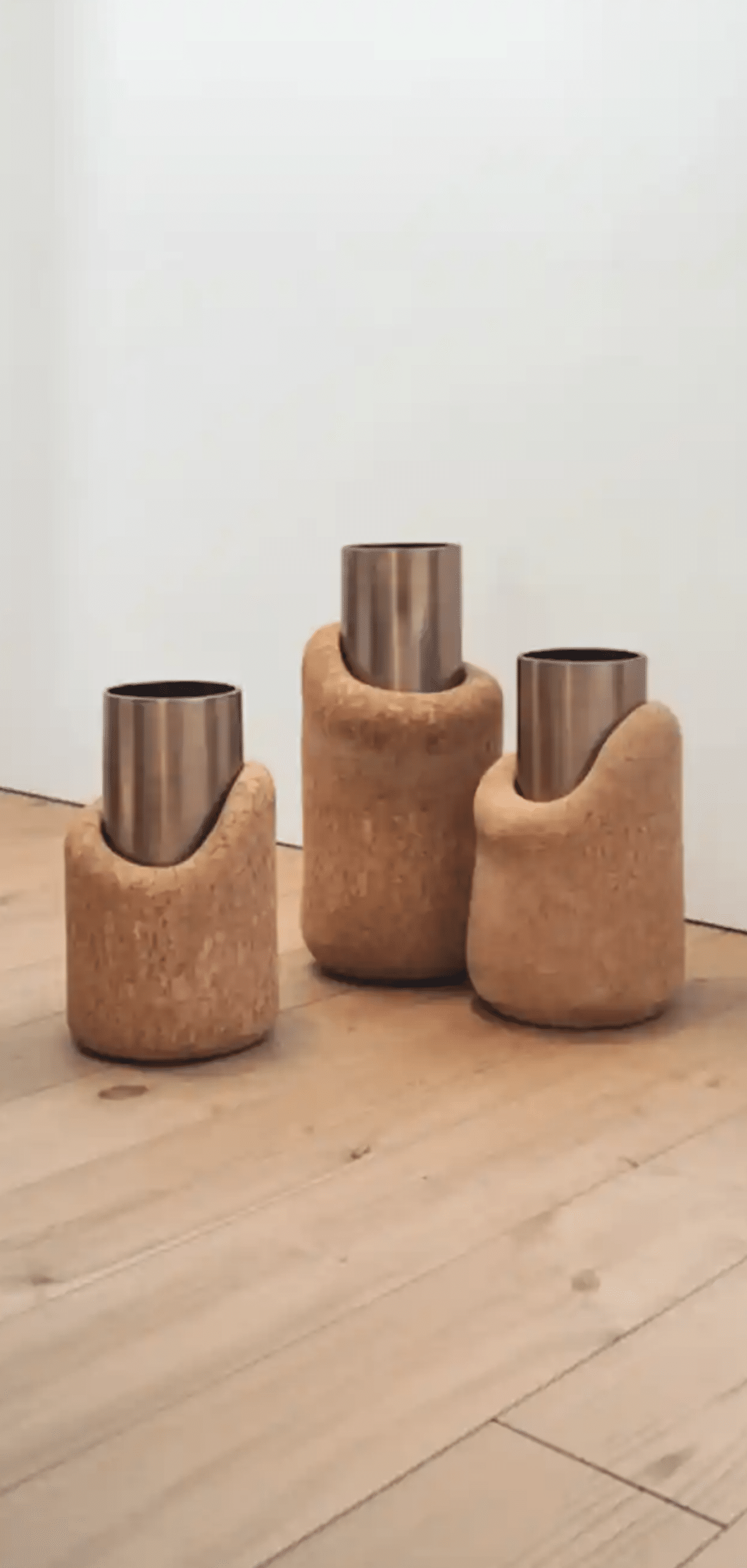
Materials:
- Ceramic pot
- Cork
- Cotton wick
- Reservoir tray
Instructions:
- Drill a hole in the pot’s base.
- Thread the wick through a cork and pot.
- Place pot on tray filled with water.
Self-Watering Planters Tip: Cork ensures snug fit while preventing soil from escaping.
4. Gutter Garden with Central Watering Trough
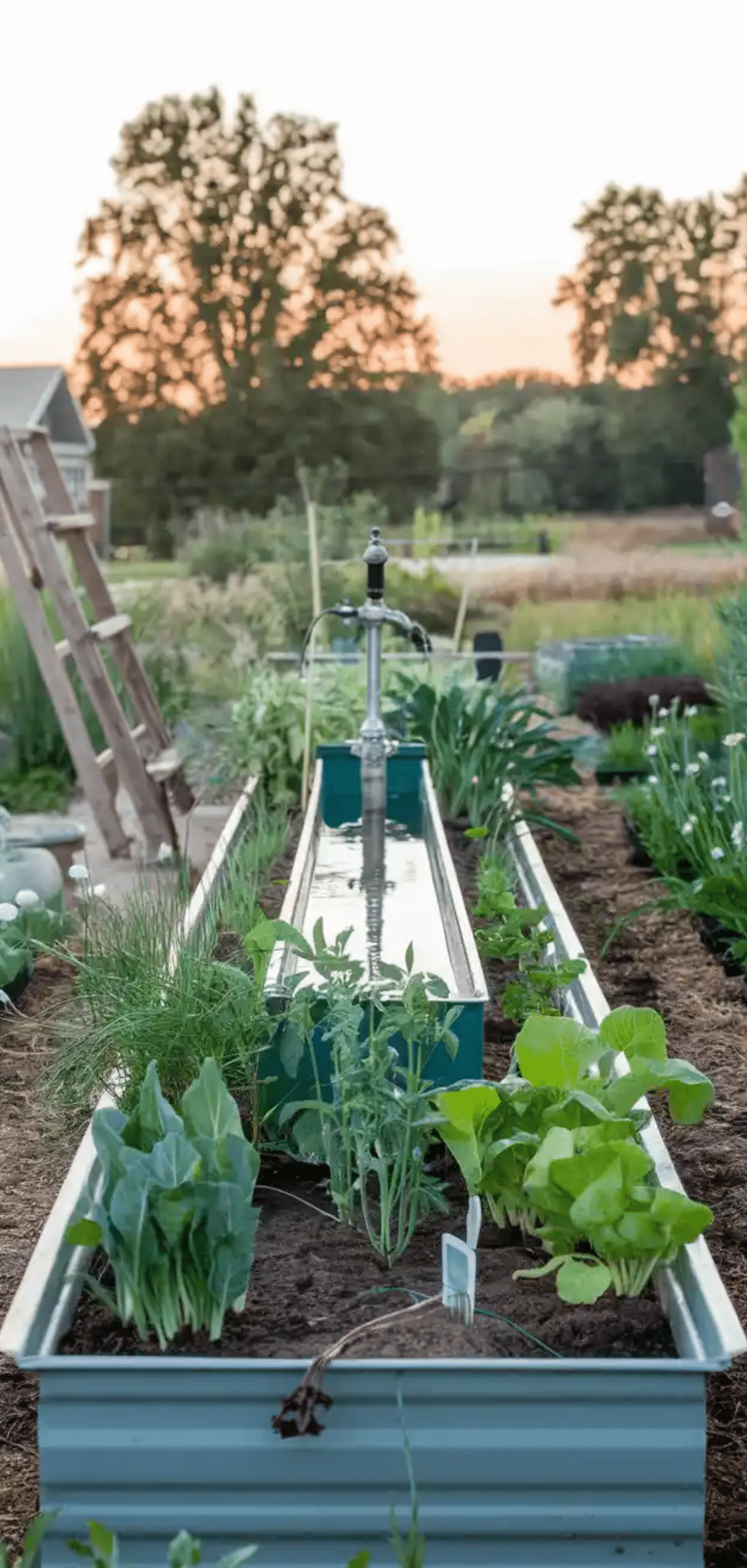
Materials:
- Rain gutters
- End caps
- Support frame
- Reservoir tube
Instructions:
- Mount gutters on a vertical frame.
- Install a water tube that runs through each level.
- Connect tube to a bottom reservoir for recirculation.
Self-Watering Planters Tip: Great for shallow-root plants like lettuce or strawberries.
3. Recycled Jug Gravity Feed Planter
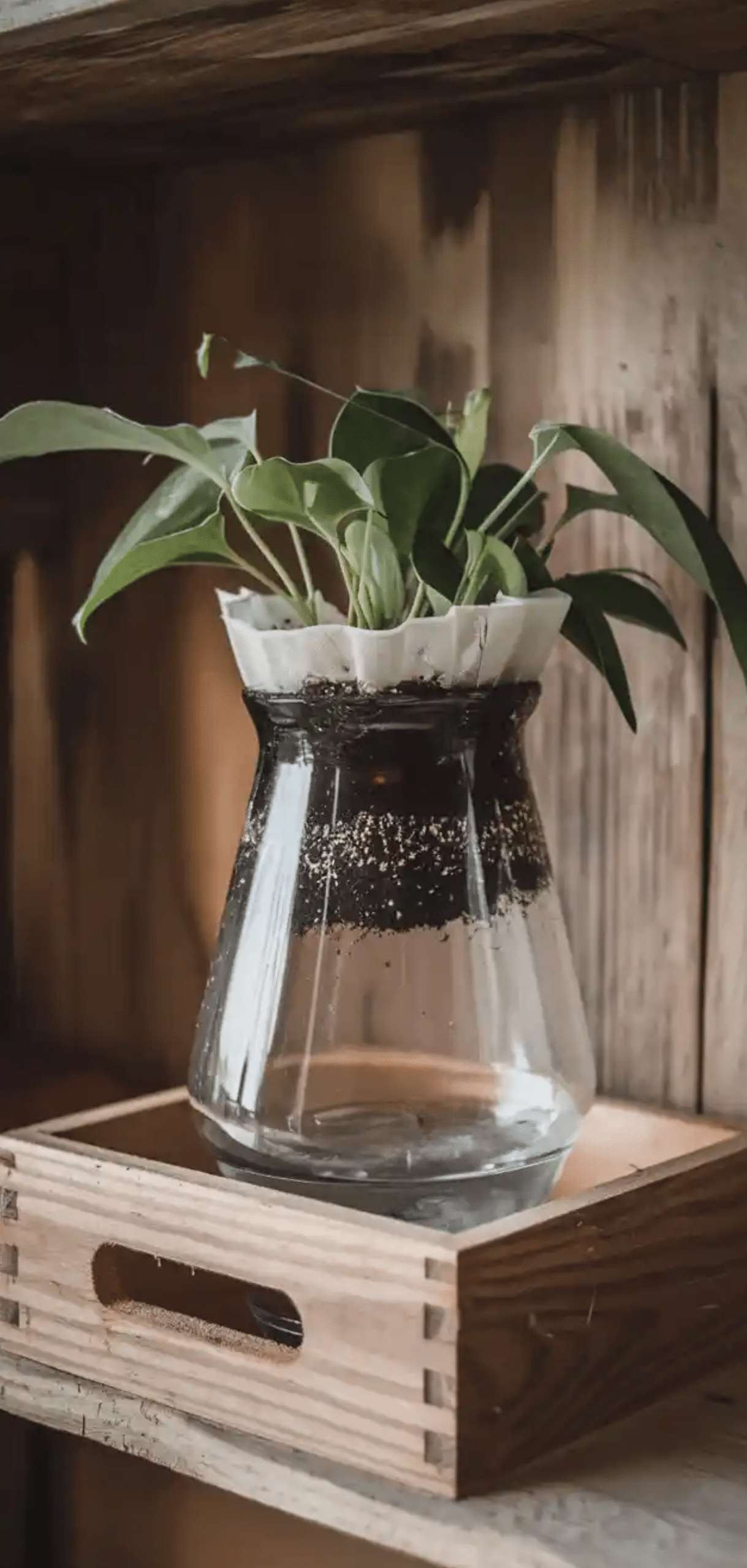
Materials:
- Gallon water jug
- Flexible tubing
- Raised plant tray
Instructions:
- Fill jug with water and elevate above the tray.
- Connect tubing from jug to tray edge.
- Let gravity regulate the water flow.
Self-Watering Planters Tip: Add a shut-off valve to control flow speed.
2. Glass Jar with Capillary Matting
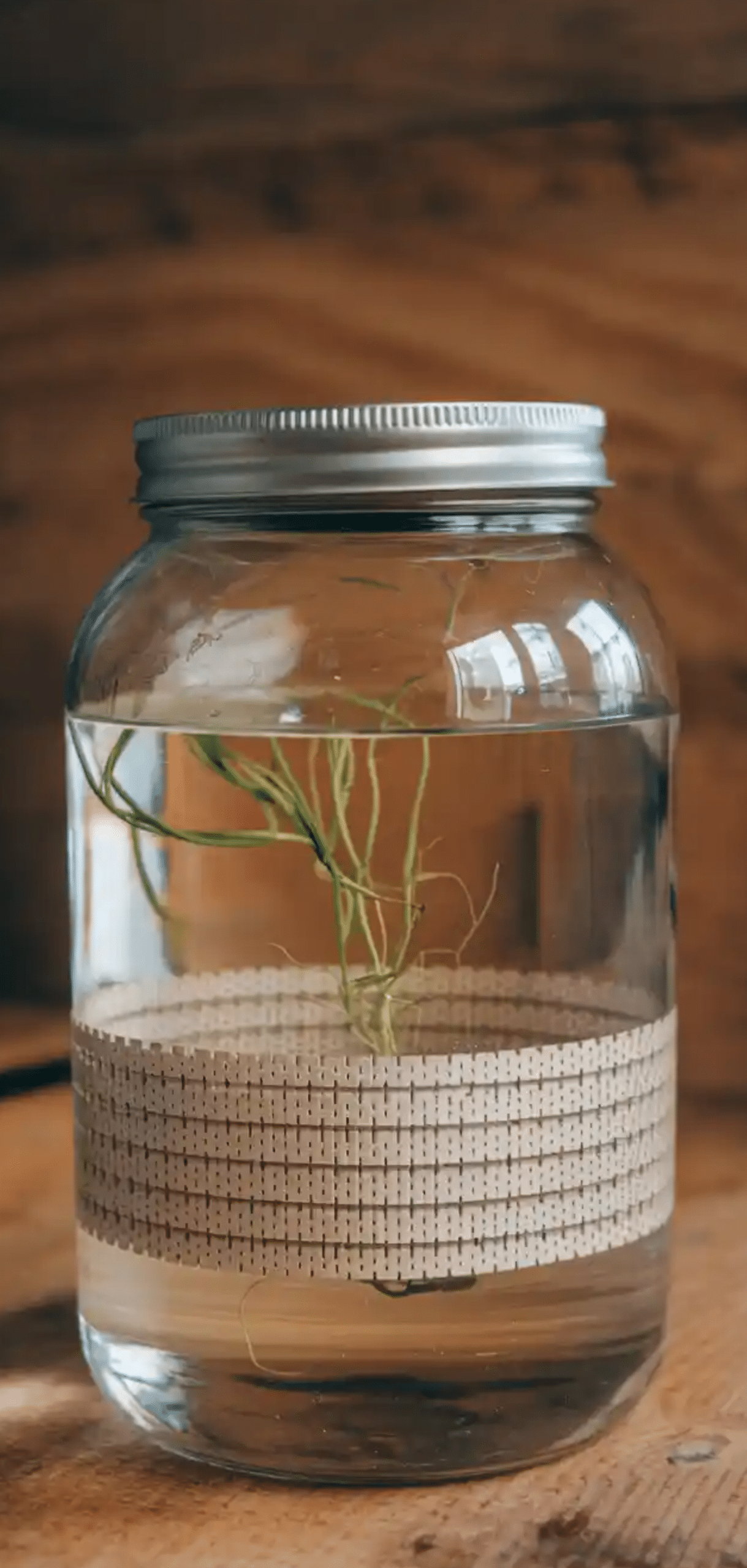
Materials:
- Glass jar
- Capillary mat
- Seed tray
Instructions:
- Fill jar with water and place mat over the opening.
- Rest the seed tray on top.
- The mat draws water upward to the plants.
Self-Watering Planters Tip: Excellent for propagation trays.
1. Hydro-Wick Hanging Basket
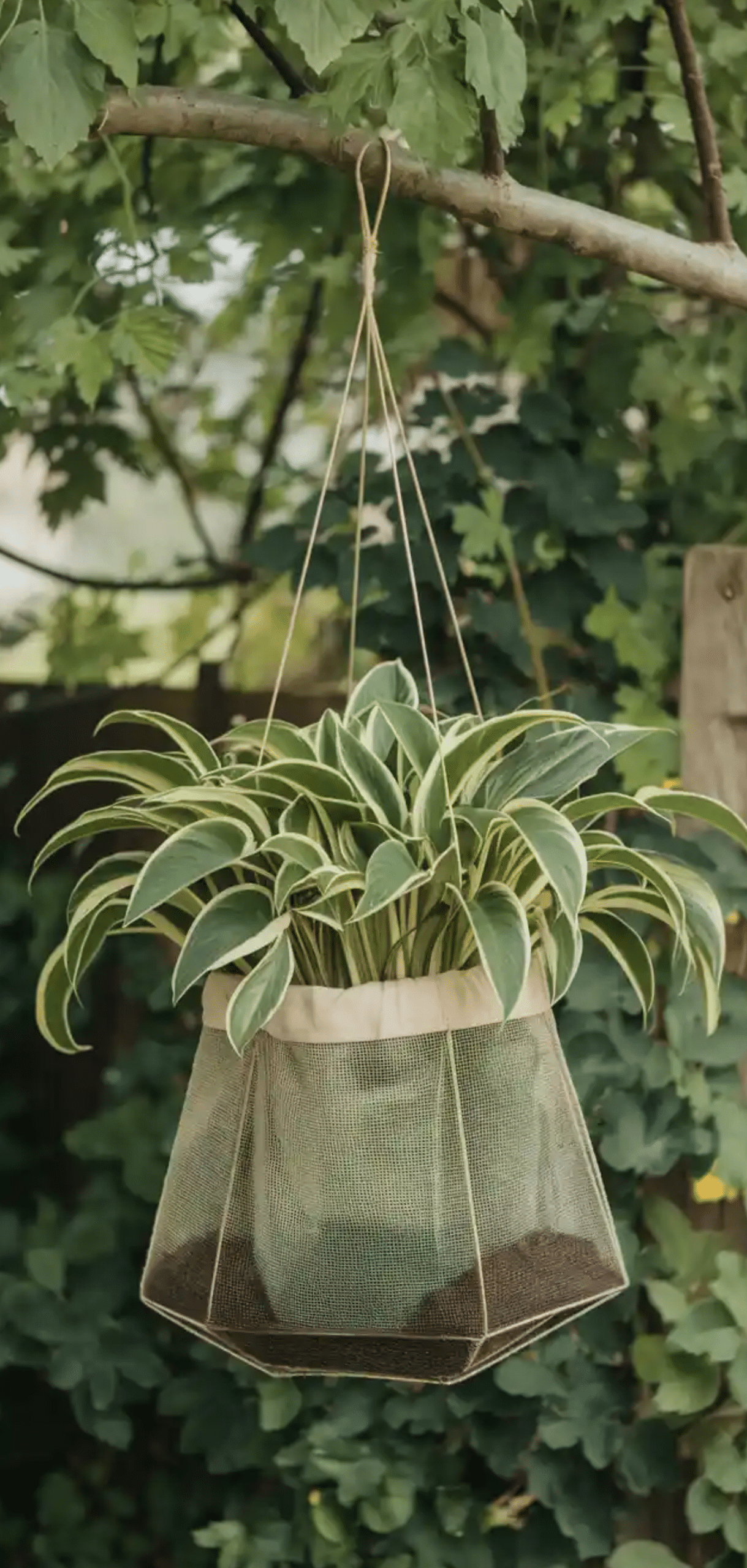
Materials:
- Hanging basket
- Nylon wick
- Bottom water tray
Instructions:
- Thread nylon wick from the base into hanging soil.
- Connect to a suspended water tray below.
Self-Watering Planters Tip: Keeps balcony plants hydrated through capillary action.
Conclusion
Self-watering planters are not only water-efficient but also promote healthier root growth and prevent overwatering. Whether you’re growing houseplants, herbs, vegetables, or flowers, these DIY solutions provide reliable hydration with minimal effort. Incorporate these designs into your gardening routine and watch your plants flourish, even when you’re away.
Enjoyed this post?
Share the love with another mom!
Every share helps this little blog grow — thank you so much