
Make sure to join my list for Weekly Tips and Recipes to Your Inbox
15 Inspiring Japandi Dining Room Ideas

A little note: Some images in this post may come from third-party sources and are shared purely to inspire you. All credit goes to their original creators. Visit our Image Credits Policy for more information.
With my husband’s assistance, I initially believed I had everything figured out when I tried to design a Japandi dining room: earthy colors, a simple table, and a soft rug. However, something felt strange as soon as I set up my pendant light and floor lamp.
The room appeared to be a conflict of styles rather than a place of serenity. Have you ever been in that situation where your room feels almost right, but something disrupts the harmony?
Every time I see something described as “Japandi,” I realize it’s not always true Japandi design. A real Japandi Dining Room is about more than just Scandinavian simplicity or Japanese minimalism; it’s about blending them seamlessly. Your dining room should feel calm, airy, and connected to nature.
The rug, mirror, and cabinetry may capture that look, but a single mismatched accent can throw the balance away. That’s why natural light, soft textures, and clean-lined furniture are so essential; they keep the style cohesive instead of chaotic.
If you’re struggling with mismatched pieces, the good news is: you don’t need to throw everything out. Start small, switch your lighting to something with organic shapes, replace harsh accents with natural wood or ceramic touches, and keep your palette neutral.
Over time, those changes will transform your space into a truly serene Japandi Dining Room. And if you love handmade details, you might enjoy my article about 12 Stunning Coil Pot Pottery Ideas because those artisanal pieces fit beautifully into a Japandi-inspired home.
What We're Exploring
- 01 15. Neutral Color Palette for Serenity
- 02 14. Minimalist Dining Table as the Focal Point
- 03 13. Blend Scandinavian Chairs with Japanese Tatami Inspiration
- 04 12. Natural Light and Sheer Window Treatments
- 05 11. Organic Materials for Warmth
- 06 10. Statement Pendant Lighting
- 07 9. Decluttered Surfaces
- 08 8. Muted Artwork and Wall Decor
- 09 7. Greenery with a Purpose
- 10 6. Layered Textiles for Comfort
- 11 5. Open Shelving for Functionality
- 12 4. Balanced Layout and Flow
- 13 3. Earth-Inspired Tableware
- 14 2. Subtle Zen Accents
- 15 1. Sustainable and Thoughtful Choices
- 16 Conclusion
15. Neutral Color Palette for Serenity
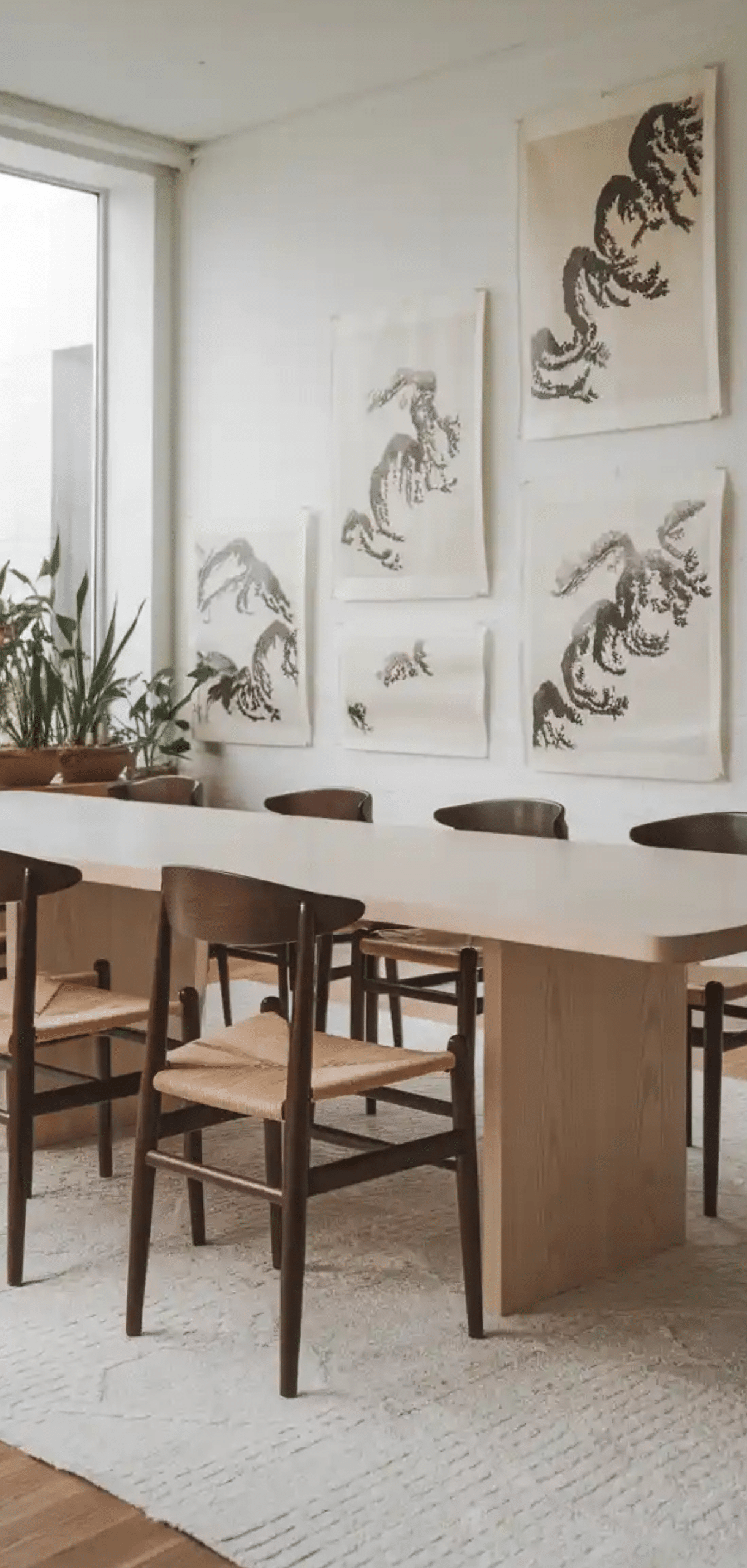
Start with muted tones, beige, soft whites, warm greys, and earthy browns. These shades reflect Japandi’s calm nature while offering a versatile foundation. To prevent the room from feeling flat, layer tonal variations of the same hue.
Japandi Dining Room Tip: For example, combine a soft ivory wall, a taupe dining table, and warm grey linen curtains.
14. Minimalist Dining Table as the Focal Point
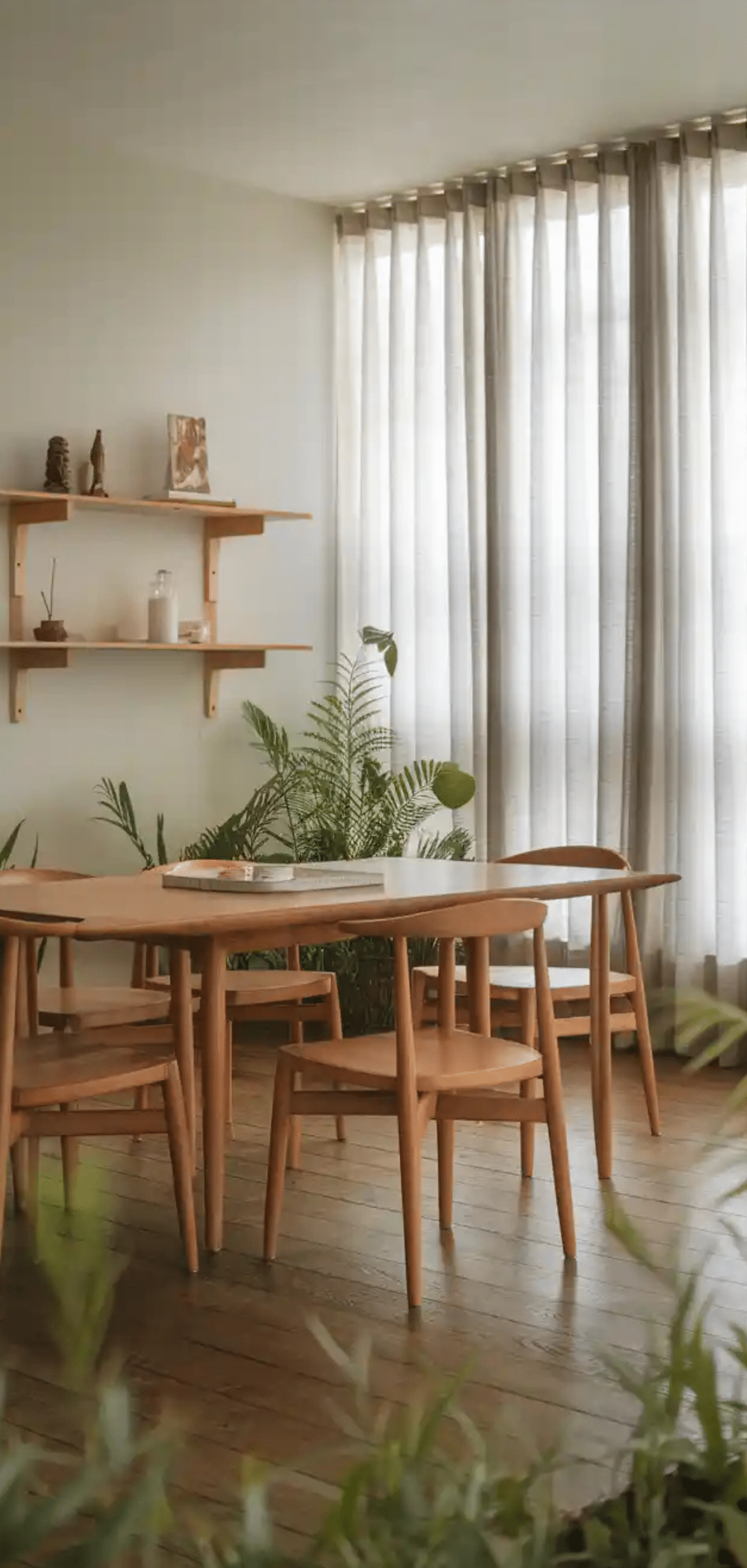
Choose a solid wood dining table with clean lines. Oak, ash, or walnut works beautifully to bring warmth and durability. Keep the design simple, avoiding unnecessary details.
Japandi Dining Room Tip: Rectangular or oval shapes fit best, paired with tapered legs for a Scandinavian touch.
13. Blend Scandinavian Chairs with Japanese Tatami Inspiration
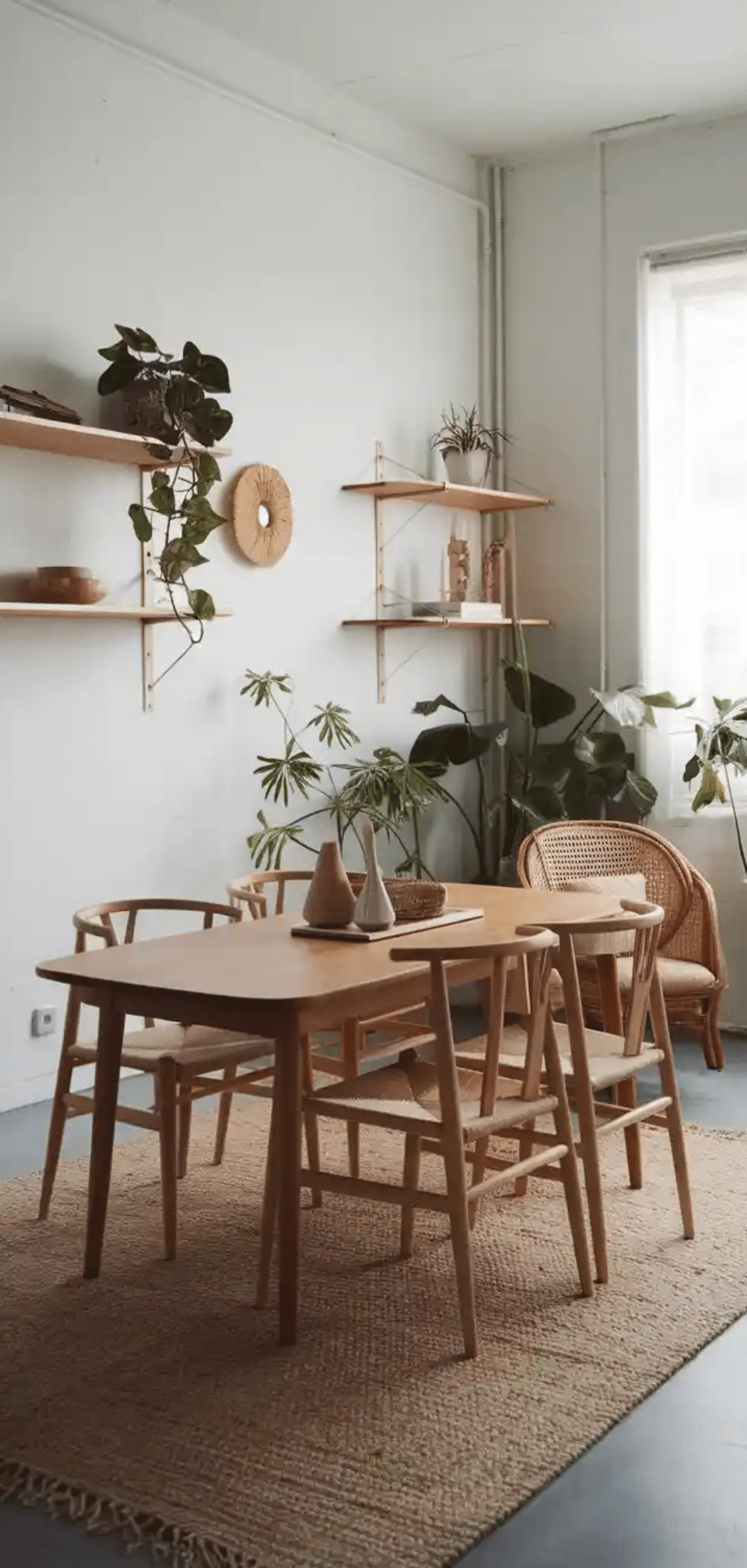
Opt for simple wooden chairs with curved backs or woven seats. For a Japanese nod, add a bench with neutral cushions or even floor cushions for a low dining table.
Japandi Dining Room Tip: The mix brings cultural authenticity without compromising comfort.
12. Natural Light and Sheer Window Treatments
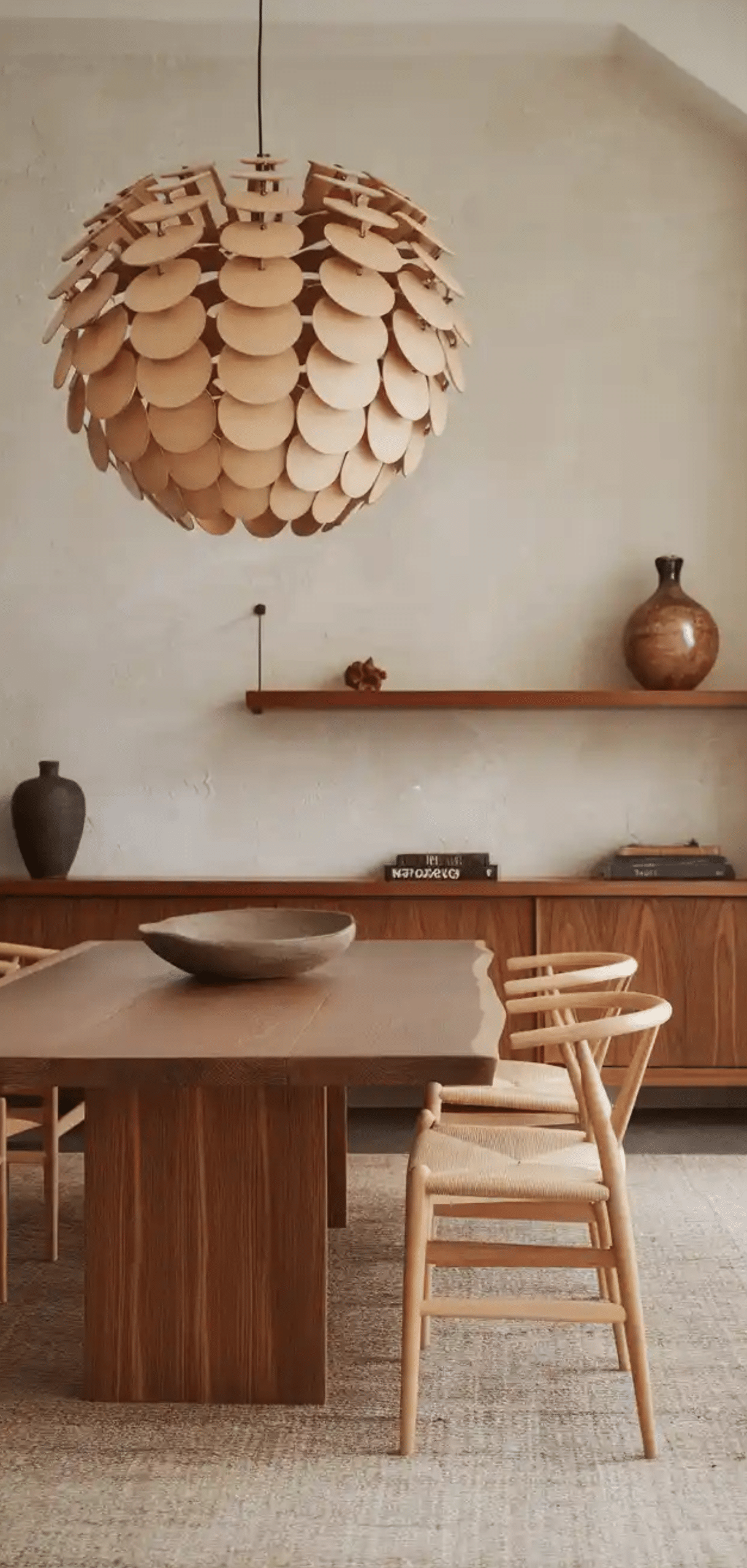
Maximize natural light with sheer linen or cotton curtains. Light filtering in should feel soft, not harsh.
Japandi Dining Room Tip: Avoid heavy drapery; instead, keep window coverings minimal to echo Japandi openness.
11. Organic Materials for Warmth
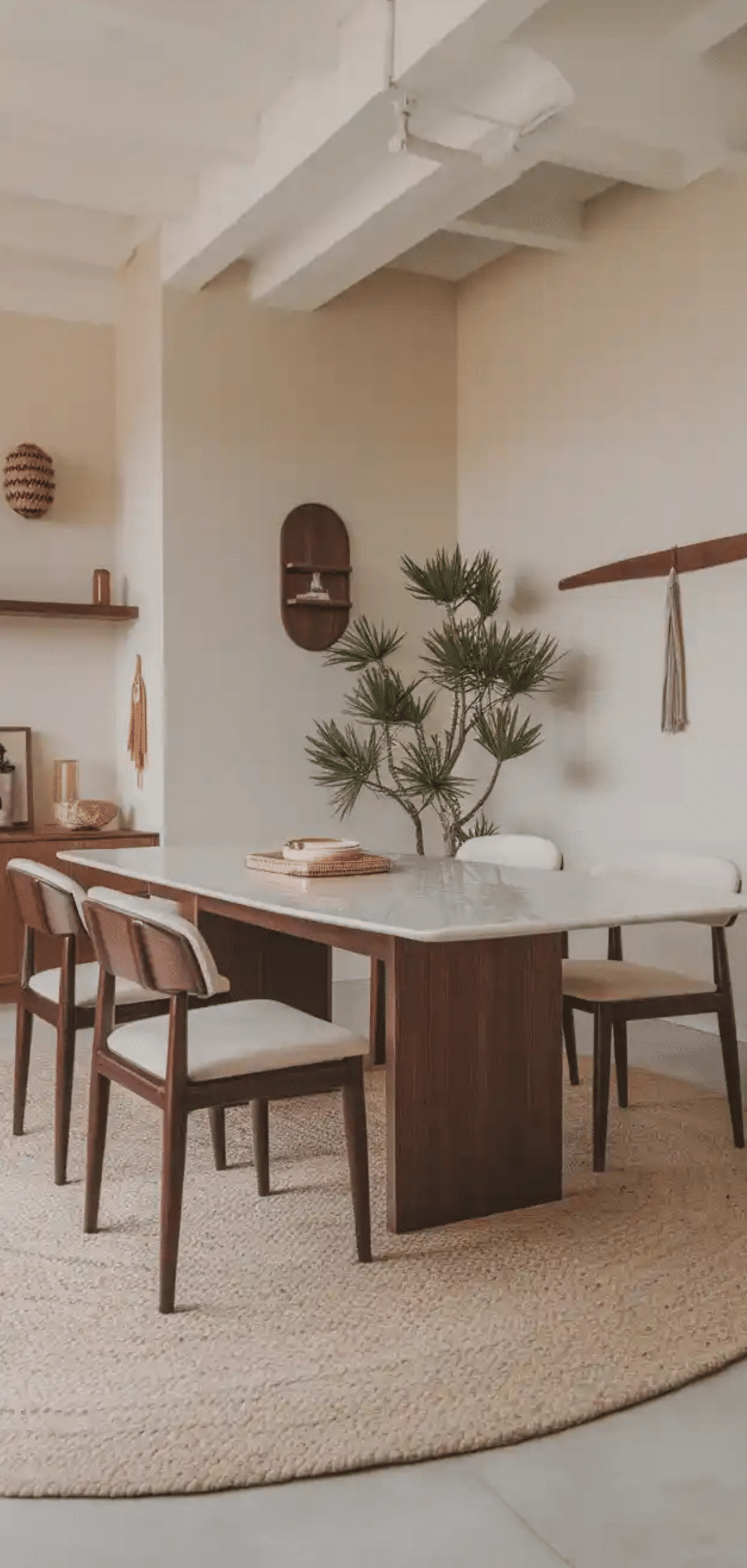
Introduce wood, stone, and natural fibers. A wooden table paired with woven jute or rattan dining chairs makes the room feel grounded.
Japandi Dining Room Tip: Clay vases, bamboo mats, and linen runners enhance the tactile richness of the dining experience.
10. Statement Pendant Lighting
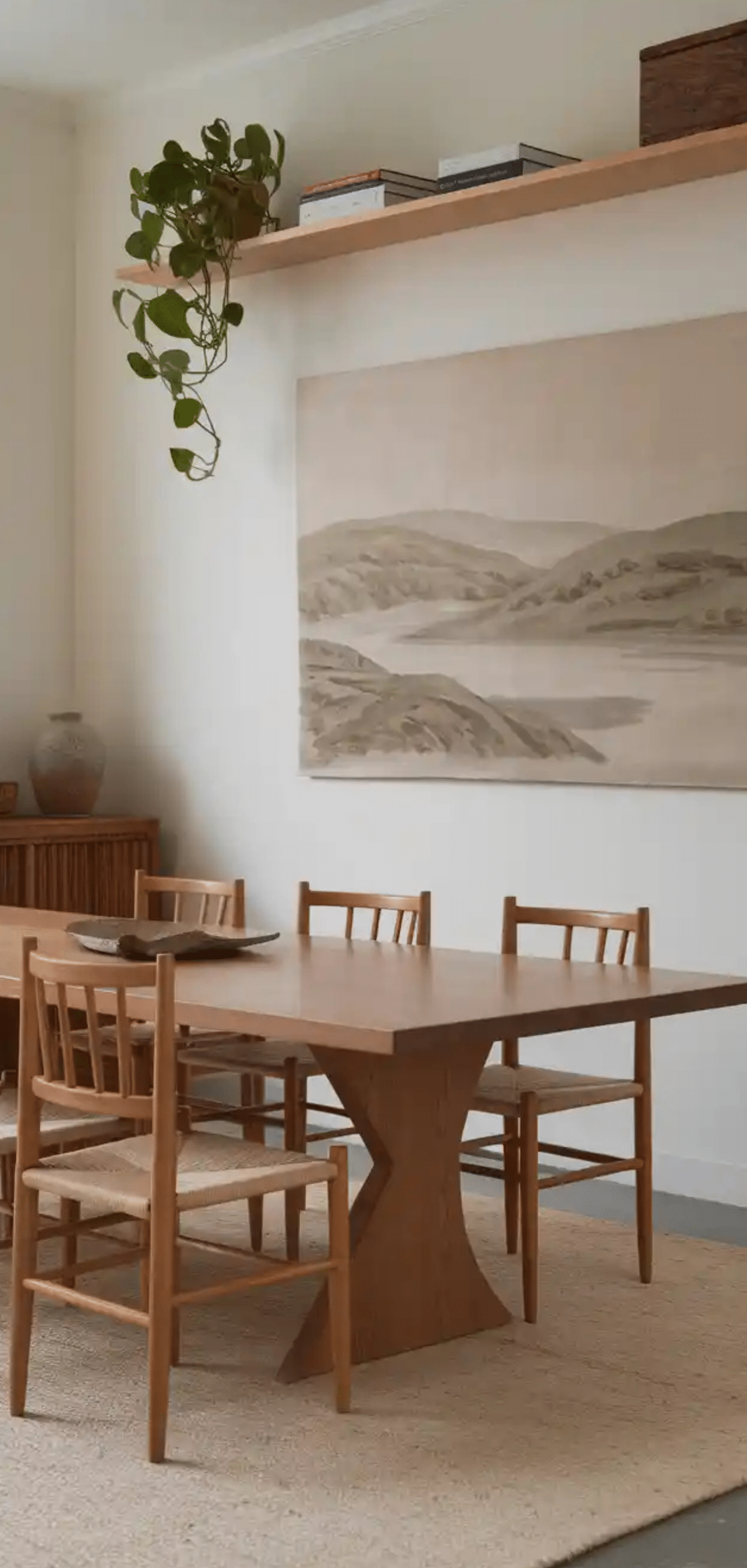
A Japandi dining room thrives on intentional lighting. Choose pendant lamps with natural textures, paper lanterns, bamboo weaves, or ceramic shades.
Japandi Dining Room Tip: Place one large pendant or a cluster above the table for focused illumination and a soft glow.
9. Decluttered Surfaces
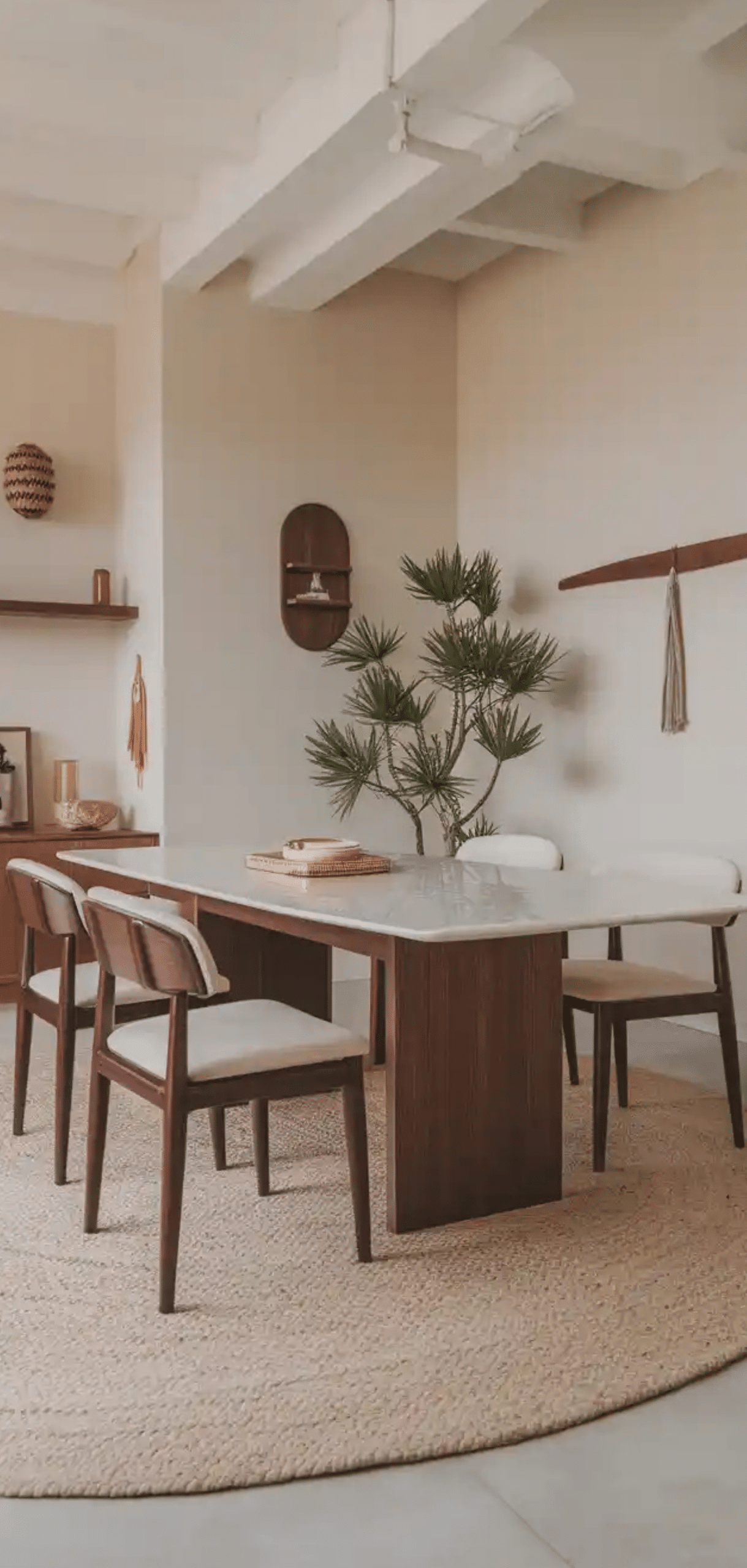
Keep your dining table and sideboards clear of unnecessary items. Only display functional or meaningful objects, like a handcrafted ceramic bowl or a small vase with fresh greenery.
Japandi Dining Room Tip: This promotes a sense of calm and focus during meals.
8. Muted Artwork and Wall Decor
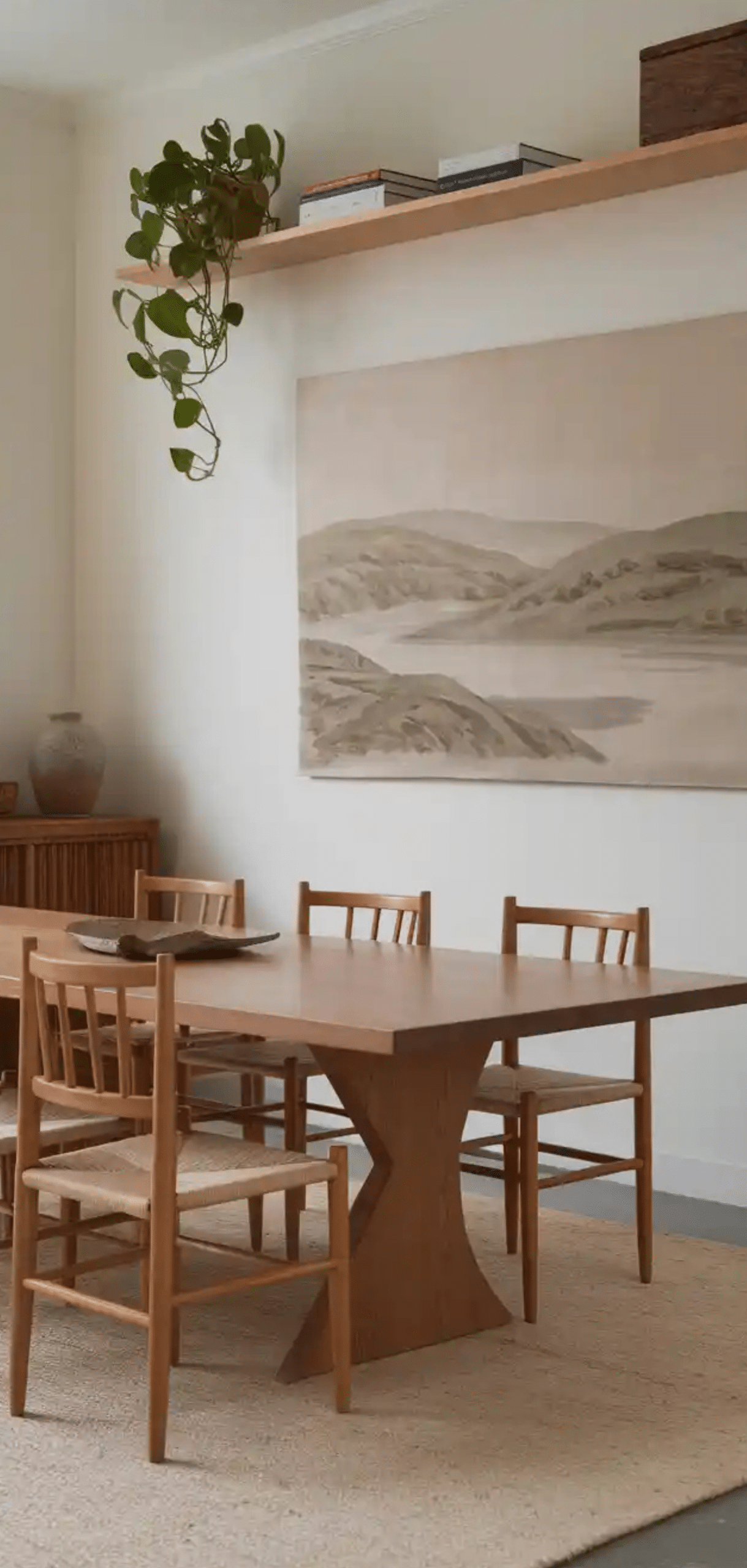
Select wall art in neutral tones or nature-inspired themes. Minimalist line drawings, soft watercolors, or Japanese calligraphy framed in wood or black frames complement Japandi’s simplicity.
Japandi Dining Room Tip: Limit the number of pieces to avoid visual noise.
7. Greenery with a Purpose
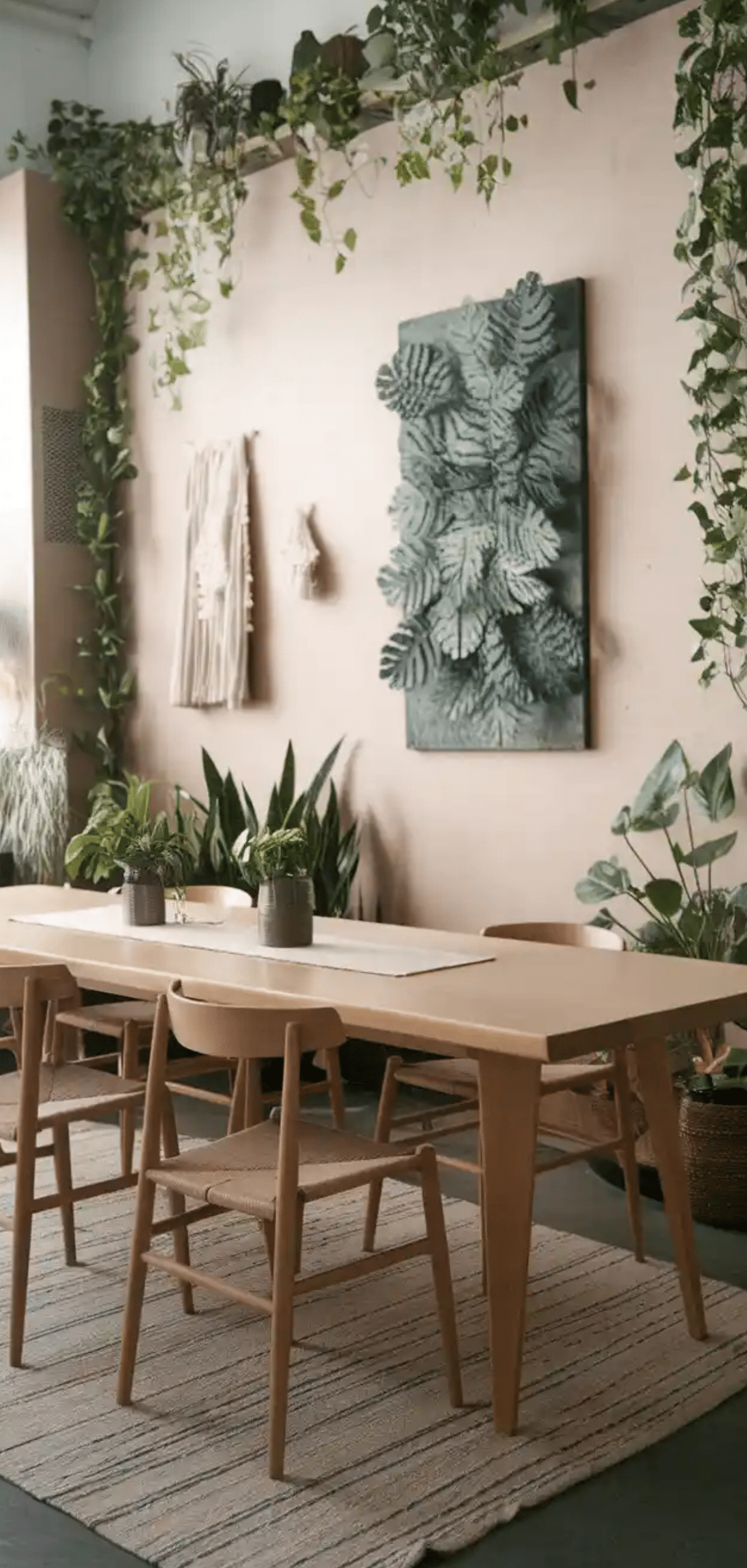
Bring in plants that reflect tranquility. Consider bonsai trees, bamboo stalks, or simple leafy greens like monstera or fiddle-leaf figs. Place them in clay or concrete pots to match the natural aesthetic.
6. Layered Textiles for Comfort
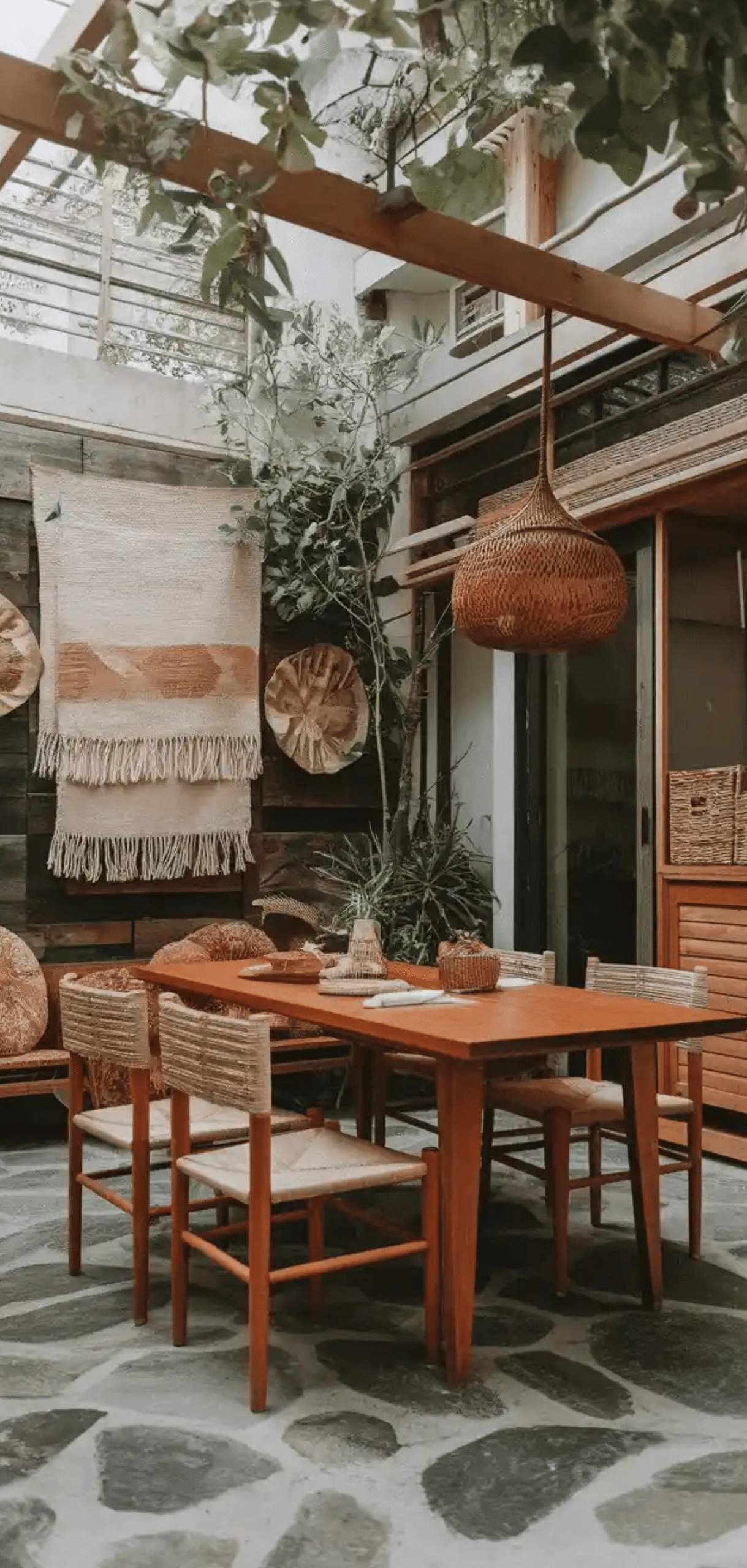
Softness is essential in balancing minimalism. Add linen table runners, organic cotton napkins, and neutral-toned seat cushions. For colder months, drape a wool throw over a bench to create a cozy Scandinavian touch.
5. Open Shelving for Functionality
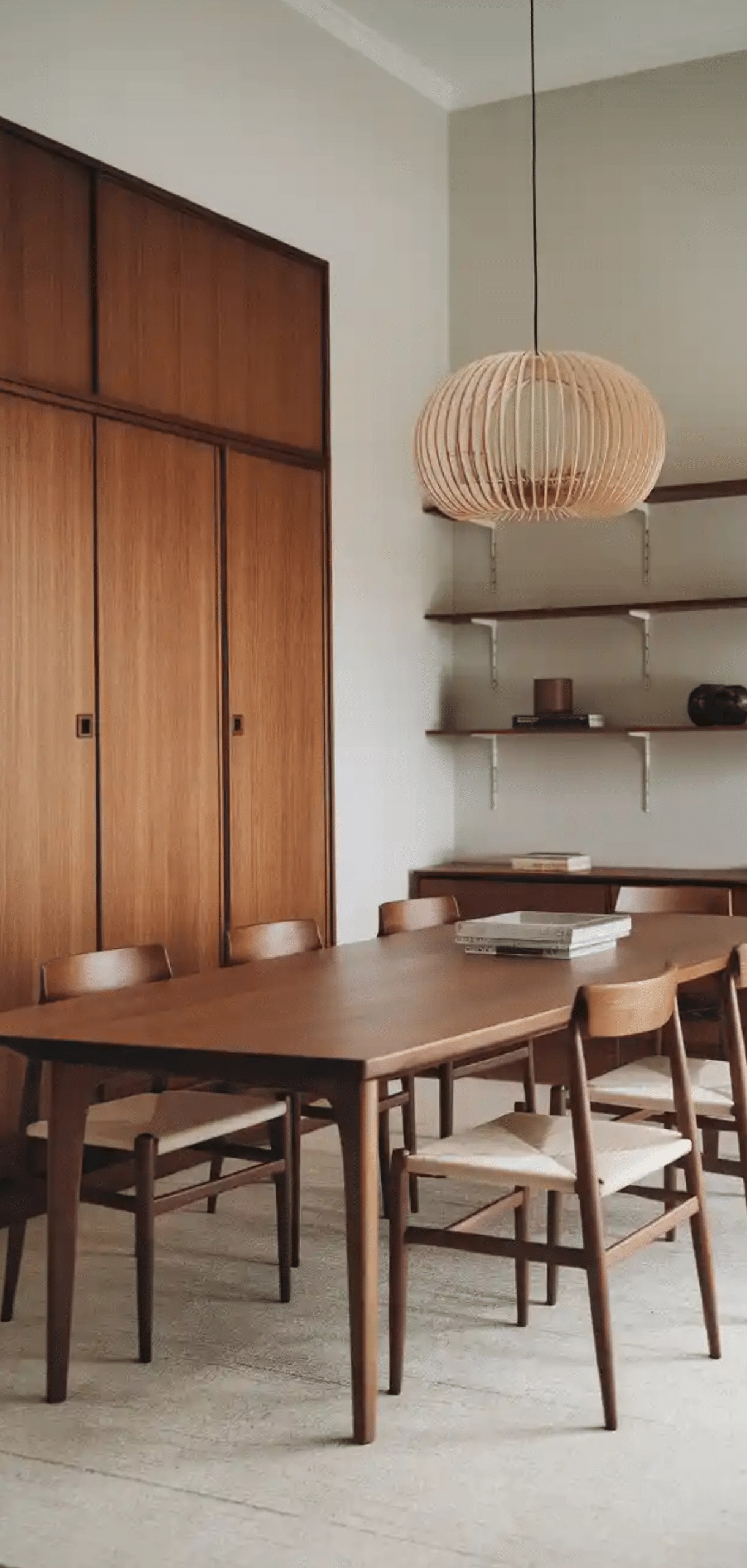
Instead of bulky cabinets, install wooden open shelves to display carefully chosen ceramics, glassware, or baskets. This maintains a sense of openness while adding practical storage. Keep items neatly arranged to avoid clutter.
4. Balanced Layout and Flow
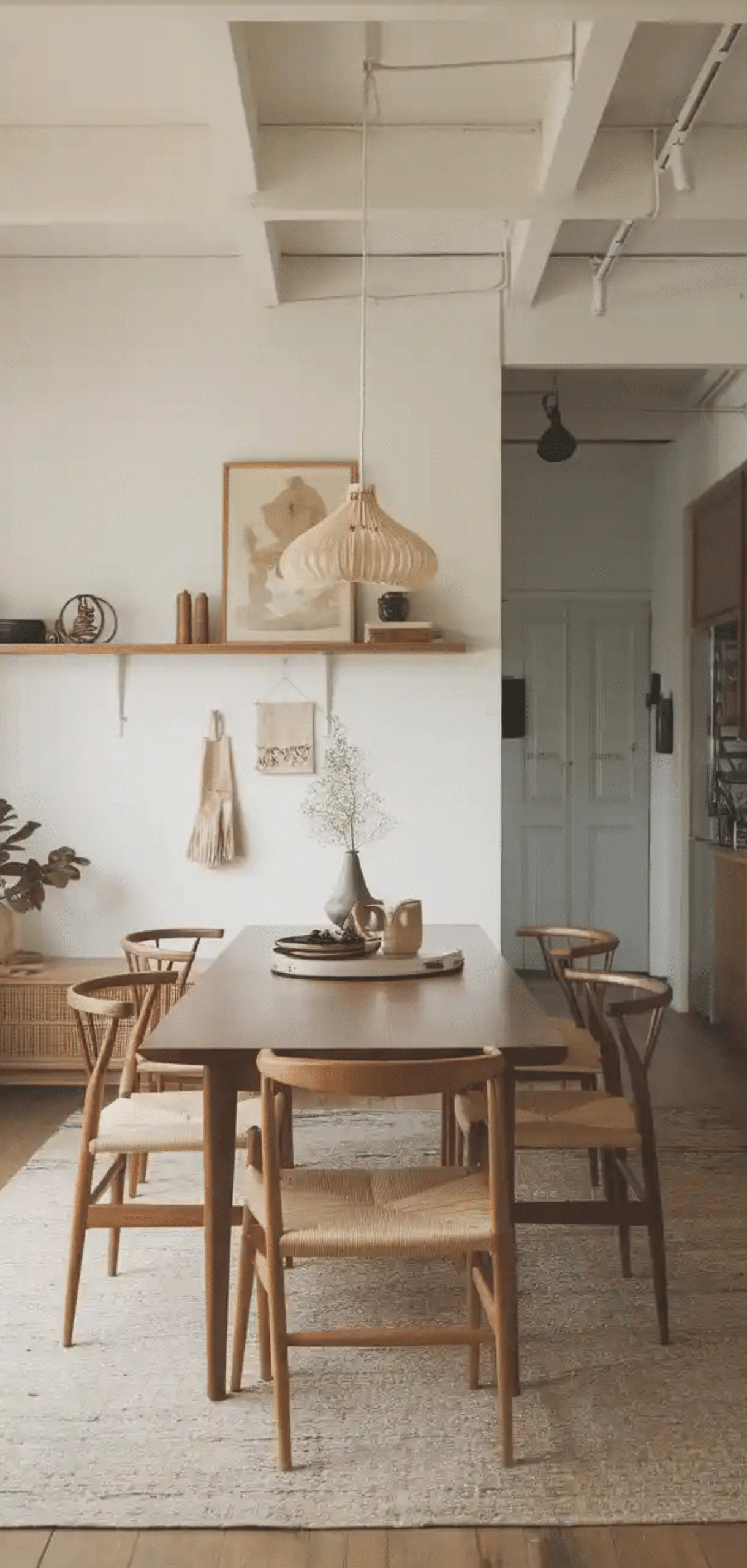
The dining area should feel open and airy, never crowded. Leave space around the table for movement, and ensure chairs can be pulled out comfortably. Balance is central to Japandi design, where function meets aesthetic calm.
3. Earth-Inspired Tableware
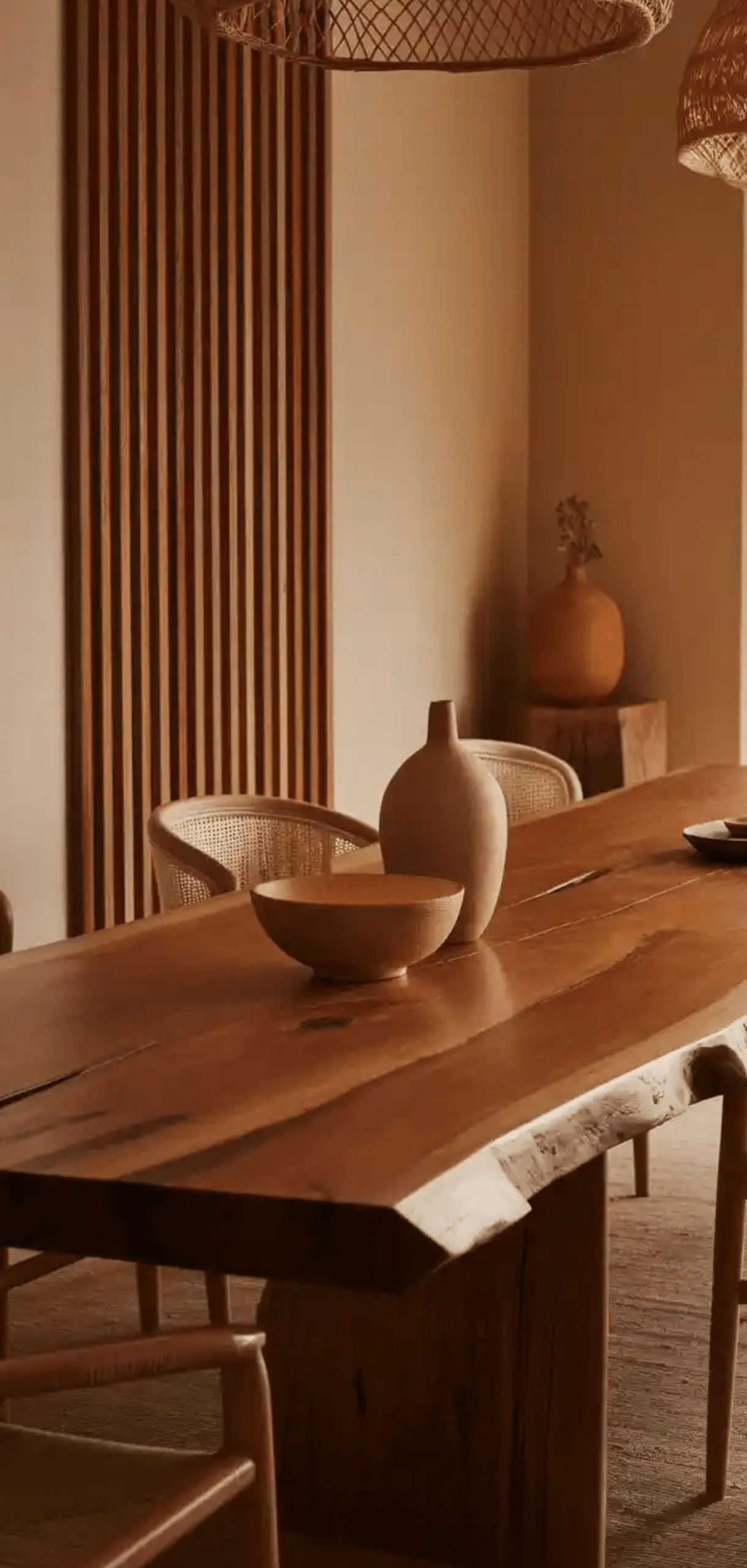
Use handmade ceramics, stoneware plates, and wooden serving trays to enhance the dining experience. Neutral colors like sand, cream, and charcoal bring cohesion, while subtle textures add visual interest without overpowering.
2. Subtle Zen Accents
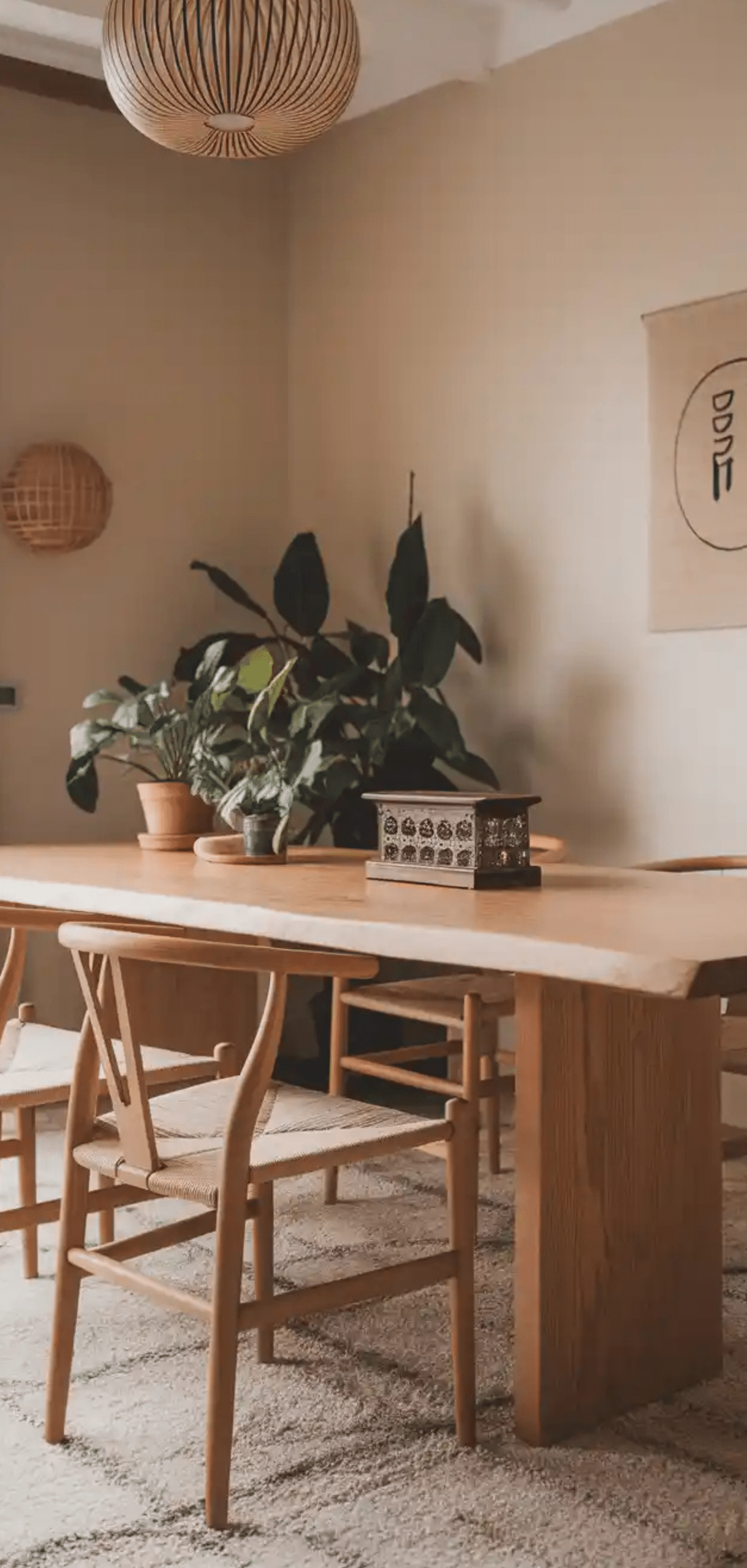
Add subtle Japanese-inspired details such as shoji-style room dividers, rice paper lamps, or tatami-inspired floor rugs. These accents enrich the space without overwhelming the minimalist essence.
1. Sustainable and Thoughtful Choices
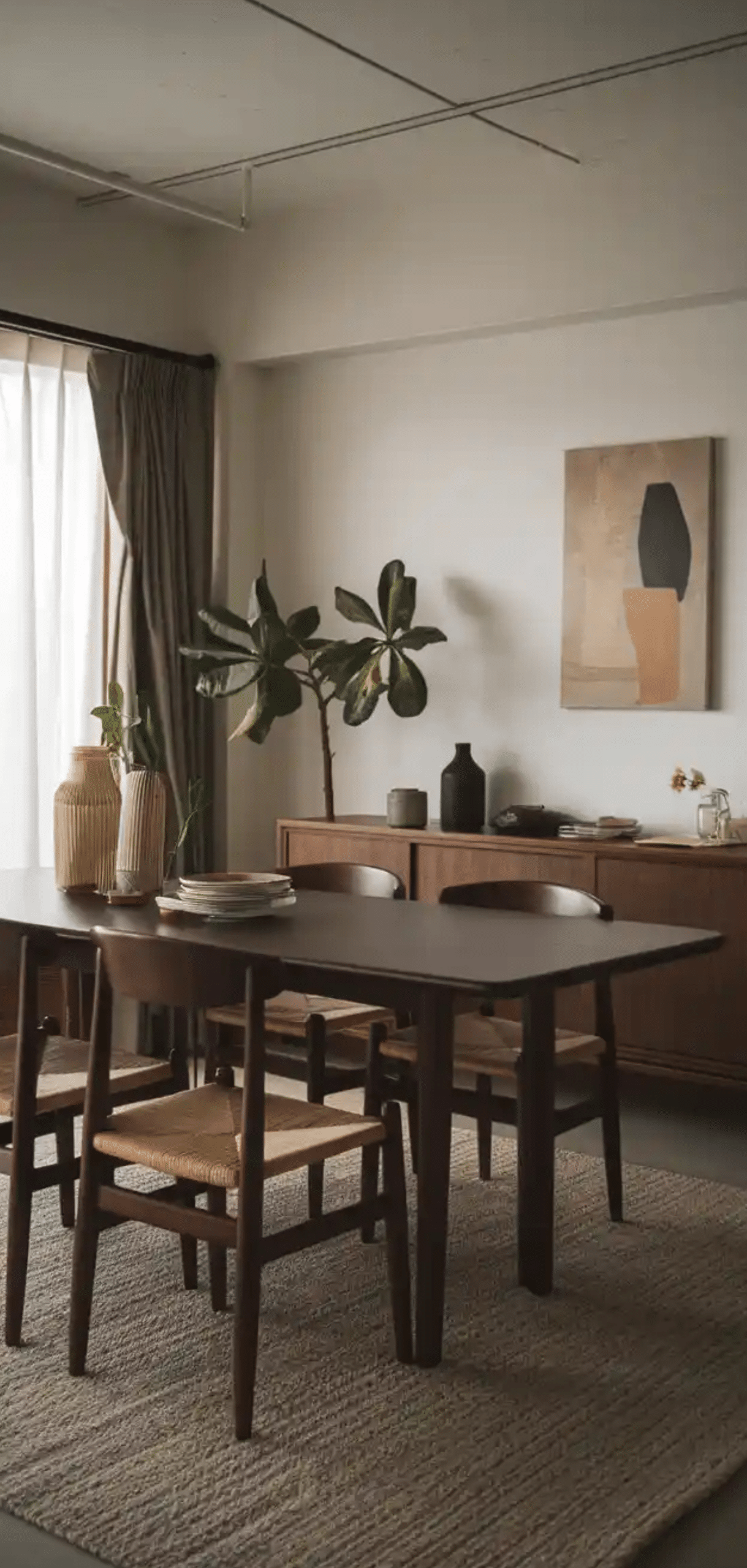
Japandi emphasizes mindful living. Choose sustainable woods, eco-friendly paints, and artisan-made tableware. Investing in timeless, durable pieces reduces waste and enhances the authenticity of your dining room.
Conclusion
A Japandi dining room is more than just a place to eat, it’s a sanctuary for connection and mindfulness. By combining Scandinavian warmth with Japanese minimalism, you create a timeless dining space that fosters harmony, balance, and peace.
Enjoyed this post?
Share the love with another mom!
Every share helps this little blog grow — thank you so much