
Make sure to join my list for Weekly Tips and Recipes to Your Inbox
Covered Deck Off Back of House Ideas That Make the Backyard Feel Like Another Room

A little note: Some images in this post may come from third-party sources and are shared purely to inspire you. All credit goes to their original creators. Visit our Image Credits Policy for more information.
I stepped out onto our bare wooden deck last spring holding a cup of coffee, squinting into direct sun because there was nowhere to sit that actually felt comfortable. I had been dreaming about a real covered deck for two summers straight. Every evening out there ended the same way, too hot, too bright, back inside within ten minutes.
I had a stack of saved photos on my phone that I kept meaning to actually do something with. Every photo showed the same basic idea done a dozen different ways, a simple roof structure that turned an exposed deck into somewhere people actually wanted to linger. It felt like such an obvious fix once I saw it clearly.
I started paying attention to what made some of these covered spaces feel so much more finished than others. It was never just the roof itself. It was the furniture underneath, the railing style, and the little details that made the whole space feel like a real room instead of an afterthought.
I began noticing pergolas built from raw cedar, slatted for partial shade. I noticed full gable roofs that matched the house perfectly, and screened-in porches with rugs and lamps that looked more like a living room than anything outdoors. Every version solved the same basic problem in its own way.
That is when I realized a covered deck does not need to look one specific way to be worth building. Some families wanted full shelter from rain and sun. Others just wanted a little relief from direct light while keeping the space feeling open.
I started saving image after image that made me stop scrolling, the way I always do when something feels worth remembering. Some were still under construction, half-finished lattice panels and exposed beams. Others were fully styled, ready for a dinner party the same evening.
By the time I finally started planning our own covered space, I had a whole list of ideas I wanted to bring to our contractor. I am sharing that same list here, the way I would text it to a friend standing on her own sunburned deck wondering where to even begin.
If a shaded, welcoming deck has ever made you pause while scrolling, these ideas are for you. Every single one came from a real backyard, built by a real family who clearly wanted somewhere better to spend their evenings.
What We're Exploring
- 01 An Open Slat Pergola Gives a Covered Deck Filtered Light
- 02 Lattice Panels Add Privacy to a Covered Deck Under Construction
- 03 The Mega Mom Moment
- 04 Slatted Privacy Walls Give a Covered Deck a Modern Retreat Feeling
- 05 A Full-Length Covered Deck Extends Living Space Along the Whole House
- 06 The Real Talk
- 07 A Gabled Roof Covered Deck Matches the Architecture of the House
- 08 A Screened Covered Deck Keeps Bugs Out Without Losing the View
- 09 What Makes a Covered Deck Worth the Investment
- 10 The Family Win
An Open Slat Pergola Gives a Covered Deck Filtered Light
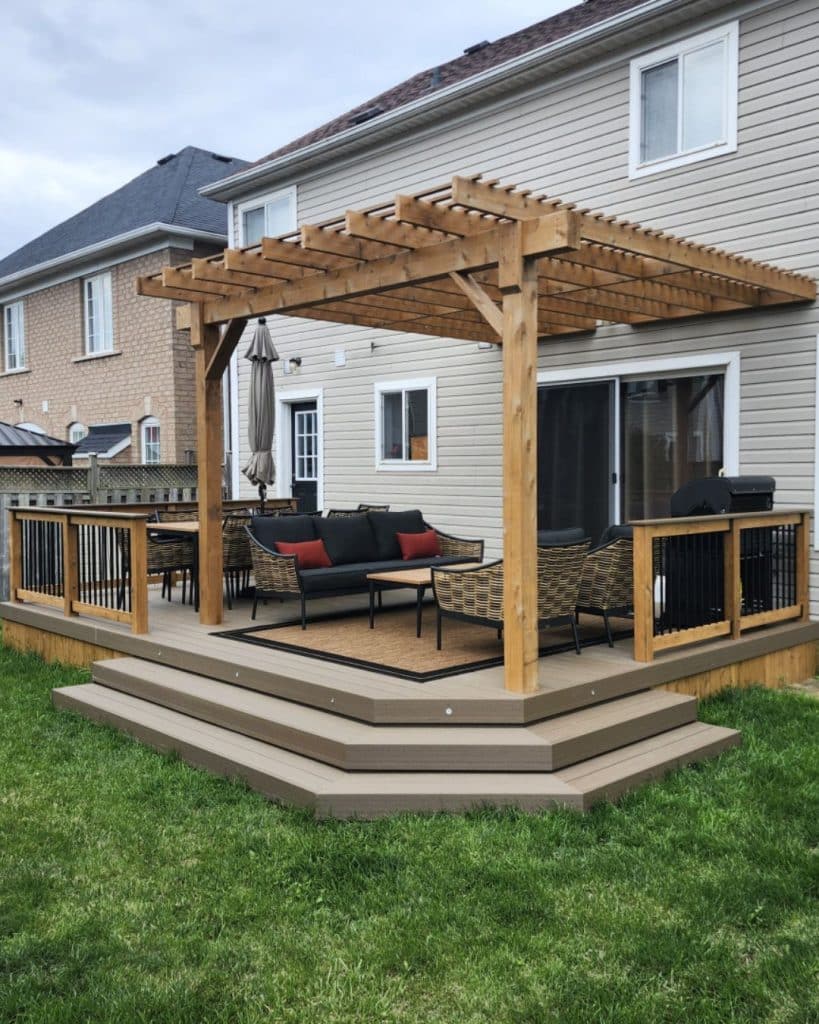
Building an open slat pergola over a multi-level composite deck gives a family partial shade without fully blocking the sky overhead. Black wicker furniture with deep cushions and a simple striped rug makes the space feel like a true outdoor living room. This kind of layered covered deck setup works beautifully for families who want shelter without losing natural light.
Built-in railing with alternating wood and metal balusters adds a modern touch that pairs well with the natural cedar overhead. Writers at outdoor living design guides often point to open slat pergolas as one of the most flexible shade solutions for a backyard deck.
Budget Guide: A cedar pergola kit for a deck typically runs $1,500 to $4,000 depending on size, and outdoor wicker seating sets cost $600 to $1,500. You can find furniture options at Home Depot, Amazon, or Wayfair adjacent retailers like Target.
Lattice Panels Add Privacy to a Covered Deck Under Construction
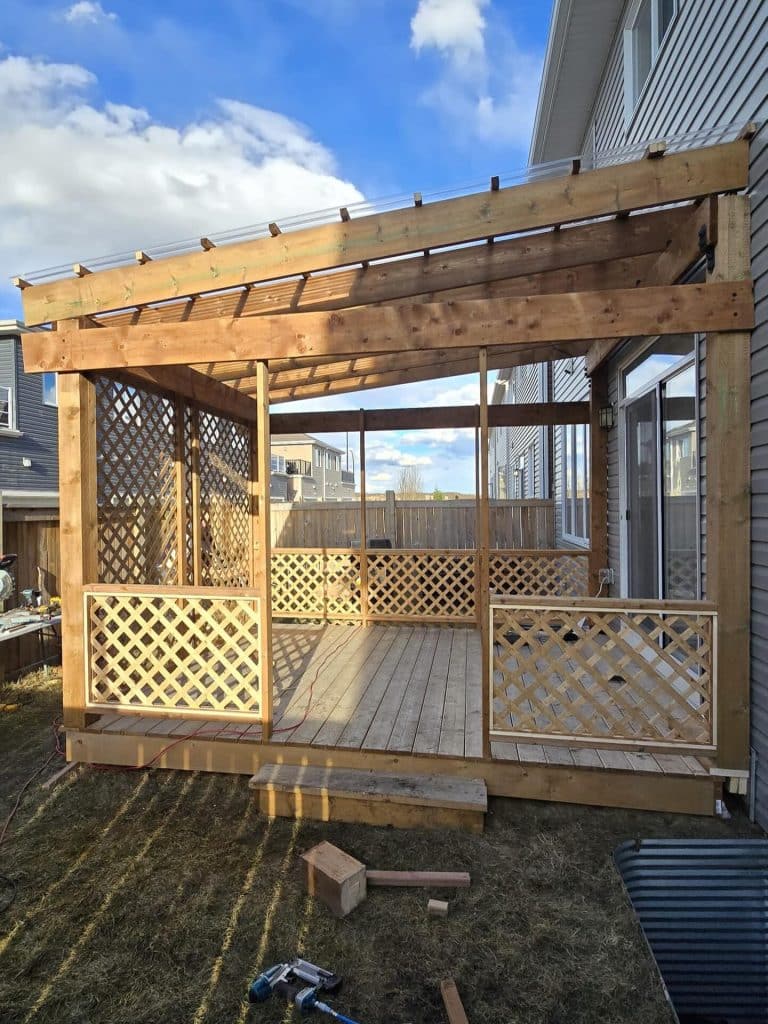
Paired with a solid overhead roof structure and a clear polycarbonate panel for extra brightness, the whole space stays shaded but never feels stuffy. This kind of do-it-yourself covered deck build is a favorite for families tackling the project in stages.
Home renovation writers at deck building guides frequently recommend lattice paneling as an affordable way to add privacy without the cost of solid fencing.
It also gives a family room to personalize the space further once the main structure is complete, since lattice panels can support hanging plants or string lights later. Building the roof and privacy walls in stages, as budget allows, keeps a big project from feeling overwhelming all at once.
Budget Guide: Lattice panel sheets typically run $25 to $50 each at Home Depot, and clear polycarbonate roofing panels cost $30 to $60 per panel depending on size.
The Mega Mom Moment
I used to think a covered deck needed to be finished all at once or not at all. Watching a family build theirs in stages, lattice one weekend, roof panels the next, reminded me that a project done slowly still counts as progress. Done eventually beats perfect never.
Slatted Privacy Walls Give a Covered Deck a Modern Retreat Feeling
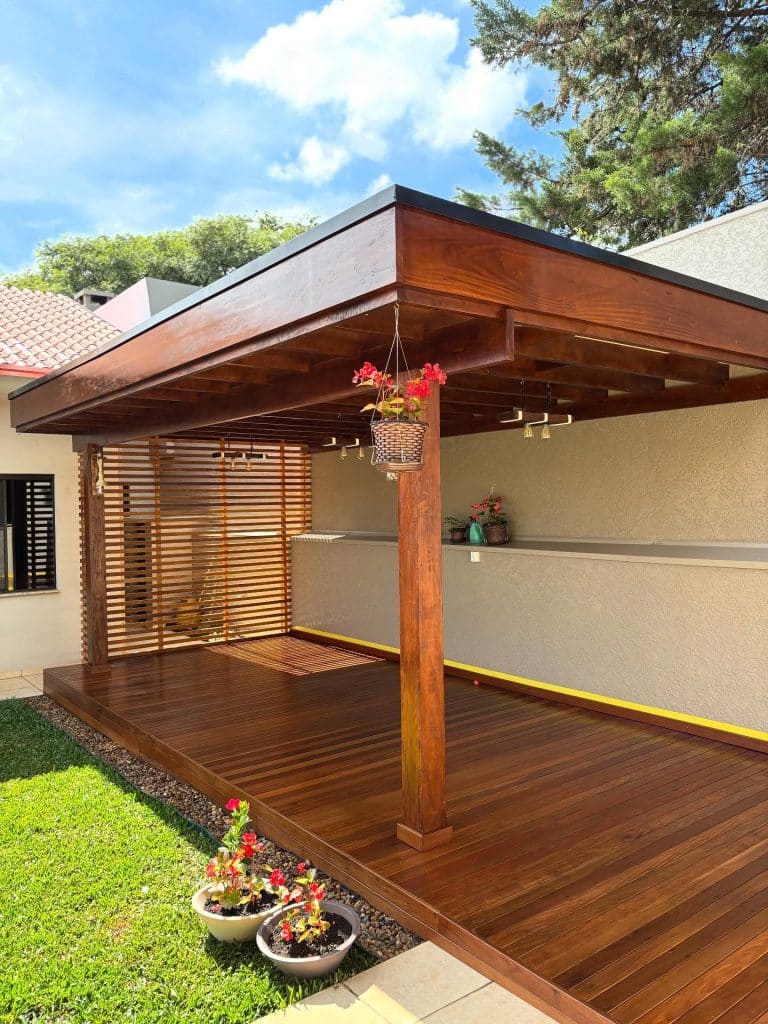
Pairing a solid dark wood roof with vertical slatted privacy walls turns a covered deck into a private retreat that still lets in dappled light and air. Hanging planters and small pendant lights add warmth against the deep stained wood tones. This kind of sophisticated covered deck design feels more like an outdoor room than a simple patio extension.
String lighting tucked along the beams keeps the space usable well after sunset, extending how many hours a family actually spends outside. Design writers at modern outdoor living features often highlight slatted wood privacy screens as a way to add architectural interest to an otherwise plain deck.
Budget Guide: Stained hardwood decking typically runs $8 to $15 per square foot installed, and slatted privacy wall panels cost $40 to $90 each depending on width. You can find planters and pendant lighting at Target, Amazon, or HomeGoods.
A Full-Length Covered Deck Extends Living Space Along the Whole House
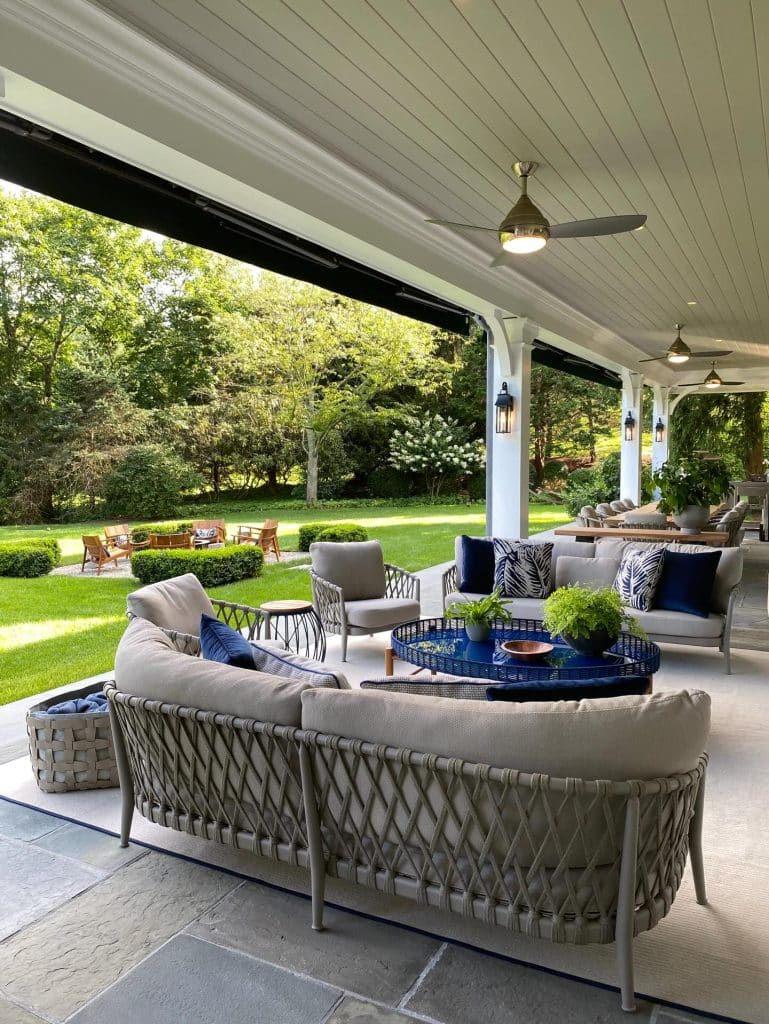
Separating the deck into distinct zones, lounging near the house and dining further along, lets a family use the space for multiple purposes at once. Outdoor entertaining writers at patio furniture and layout guides often recommend zoning a long covered space to prevent it from feeling like one crowded room.
It also gives a family a seamless transition from the yard to the house, since the roofline connects the whole back of the home visually. Wall sconces mounted along the support posts add soft lighting for evening gatherings without needing string lights strung overhead. That kind of built-in lighting plan is worth considering for any large covered space.
Budget Guide: A full-length covered deck addition typically runs $10,000 to $30,000, depending on size and materials, best planned with a contractor. Outdoor rope furniture sets cost $1,200 to $3,000, available through Home Depot or specialty patio retailers.
The Real Talk
Nobody tells you that a covered deck this size needs a real lighting and furniture plan before construction even starts. Figure out your zones, lounging, dining, cooking, before you build, not after. Retrofitting a huge space later costs far more than planning it upfront.
A Gabled Roof Covered Deck Matches the Architecture of the House
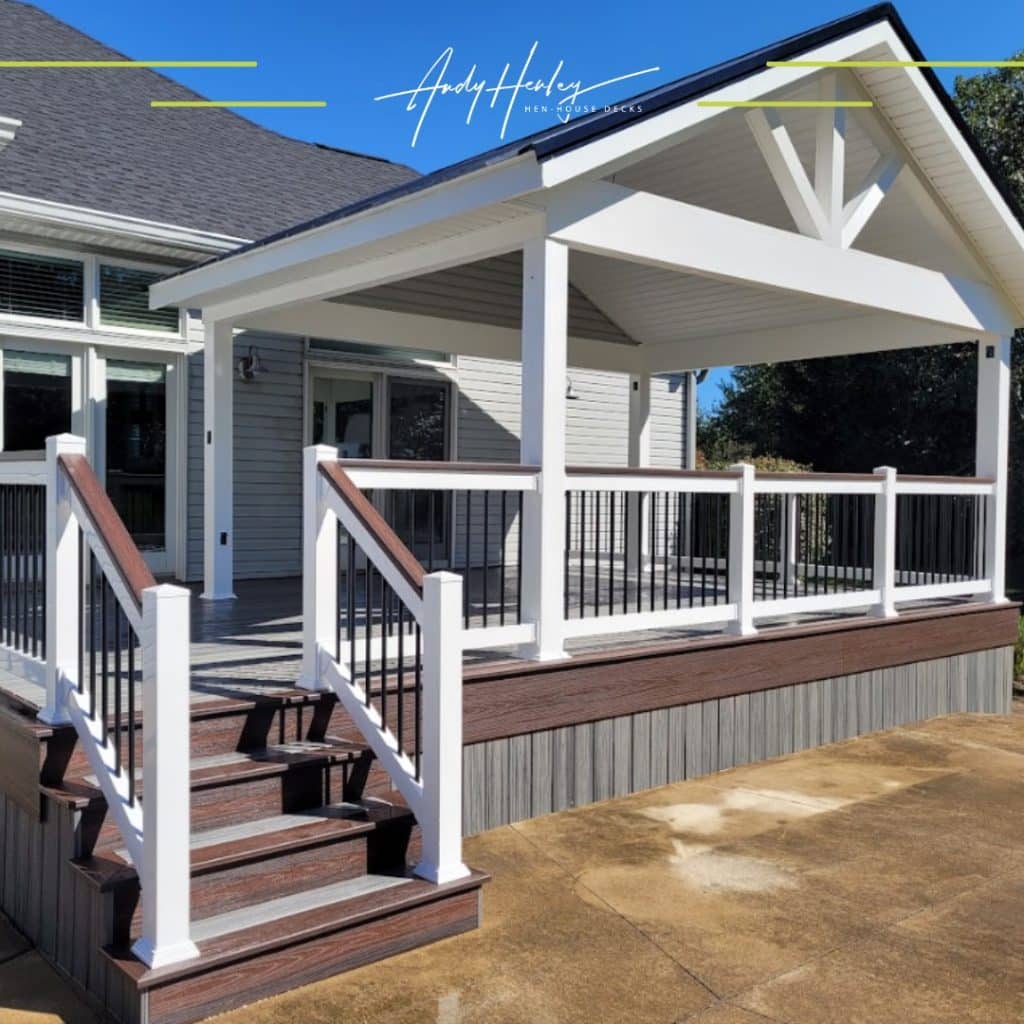
White trim and matching composite decking tie the whole structure back to the home’s existing exterior. This kind of cohesive covered deck design adds real value because it looks original to the house.
This idea works because matching rooflines and trim colors makes an addition feel intentional rather than like an obvious later upgrade. Black metal balusters mixed with white railing posts add a modern contrast that keeps the traditional gable shape from feeling dated. Architecture writers at home addition design features often note that matching a new structure’s roofline to the existing house is one of the biggest factors in how well an addition blends in.
Budget Guide: Composite decking with matching gable roof construction typically runs $15,000 to $35,000 depending on square footage, best handled by a licensed contractor. Vinyl railing systems cost $30 to $60 per linear foot at Home Depot or Lowe’s.
A Screened Covered Deck Keeps Bugs Out Without Losing the View
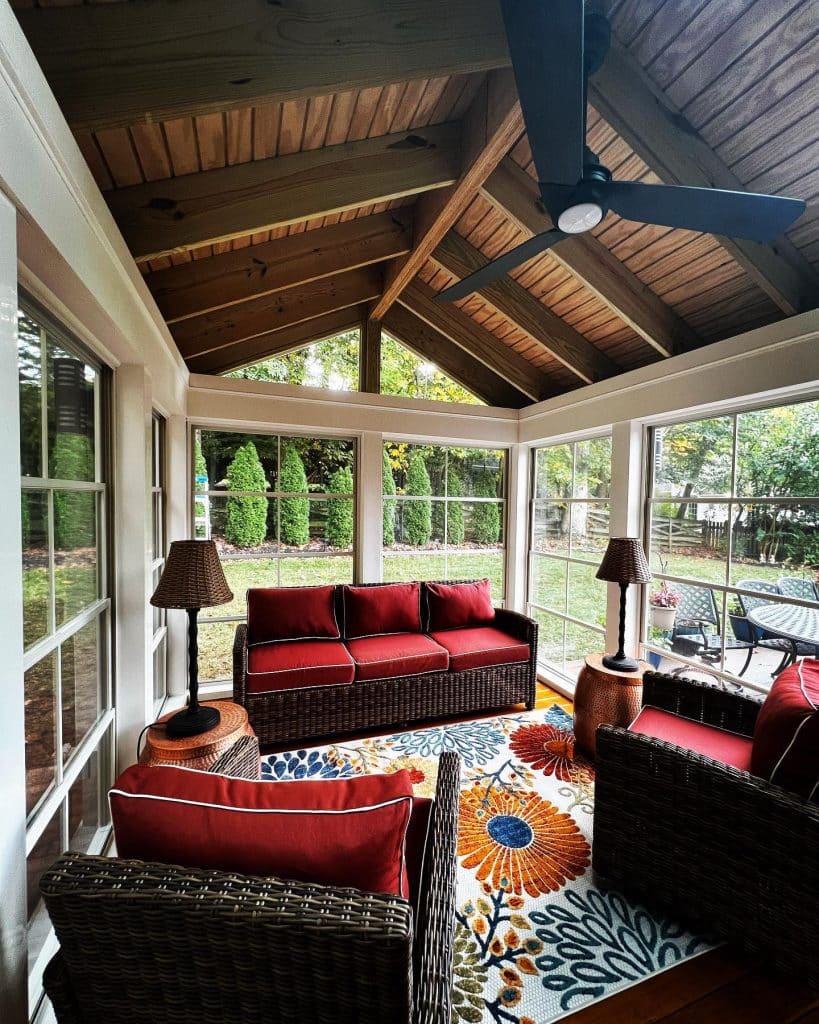
Enclosing a covered deck with full screens gives a family a bug-free space to enjoy every evening without ever reaching for bug spray. A vaulted wood ceiling with exposed beams and a large fan keeps the space feeling open despite the added screening. Layering in a bold floral rug and deep red wicker furniture makes this kind of covered deck feel like a genuine extra room of the house.
Copper garden stool side tables add a warm metallic detail that plays well against the natural wood tones overhead. Writers at screened porch design guides frequently point to screened additions as one of the highest-value ways to extend a home’s usable living space.
Budget Guide: Screened porch construction typically runs $8,000 to $20,000 depending on size, often built as part of a larger deck project. Indoor-outdoor area rugs cost $80 to $200 at Wayfair, Target, or HomeGoods.
What Makes a Covered Deck Worth the Investment
A covered deck earns its place in a backyard when it genuinely gets used, not just admired from inside the house. The best ones solve a real problem, too much sun, not enough privacy, bugs ruining the evening, rather than simply adding a roof for the sake of it. That clarity of purpose is what separates a covered deck families actually live on from one that sits mostly empty.
Matching the structure to the house matters more than most people expect at first. A roofline that echoes the home’s existing architecture, paired with coordinating trim and railing, makes an addition feel original rather than tacked on. That visual connection is often what makes a covered deck increase a home’s overall value.
The Family Win
Three easy ways to start planning your own covered deck. Decide what problem you are solving first, sun, privacy, or bugs, before choosing a structure style. Match your roofline and trim to the existing house whenever possible for a more finished look. Invest in real furniture and lighting last, since that is what actually makes the space feel like a room.
Privacy and airflow both deserve real consideration before construction begins. Lattice, slatted walls, or full screening each solve the privacy question differently, and choosing the right one depends on how exposed a yard actually is to neighbors. Getting this decision right the first time saves a lot of retrofitting later.
Furniture and lighting finish the space in ways the structure alone cannot. Deep cushioned seating, warm lighting, and a well-chosen rug turn a covered frame into a room people want to spend hours in. That final layer of styling is often what gets remembered and photographed the most.
Enjoyed this post?
Share the love with another mom!
Every share helps this little blog grow — thank you so much